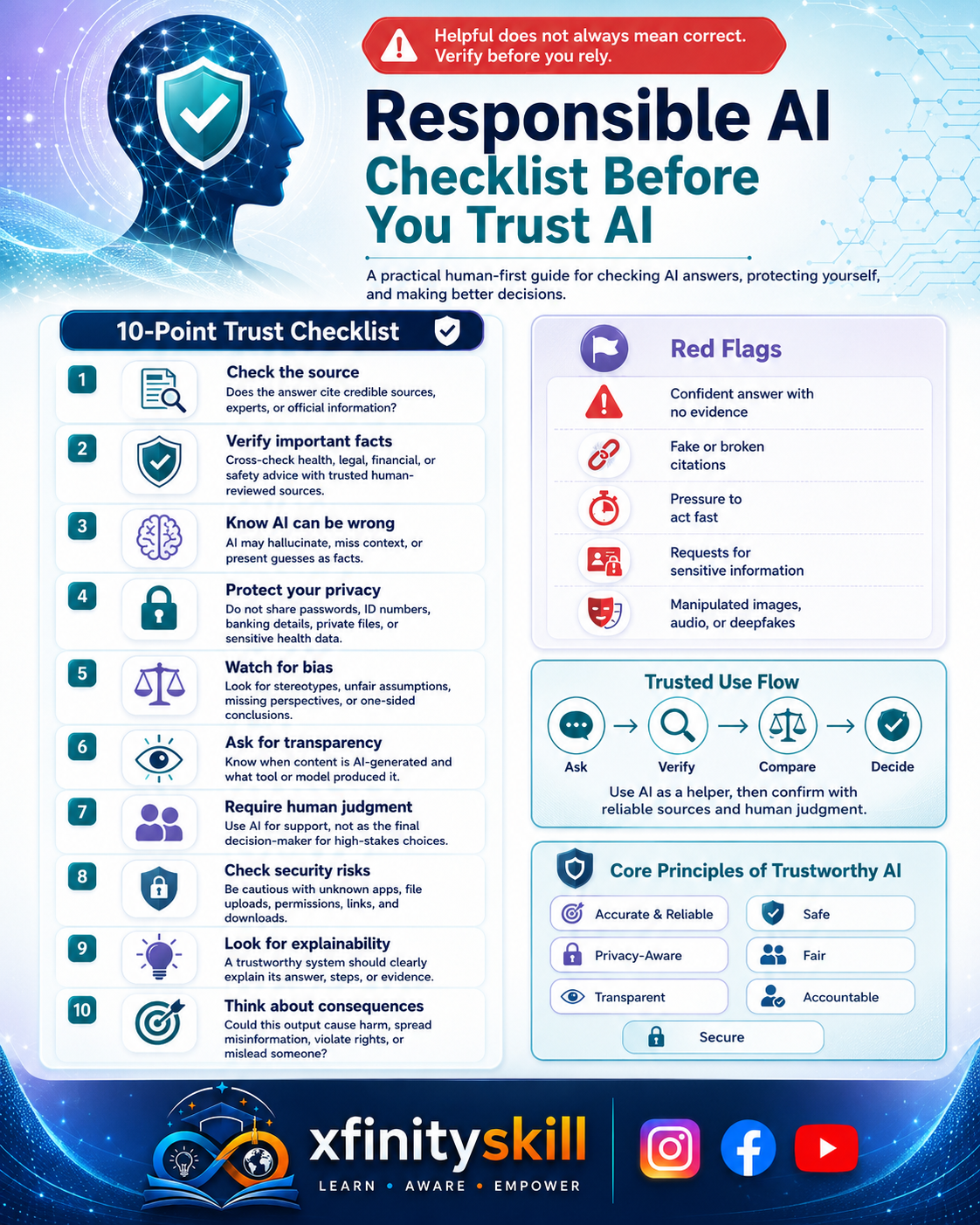
To ensure that you are engaging with AI responsibly, consider the following checklist before placing your trust in any AI system:
- Transparency
Understand how the AI operates. Look for clear explanations of its algorithms and decision-making processes. Transparency helps build trust and allows users to comprehend the AI’s capabilities and limitations. - Data Privacy
Ensure that the AI respects user privacy. Check how data is collected, stored, and used. Responsible AI should prioritize user consent and data protection. - Bias Mitigation
Investigate whether the AI has been tested for biases. AI systems can inadvertently perpetuate existing biases in data. Look for measures taken to identify and reduce bias in AI outputs. - Accountability
Determine who is responsible for the AI’s actions. There should be clear lines of accountability in case of errors or harmful outcomes. This includes understanding the roles of developers, users, and organizations. - User Control
Ensure that users have control over the AI’s functionalities. Users should be able to adjust settings, provide feedback, and opt-out if necessary. Empowering users fosters a sense of ownership and responsibility. - Ethical Guidelines
Check if the AI adheres to established ethical guidelines. Responsible AI should align with ethical standards that promote fairness, safety, and respect for human rights. - Continuous Monitoring
Look for ongoing evaluation of the AI’s performance. Responsible AI should be subject to regular assessments to ensure it operates as intended and adapts to new challenges. - User Education
Ensure that users are educated about the AI’s capabilities and limitations. Providing resources and training can help users make informed decisions about their interactions with AI.
By following this checklist, you can make more informed decisions about trusting AI systems and contribute to a more responsible AI landscape.