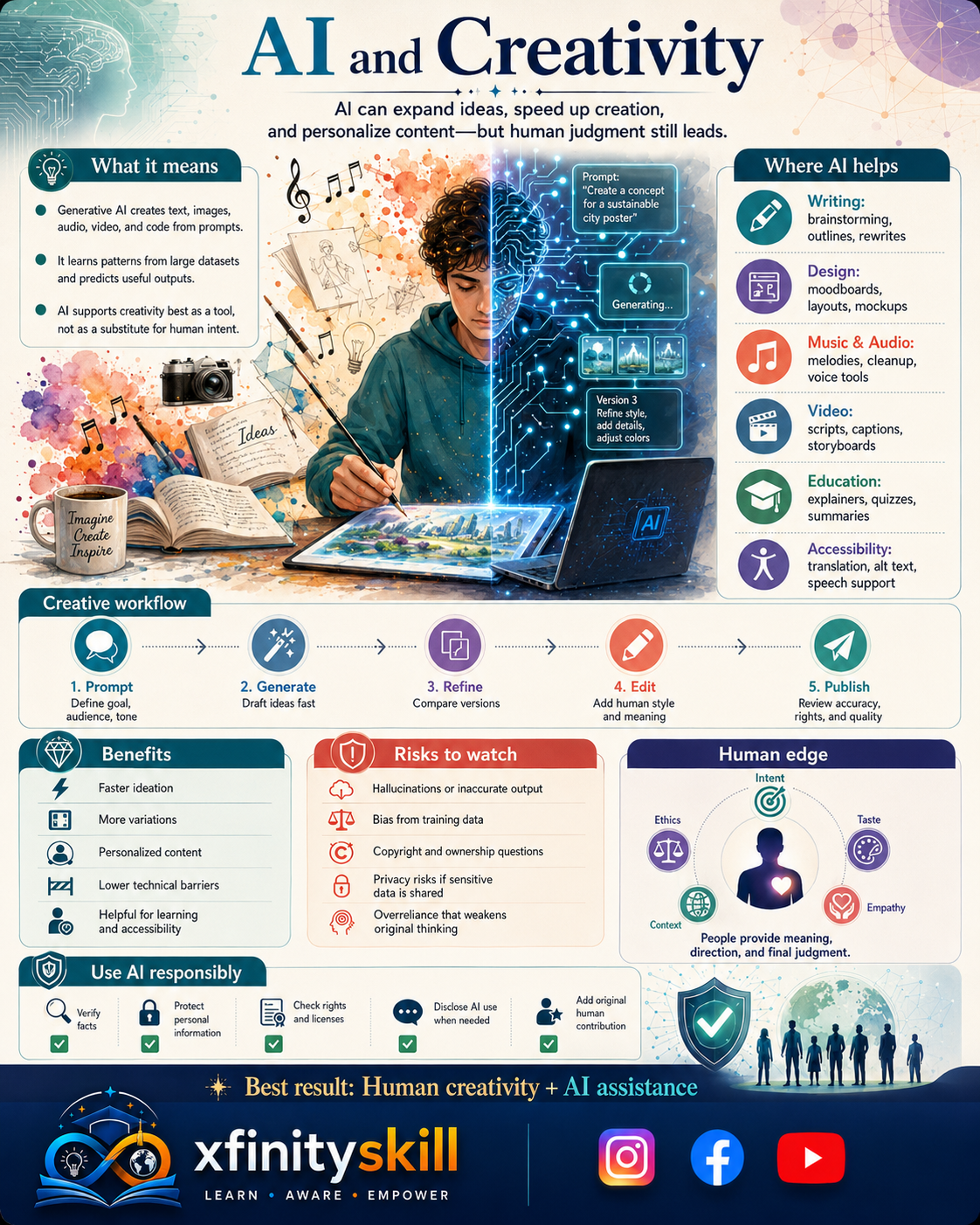
AI and Creativity are increasingly intertwined in today’s digital landscape. As artificial intelligence continues to evolve, it is reshaping the way we think about creativity and artistic expression.
AI tools are now capable of generating music, art, and even literature, often producing works that are indistinguishable from those created by humans. This raises intriguing questions about the nature of creativity itself. Is creativity solely a human trait, or can machines also possess a form of creative intelligence?
One of the most exciting aspects of AI in the creative realm is its ability to assist and enhance human creativity. For instance, artists can use AI algorithms to explore new styles, generate unique patterns, or even collaborate with AI to create innovative pieces. This partnership can lead to unexpected outcomes, pushing the boundaries of traditional art forms.
Moreover, AI can analyze vast amounts of data to identify trends and preferences, helping creators tailor their work to resonate with audiences. This data-driven approach can inspire new ideas and foster a deeper understanding of what makes art impactful.
However, the rise of AI in creativity also brings challenges. Concerns about originality, copyright, and the potential for AI to replace human artists are prevalent. As we navigate this new landscape, it is essential to strike a balance between leveraging AI’s capabilities and preserving the unique human touch that defines true creativity.
In conclusion, AI is not just a tool; it is a collaborator that can expand the horizons of creativity. By embracing this technology, we can explore new artistic possibilities and redefine what it means to be creative in the 21st century.