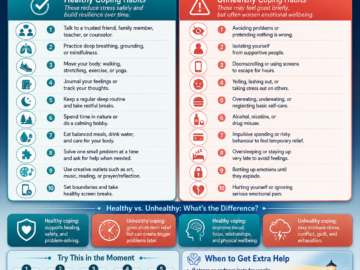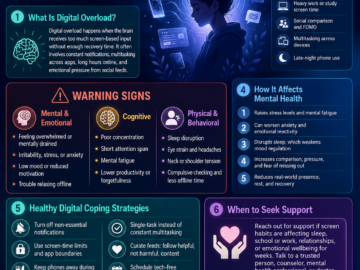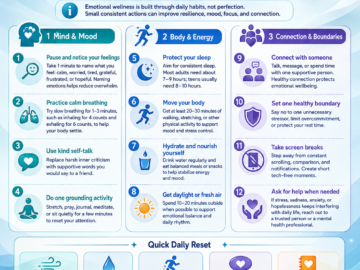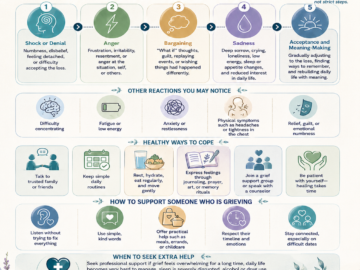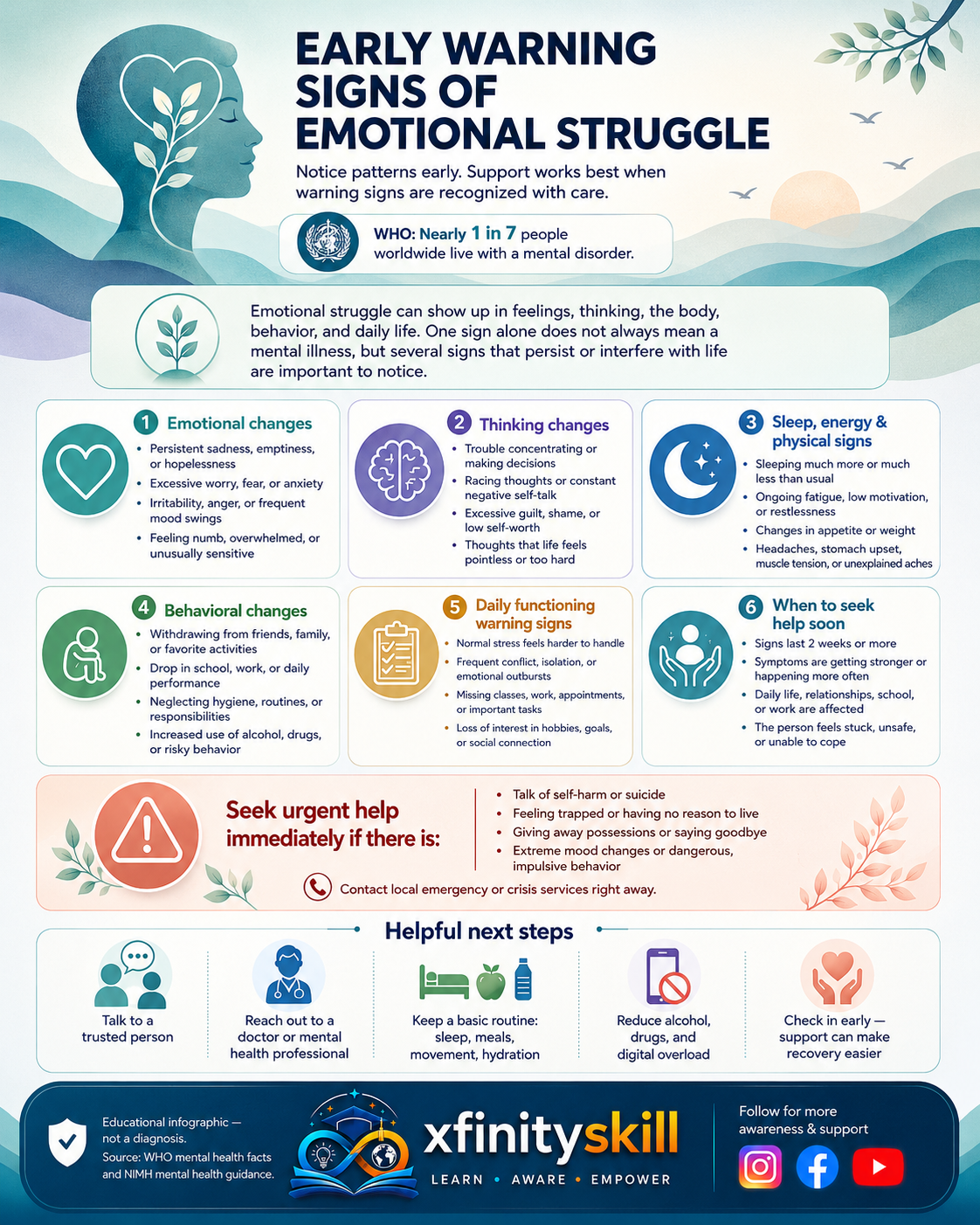
Emotional struggles can manifest in various ways, and recognizing early warning signs is crucial for addressing them effectively. Here are some key indicators to watch for:
- Changes in Mood: Frequent mood swings, irritability, or feelings of sadness that seem disproportionate to the situation can be a sign of emotional distress.
- Withdrawal from Social Activities: If someone begins to isolate themselves from friends and family or loses interest in activities they once enjoyed, it may indicate underlying emotional issues.
- Changes in Sleep Patterns: Difficulty sleeping, insomnia, or sleeping too much can be a response to emotional struggles. These changes can significantly impact overall well-being.
- Changes in Appetite: Significant weight loss or gain, or changes in eating habits, can be linked to emotional health. Stress and anxiety often lead to changes in appetite.
- Difficulty Concentrating: Struggling to focus on tasks, making decisions, or remembering details can be a sign of emotional overload.
- Physical Symptoms: Unexplained headaches, stomachaches, or other physical ailments can sometimes be manifestations of emotional distress.
- Increased Substance Use: Turning to alcohol, drugs, or other substances as a coping mechanism can indicate that someone is struggling emotionally.
- Feelings of Hopelessness: Persistent feelings of hopelessness or helplessness can be a serious warning sign that someone may need support.
Recognizing these signs early can lead to timely intervention and support, helping individuals navigate their emotional struggles more effectively. If you or someone you know is experiencing these symptoms, reaching out for help from a mental health professional can be a vital step toward healing.