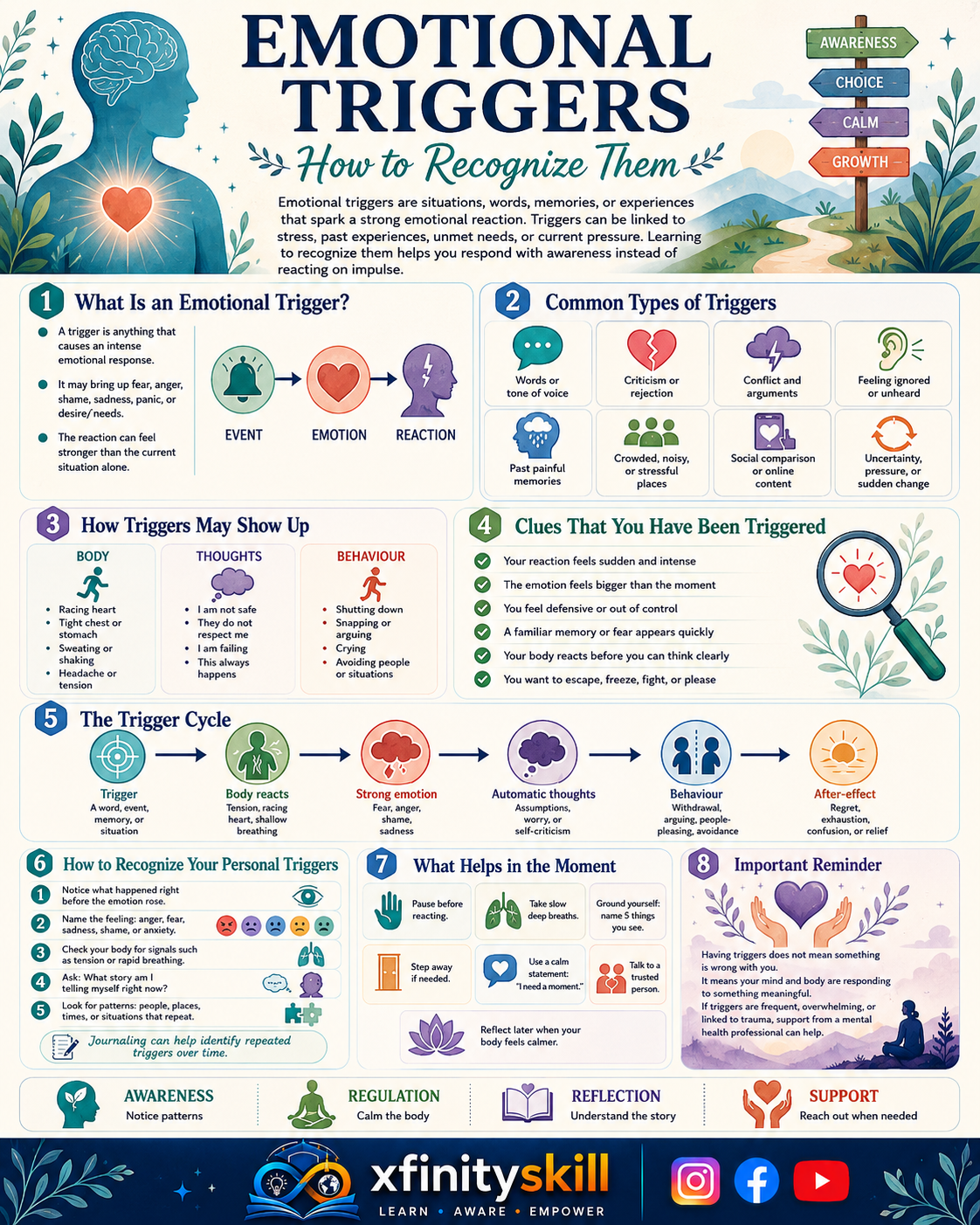
Emotional triggers are specific stimuli—such as words, situations, or memories—that provoke strong emotional reactions. Recognizing these triggers is essential for personal growth and emotional regulation. Here’s how to identify them:
- Self-Reflection: Take time to reflect on your emotional responses. Journaling can help you track situations that evoke intense feelings, whether positive or negative.
- Physical Reactions: Pay attention to your body. Emotional triggers often manifest physically—like a racing heart, sweating, or tension. Noticing these signs can help you pinpoint what’s causing your emotional response.
- Patterns in Relationships: Observe your interactions with others. Are there recurring themes or conflicts that lead to heightened emotions? Identifying these patterns can reveal underlying triggers.
- Past Experiences: Consider your history. Past traumas or significant events can create triggers that affect your current emotional state. Understanding these connections can provide clarity.
- Emotional Vocabulary: Expand your emotional vocabulary. Being able to articulate your feelings can help you recognize triggers more easily. Instead of just feeling “angry,” you might identify feelings of “betrayal” or “frustration.”
- Mindfulness Practices: Engage in mindfulness or meditation. These practices can enhance your awareness of your thoughts and feelings, making it easier to identify triggers as they arise.
Recognizing emotional triggers is a vital step in managing your emotions effectively. By understanding what affects you, you can develop healthier coping strategies and improve your emotional well-being.