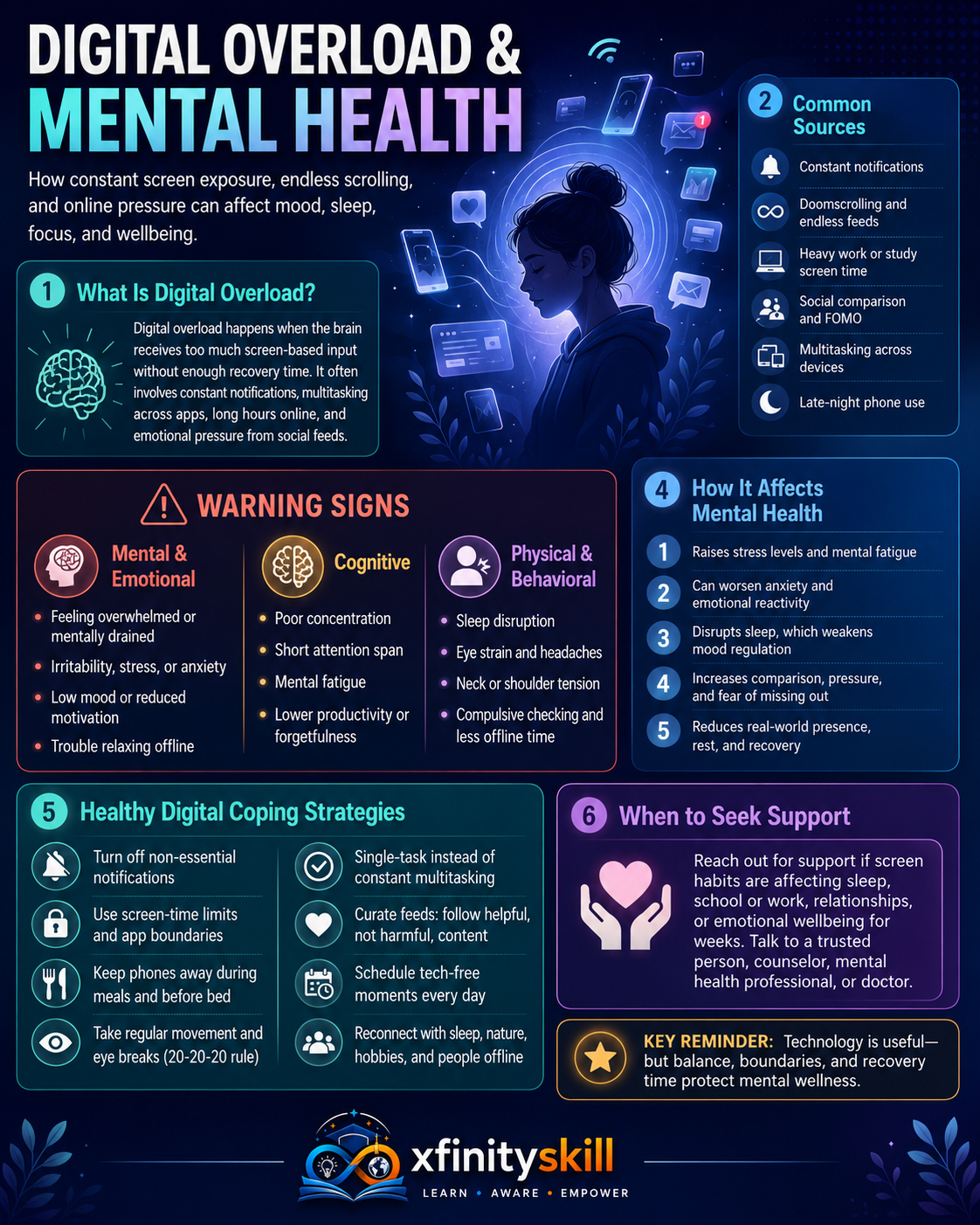
Digital overload has become a pressing concern in today’s fast-paced, technology-driven world. As we increasingly rely on digital devices for communication, work, and entertainment, the constant influx of information can lead to feelings of anxiety, stress, and even depression.
The impact of digital overload on mental health is multifaceted. It can disrupt sleep patterns, reduce attention spans, and create a sense of isolation despite being more connected than ever. Many individuals find themselves scrolling through social media feeds, often comparing their lives to the curated highlights of others, which can exacerbate feelings of inadequacy and loneliness.
To combat digital overload, it’s essential to establish healthy boundaries with technology. Here are some strategies to consider:
- Set Time Limits: Allocate specific times for checking emails and social media to avoid constant distractions.
- Digital Detox: Take regular breaks from screens, especially before bedtime, to improve sleep quality and mental clarity.
- Mindfulness Practices: Engage in mindfulness or meditation to help center your thoughts and reduce anxiety.
- Prioritize Face-to-Face Interactions: Foster real-life connections to combat feelings of isolation and enhance emotional well-being.
By recognizing the signs of digital overload and implementing these strategies, individuals can take proactive steps to protect their mental health in an increasingly digital world.