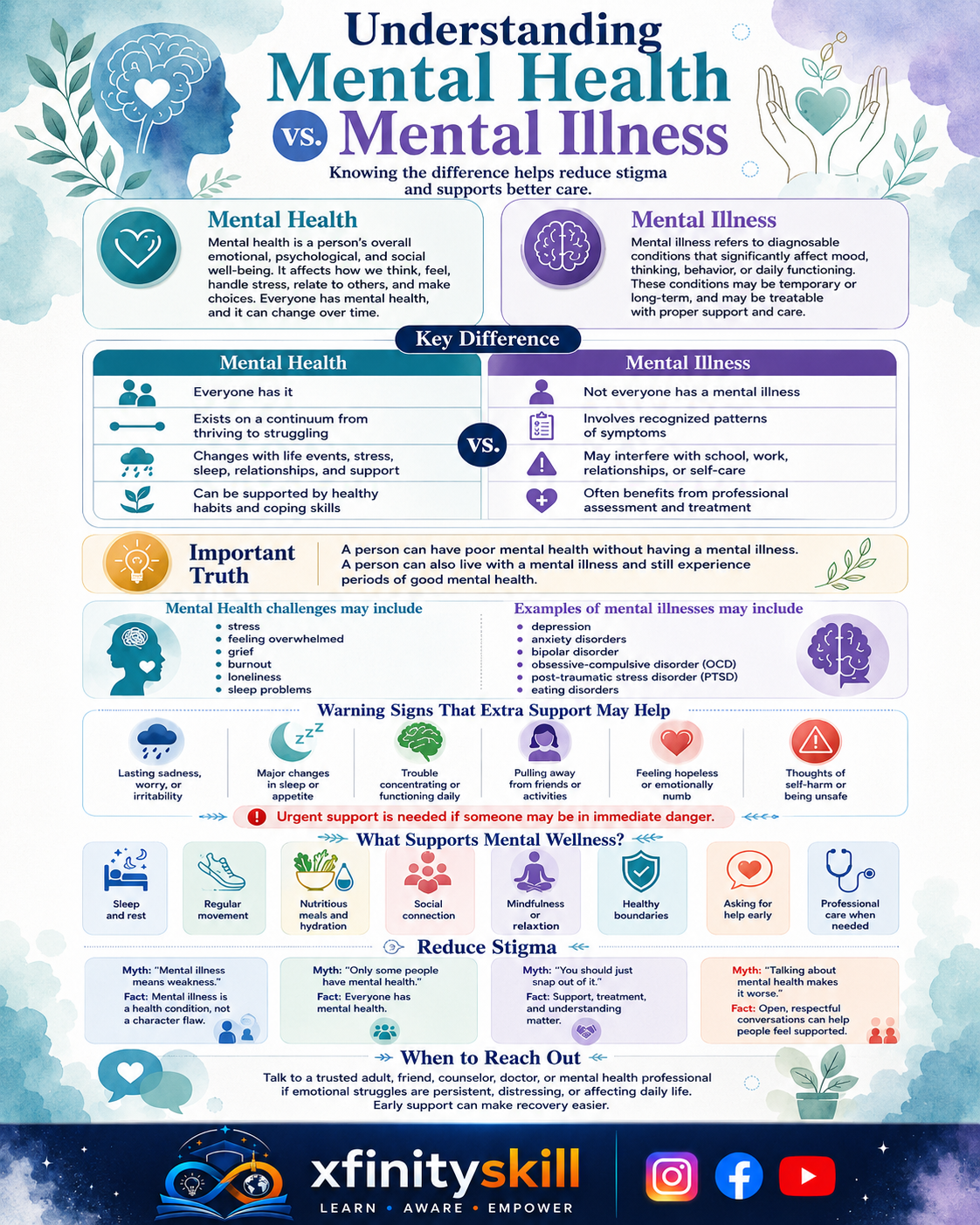
Understanding Mental Health vs. Mental Illness
Mental health and mental illness are terms that are often used interchangeably, but they represent different concepts. Understanding the distinction between the two is crucial for fostering awareness and promoting well-being.
Mental health refers to our emotional, psychological, and social well-being. It affects how we think, feel, and act. It also influences how we handle stress, relate to others, and make choices. Good mental health is more than just the absence of mental illness; it encompasses a state of balance and resilience, allowing individuals to cope with life’s challenges effectively.
On the other hand, mental illness refers to a wide range of mental health conditions that affect mood, thinking, and behavior. These conditions can disrupt daily functioning and may require treatment. Examples of mental illnesses include depression, anxiety disorders, schizophrenia, and bipolar disorder. It’s important to recognize that mental illnesses are medical conditions, just like physical illnesses, and they can be diagnosed and treated.
Understanding the difference between mental health and mental illness can help reduce stigma and encourage individuals to seek help when needed. Promoting mental health involves creating supportive environments, fostering healthy relationships, and encouraging self-care practices. Meanwhile, addressing mental illness requires access to appropriate treatment and support systems.
In summary, while mental health is a broad concept encompassing overall well-being, mental illness refers to specific disorders that can impact that well-being. By recognizing and addressing both aspects, we can work towards a healthier society where individuals feel empowered to take care of their mental health and seek help for mental illnesses when necessary.