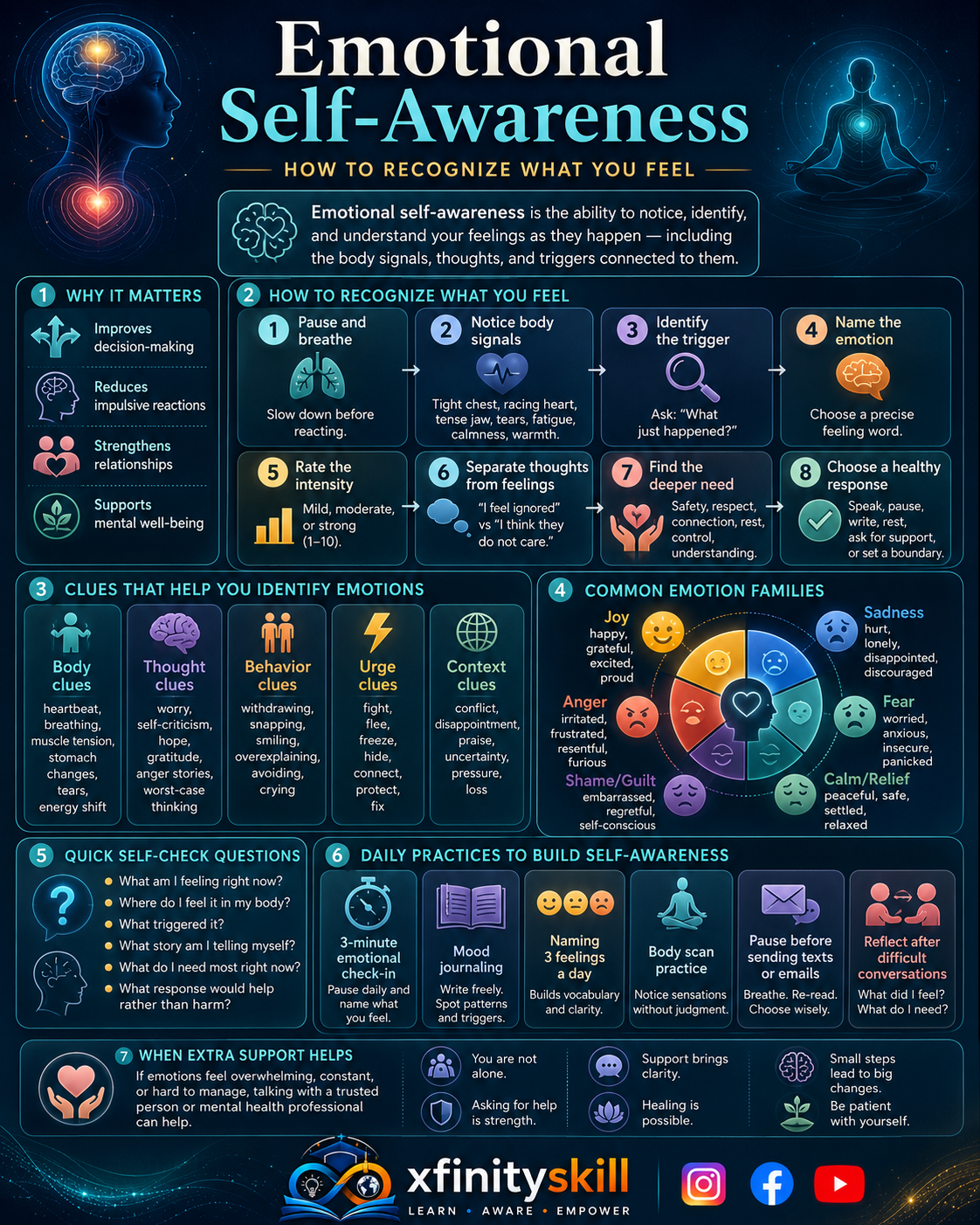
Emotional self-awareness is the ability to recognize and understand your emotions as they occur. It’s a crucial skill that can enhance your relationships, decision-making, and overall well-being. Here are some steps to help you develop this awareness:
- Pause and Reflect: Take a moment to check in with yourself throughout the day. Ask yourself, “What am I feeling right now?” This simple practice can help you become more attuned to your emotions.
- Identify Triggers: Pay attention to situations or interactions that evoke strong feelings. Understanding what triggers your emotions can provide insight into your emotional responses.
- Use a Feelings Wheel: A feelings wheel can help you articulate your emotions more precisely. Instead of just saying you feel “bad,” you might discover you feel “frustrated,” “anxious,” or “disappointed.”
- Journal Your Emotions: Writing down your feelings can clarify your thoughts and emotions. Reflect on your day and note any emotional highs or lows, along with the circumstances surrounding them.
- Practice Mindfulness: Engage in mindfulness practices such as meditation or deep breathing. These techniques can help you stay present and aware of your emotional state without judgment.
- Seek Feedback: Sometimes, others can see things we miss. Ask trusted friends or family members how they perceive your emotional responses in various situations.
- Be Compassionate with Yourself: Recognize that it’s okay to feel a range of emotions. Practice self-compassion and avoid harsh self-criticism when you experience difficult feelings.
By implementing these strategies, you can enhance your emotional self-awareness, leading to a deeper understanding of yourself and improved emotional regulation.