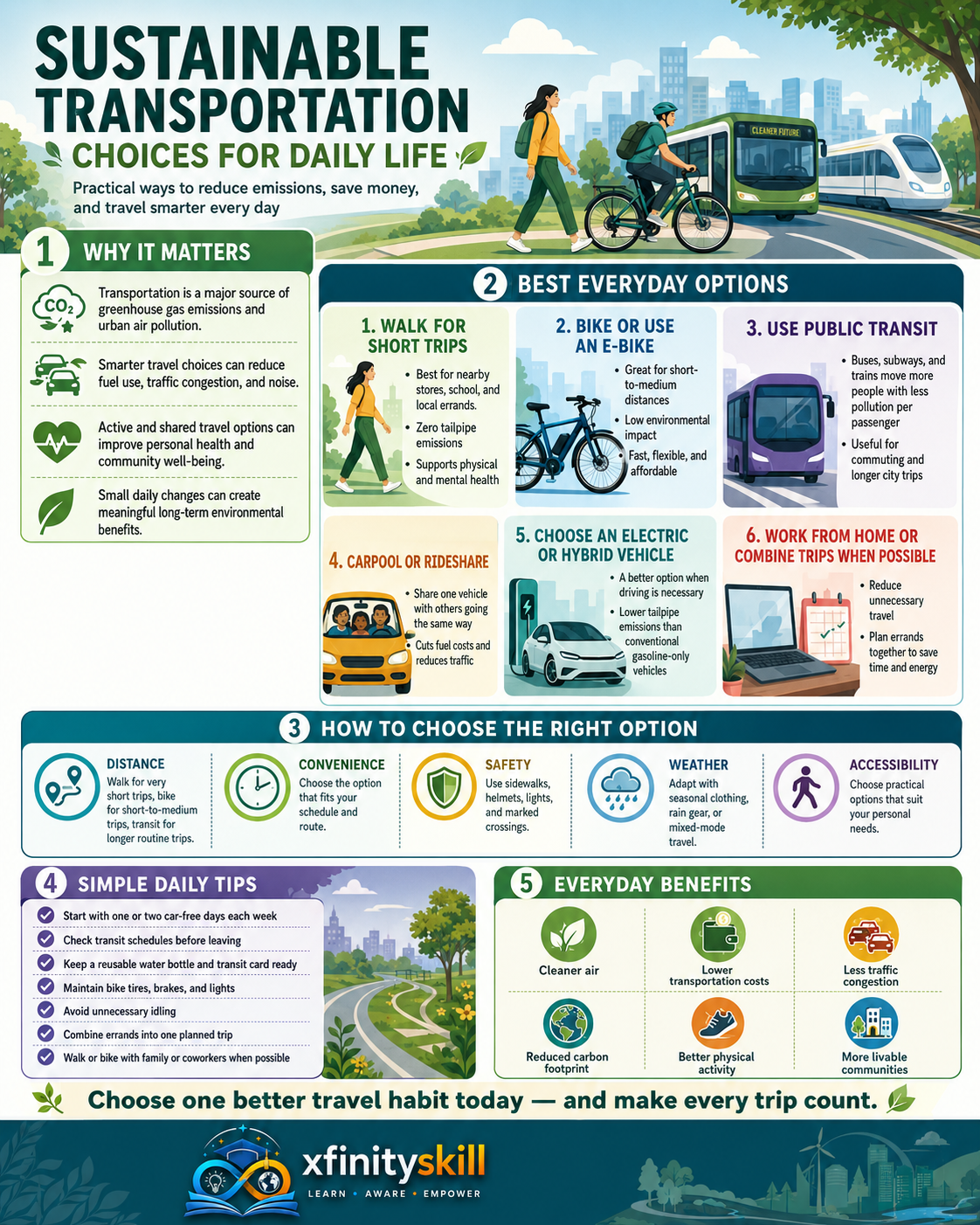
Sustainable transportation means choosing ways to travel that reduce pollution, save energy, protect health, and support a cleaner environment. In daily life, transportation decisions may seem small, but they can have a meaningful impact when practiced regularly. Simple choices such as walking, cycling, using public transit, carpooling, planning trips wisely, or choosing electric and fuel-efficient vehicles can help reduce greenhouse gas emissions and improve community well-being.
One of the most sustainable choices is walking or cycling for short trips. These options produce very low emissions and also support physical health by increasing daily movement. Walking to nearby shops, biking to school or work, or using safe cycling lanes can reduce traffic congestion and improve air quality. These active transportation choices are especially helpful in cities where many short car trips can be replaced with healthier alternatives.
Public transportation is another important sustainable option. Buses, trains, subways, and light rail can carry many people at once, which reduces the number of private cars on the road. When more people use public transit, cities can lower traffic congestion, fuel use, and air pollution. For longer daily commutes, public transportation is often more environmentally friendly than driving alone.
Carpooling and ride-sharing are practical choices when walking, cycling, or public transit are not possible. Sharing a ride with classmates, coworkers, family members, or neighbours reduces the number of vehicles on the road. This helps save fuel, lower travel costs, and reduce emissions. Even carpooling a few times a week can make a positive difference.
For people who need to drive, choosing a fuel-efficient, hybrid, or electric vehicle can reduce environmental impact. Electric vehicles can lower emissions from road transportation, especially when electricity comes from cleaner energy sources. However, sustainable driving also includes simple habits such as avoiding unnecessary idling, keeping tires properly inflated, maintaining the vehicle, and combining errands into one trip.
Another daily habit is trip planning. Instead of making several separate car trips, people can organize errands in one route, choose nearby services, or work from home when possible. Communities can also support sustainable transportation by building safe sidewalks, bike lanes, reliable transit systems, and compact neighbourhoods where people can access schools, shops, parks, and services more easily.
Sustainable transportation is not about perfection. It is about making better choices whenever possible. Walking for short distances, taking public transit, sharing rides, driving efficiently, and supporting cleaner transportation systems can all contribute to healthier people, cleaner air, and a more sustainable future.