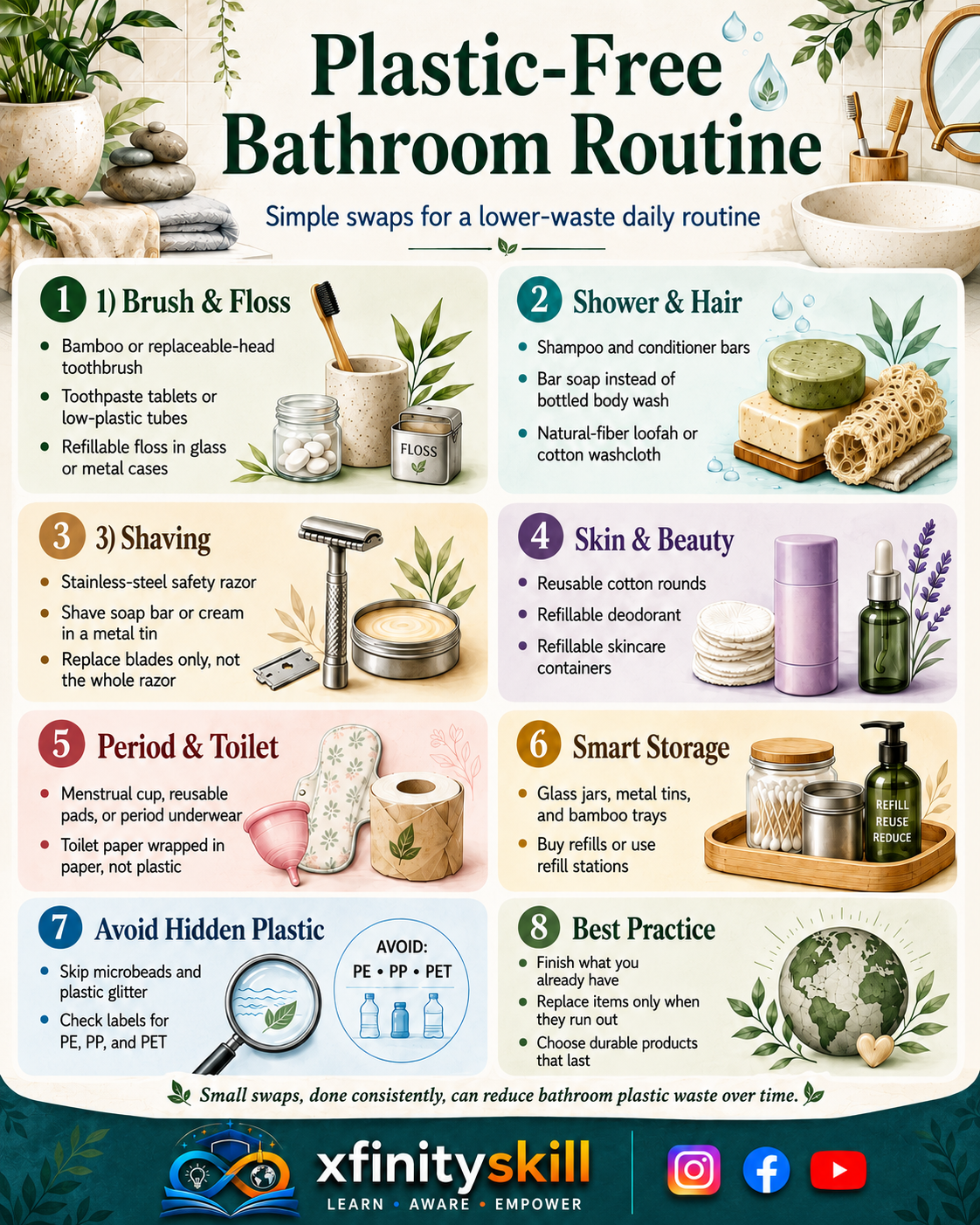
Small daily swaps that reduce waste, protect waterways, and create a cleaner self-care habit.
A plastic-free bathroom routine means replacing single-use or heavily packaged bathroom products with reusable, refillable, compostable, or low-waste alternatives. Bathrooms often contain many plastic items, including shampoo bottles, body wash containers, toothbrushes, razors, wipes, cosmetic packaging, and disposable personal care products. Reducing these items helps lower plastic waste and supports cleaner oceans, rivers, and communities.
Plastic pollution is a global environmental issue. UNEP reports that millions of tonnes of plastic waste enter aquatic ecosystems each year, affecting lakes, rivers, and seas. The U.S. EPA also explains that plastic products can create long-term waste and pollution challenges, especially when they are designed for short-term use.
Why It Matters
A plastic-free bathroom routine helps reduce single-use packaging, unnecessary waste, and microplastic pollution. Some personal care products have historically contained tiny plastic particles called microbeads. The U.S. FDA notes that the Microbead-Free Waters Act prohibits rinse-off cosmetics containing plastic microbeads, including some toothpastes and cleansing products. UNEP has also highlighted that plastic ingredients in personal care and cosmetic products contribute to microplastic pollution in the environment.
Canada is also taking action to reduce plastic waste through regulations and policies focused on problematic single-use plastic products and a circular economy approach.
Easy Plastic-Free Bathroom Swaps
- Switch to bar soap instead of liquid body wash
Bar soap usually uses less packaging than plastic pump bottles. Choose paper-wrapped or package-free soap when possible. - Try shampoo and conditioner bars
Shampoo bars can replace plastic shampoo bottles and often last longer when stored dry between uses. - Use a bamboo or reusable-handle toothbrush
A bamboo toothbrush can reduce plastic use compared with standard disposable plastic toothbrushes. Replace the brush head or toothbrush when needed. - Choose refillable hand soap and lotion
Use glass, aluminum, or durable refill bottles. Buying refills in bulk can reduce repeated small plastic containers. - Replace disposable razors with a reusable razor
A reusable metal razor can reduce plastic razor waste. For safety, always store blades carefully and follow the product instructions. - Use washable face cloths instead of disposable wipes
Many wipes are single-use and create unnecessary waste. A soft washable cloth can be reused many times. - Choose plastic-free dental care where suitable
Look for toothpaste tablets, recyclable metal tubes, or low-waste packaging. For dental health, choose products that still meet your personal needs and dentist’s advice. - Avoid products with plastic microbeads
Check exfoliating scrubs and rinse-off products. Natural exfoliating alternatives or reusable cleansing tools are better choices. - Buy only what you need
The most sustainable product is often the one you already own. Finish current products before replacing them to avoid waste. - Recycle correctly
When plastic packaging cannot be avoided, rinse containers and follow your local recycling rules. Not every bathroom item is recyclable, especially mixed-material pumps, caps, and small containers.
Smart Rule: Reuse First, Replace Slowly
A plastic-free bathroom does not need to happen overnight. The best approach is to replace items one by one when they run out. This prevents waste and makes the routine affordable. UNEP recommends shifting away from single-use items toward reusable alternatives where possible.
Final Message
A plastic-free bathroom routine is not about perfection. It is about making thoughtful choices: less packaging, fewer disposables, safer product habits, and more reusable options. Every small swap can help reduce plastic waste and support a cleaner planet.