Energy-Smart Home Habits for Renters and Homeowners
Energy-smart living is not only about buying expensive equipment. Many everyday habits can lower energy use, reduce monthly bills, and make a home more comfortable. Whether someone rents an apartment or owns a house, small changes in heating, cooling, lighting, appliances, and water use can make a real difference.
- Control Heating and Cooling Wisely
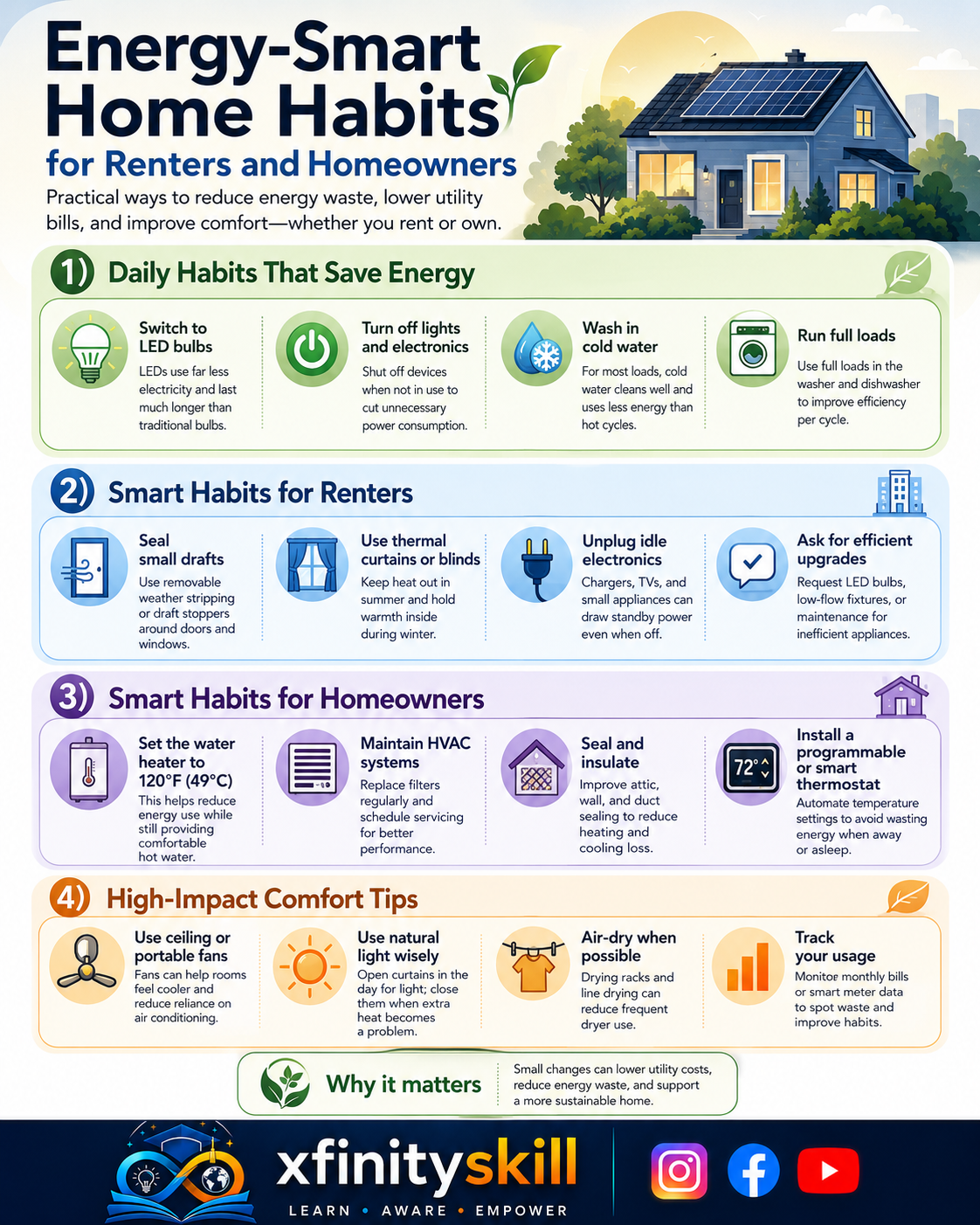
Heating and cooling are major parts of home energy use. A smart habit is to avoid extreme thermostat settings. In summer, use fans with air conditioning and raise the thermostat slightly when possible. Natural Resources Canada says using ceiling fans with air conditioning and setting the thermostat two degrees higher can reduce air-conditioning costs by nearly 14%. Fans should be turned off when leaving the room because they cool people, not the room itself.
For homeowners, regular HVAC maintenance, yearly tune-ups, clean filters, smart thermostats, and sealed heating/cooling ducts can improve efficiency. ENERGY STAR recommends changing air filters regularly, tuning up HVAC equipment yearly, installing a smart thermostat, and sealing ducts.
- Stop Air Leaks
Drafts around doors, windows, outlets, and baseboards can waste energy. Renters can use removable weatherstripping, draft stoppers, heavy curtains, and window film, if allowed by the lease. Homeowners can go further by sealing gaps, improving insulation, and arranging a home energy assessment. The U.S. Department of Energy explains that a home energy assessment helps identify energy use, comfort issues, and safety concerns.
- Use Appliances Efficiently
Appliances can quietly add to the electricity bill. Natural Resources Canada notes that household appliances such as fridges, freezers, dishwashers, and water coolers can account for up to 14.1% of energy used in an average Canadian home.
Good habits include washing clothes in cold water, running full loads, air-drying when possible, and using dishwashers only when full. NYSERDA recommends renters wash laundry with cold water whenever possible and wash full loads to reduce both energy and water use.
- Reduce Standby Power
Many devices use electricity even when they are turned off but still plugged in. This is often called standby power or “phantom” power. Renters and homeowners can use smart power strips, unplug chargers, turn off gaming systems, and avoid leaving electronics on standby. Seattle City Light recommends renters reduce standby power and optimize appliance use as part of energy-saving habits.
- Choose Efficient Products When Replacing Items
When buying light bulbs, appliances, electronics, or HVAC equipment, look for energy-efficient models. ENERGY STAR provides information on certified energy-efficient products and available rebates.
Renters may not control large appliances, but they can still choose LED bulbs, efficient small appliances, smart plugs, and good window coverings. Homeowners can plan bigger upgrades such as insulation, heat pumps, efficient windows, and ENERGY STAR-certified appliances.
- Save Hot Water
Hot water use affects both energy and water bills. Simple habits include shorter showers, fixing leaks, washing clothes in cold water, and using low-flow showerheads. Renters can usually make low-cost changes, while homeowners can consider insulating hot water pipes or upgrading to a more efficient water heater.
- Use Natural Light and Shade
Open curtains during cold sunny days to bring in warmth and natural light. In summer, close blinds or curtains during hot afternoon hours to reduce indoor heat. This helps reduce the need for artificial lighting, air conditioning, and extra heating.
- Know the Difference Between Renter and Homeowner Actions
Renters should focus on portable, removable, and low-cost habits: LED bulbs, smart power strips, draft stoppers, curtains, cold-water laundry, full dishwasher loads, and careful thermostat use. Homeowners can add long-term improvements: insulation, air sealing, HVAC maintenance, smart thermostats, energy-efficient appliances, and home energy audits.
The U.S. Department of Energy says renters and rental property owners can use energy-saving guidance related to air leaks, insulation, heating and cooling, water heating, windows, appliances, and renewable energy.
Key Takeaway
An energy-smart home is built through consistent habits. Renters can save energy with simple, removable changes, while homeowners can combine daily habits with long-term upgrades. The best approach is to reduce waste, improve comfort, and make energy choices that fit the home, budget, and lifestyle.
Trusted sources used: Natural Resources Canada, ENERGY STAR, U.S. Department of Energy, NYSERDA, and Seattle City Light.