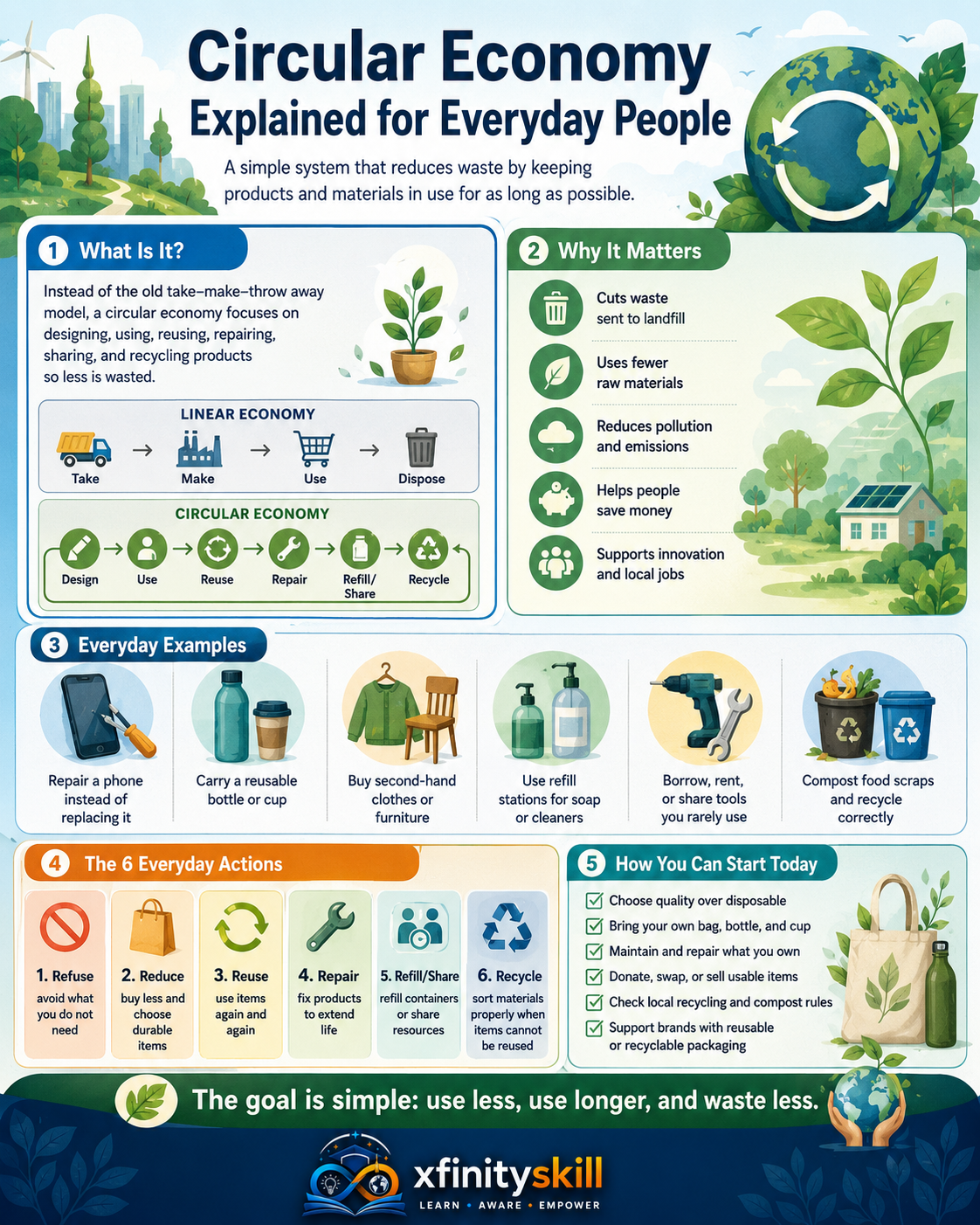
Circular Economy Explained for Everyday People
The circular economy is a transformative approach to how we produce and consume goods. Unlike the traditional linear economy, which follows a ‘take, make, dispose’ model, the circular economy emphasizes sustainability and resource efficiency. It aims to keep products, materials, and resources in use for as long as possible, minimizing waste and reducing environmental impact.
At its core, the circular economy is about designing products that are easier to repair, reuse, and recycle. This means creating items that can be disassembled and their components repurposed, rather than ending up in landfills. For everyday people, this can translate into practical actions such as:
- Choosing Durable Products: Opt for items that are built to last. This not only saves money in the long run but also reduces the frequency of replacements.
- Repairing Instead of Discarding: When something breaks, consider repairing it rather than throwing it away. Many communities offer repair cafes or workshops where you can learn how to fix your belongings.
- Recycling Properly: Familiarize yourself with local recycling guidelines to ensure that materials are disposed of correctly. This helps in the effective processing of recyclables and reduces contamination.
- Supporting Sustainable Brands: Look for companies that prioritize sustainability in their practices. By choosing to buy from these brands, you contribute to a market that values circular principles.
- Participating in Sharing Economies: Engage in sharing platforms for tools, clothing, or even cars. This reduces the need for new products and promotes a community-oriented approach to consumption.
The benefits of a circular economy extend beyond individual actions. When adopted on a larger scale, it can lead to significant economic growth, job creation, and a healthier planet. By reducing reliance on finite resources, we can create a more resilient economy that thrives on innovation and sustainability.
In summary, the circular economy is not just a concept for policymakers and businesses; it’s a practical framework that everyday people can embrace. By making conscious choices in our consumption habits, we can contribute to a more sustainable future for ourselves and generations to come.