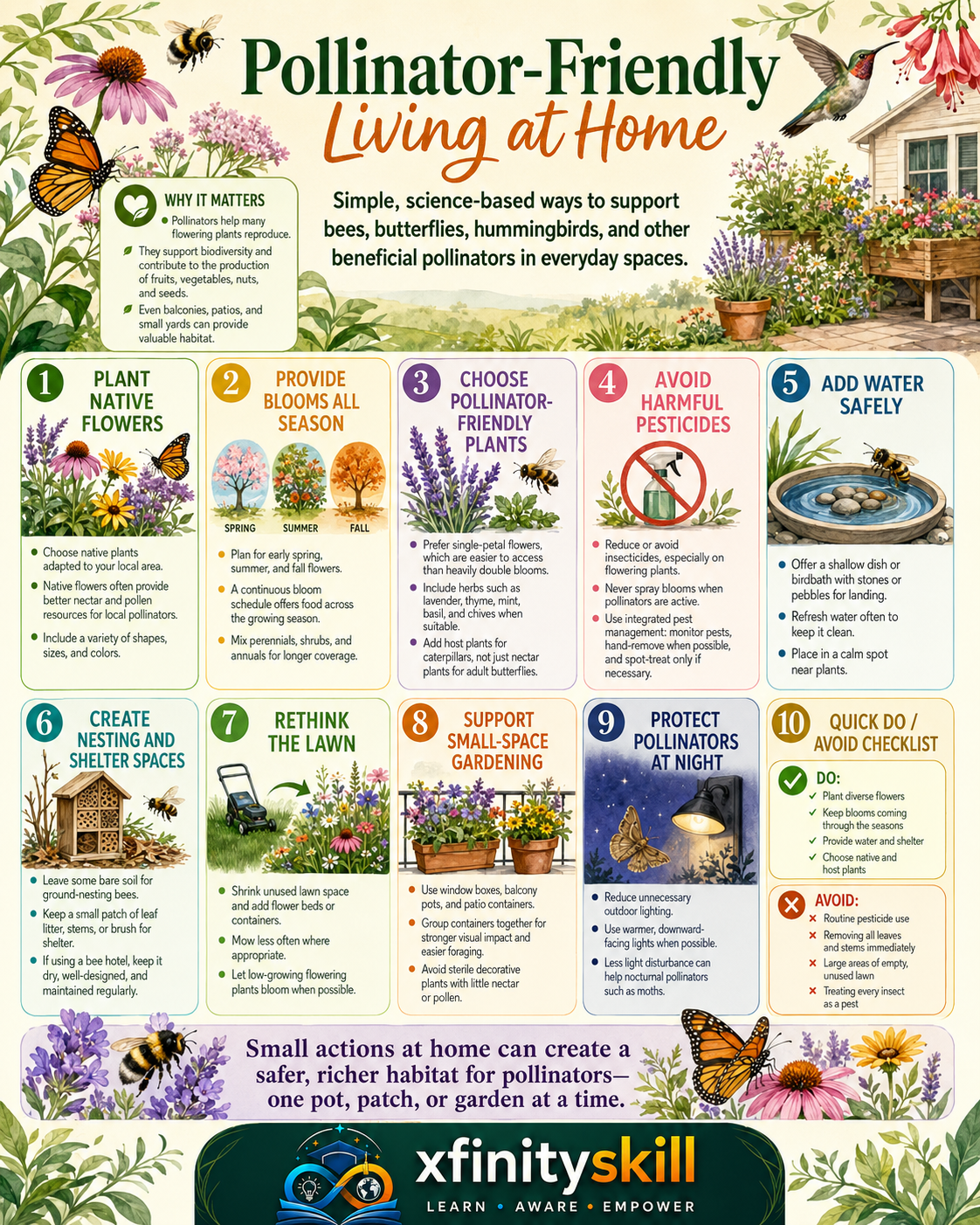
Creating a pollinator-friendly home is a rewarding way to support local ecosystems and contribute to the health of our planet. Here are some effective strategies to make your living space more welcoming to pollinators:
1. Plant Native Flowers
Choose a variety of native flowering plants that bloom at different times throughout the growing season. This ensures a continuous food source for pollinators like bees, butterflies, and hummingbirds. Some excellent options include:
- Coneflowers
- Black-eyed Susans
- Milkweed
- Asters
2. Create a Diverse Garden
Incorporate a mix of plants, including perennials, annuals, and shrubs. A diverse garden attracts a wider range of pollinators and provides habitats for them to thrive.
3. Avoid Pesticides
Minimize or eliminate the use of chemical pesticides and herbicides in your garden. These substances can be harmful to pollinators. Instead, consider natural pest control methods, such as introducing beneficial insects or using organic solutions.
4. Provide Water Sources
Pollinators need water to survive. Create shallow water sources, such as birdbaths or small ponds, with stones or pebbles for them to land on safely.
5. Build Nesting Habitats
Offer nesting sites for pollinators by leaving some areas of your garden undisturbed. You can also create bee hotels using hollow stems or wood blocks with drilled holes to attract solitary bees.
6. Educate and Advocate
Share your knowledge about pollinator-friendly practices with friends and family. Advocate for local initiatives that support pollinator habitats in your community.
7. Participate in Citizen Science
Engage in citizen science projects that monitor pollinator populations. This helps researchers gather valuable data and raises awareness about the importance of pollinators.
By implementing these strategies, you can create a vibrant, pollinator-friendly environment right at home. Not only will you be helping these essential creatures, but you’ll also enjoy the beauty and diversity they bring to your garden.