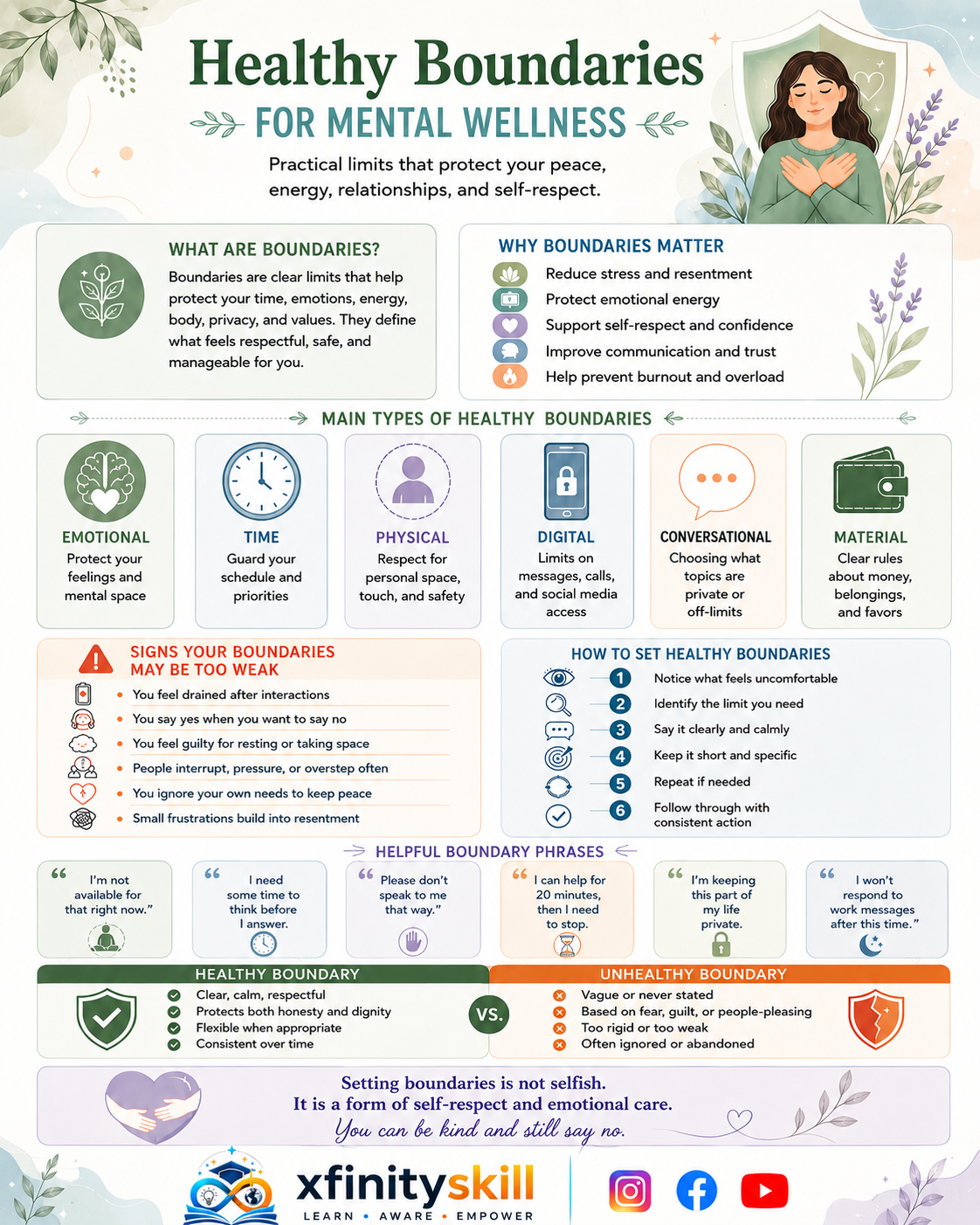
Establishing healthy boundaries is essential for maintaining mental wellness. Boundaries help define where one person ends and another begins, allowing individuals to protect their emotional space and prioritize their mental health. Here are some key aspects to consider when setting boundaries:
- Know Your Limits
Understanding your emotional and physical limits is the first step in establishing boundaries. Reflect on what makes you feel overwhelmed or stressed, and use this insight to guide your interactions with others. - Communicate Clearly
Once you identify your limits, communicate them clearly and assertively. Whether it’s saying “no” to additional responsibilities or expressing your need for personal time, clear communication helps others understand your needs. - Practice Self-Care
Prioritizing self-care is crucial when setting boundaries. Engage in activities that rejuvenate you, such as exercise, meditation, or hobbies. This not only reinforces your boundaries but also enhances your overall well-being. - Be Consistent
Consistency is key in maintaining boundaries. If you waver or allow others to push your limits, it can lead to confusion and resentment. Stay firm in your decisions and remind yourself of the importance of your mental health. - Evaluate Relationships
Assess the relationships in your life. Are they supportive and respectful of your boundaries? If not, it may be time to reconsider their place in your life. Surround yourself with people who uplift you and respect your limits. - Seek Support
If you’re struggling to establish or maintain boundaries, consider seeking support from a therapist or counselor. They can provide guidance and strategies tailored to your specific situation.
By implementing these practices, you can create a healthier environment for yourself, leading to improved mental wellness and a more balanced life. Remember, setting boundaries is not selfish; it’s a necessary step towards self-respect and emotional health.