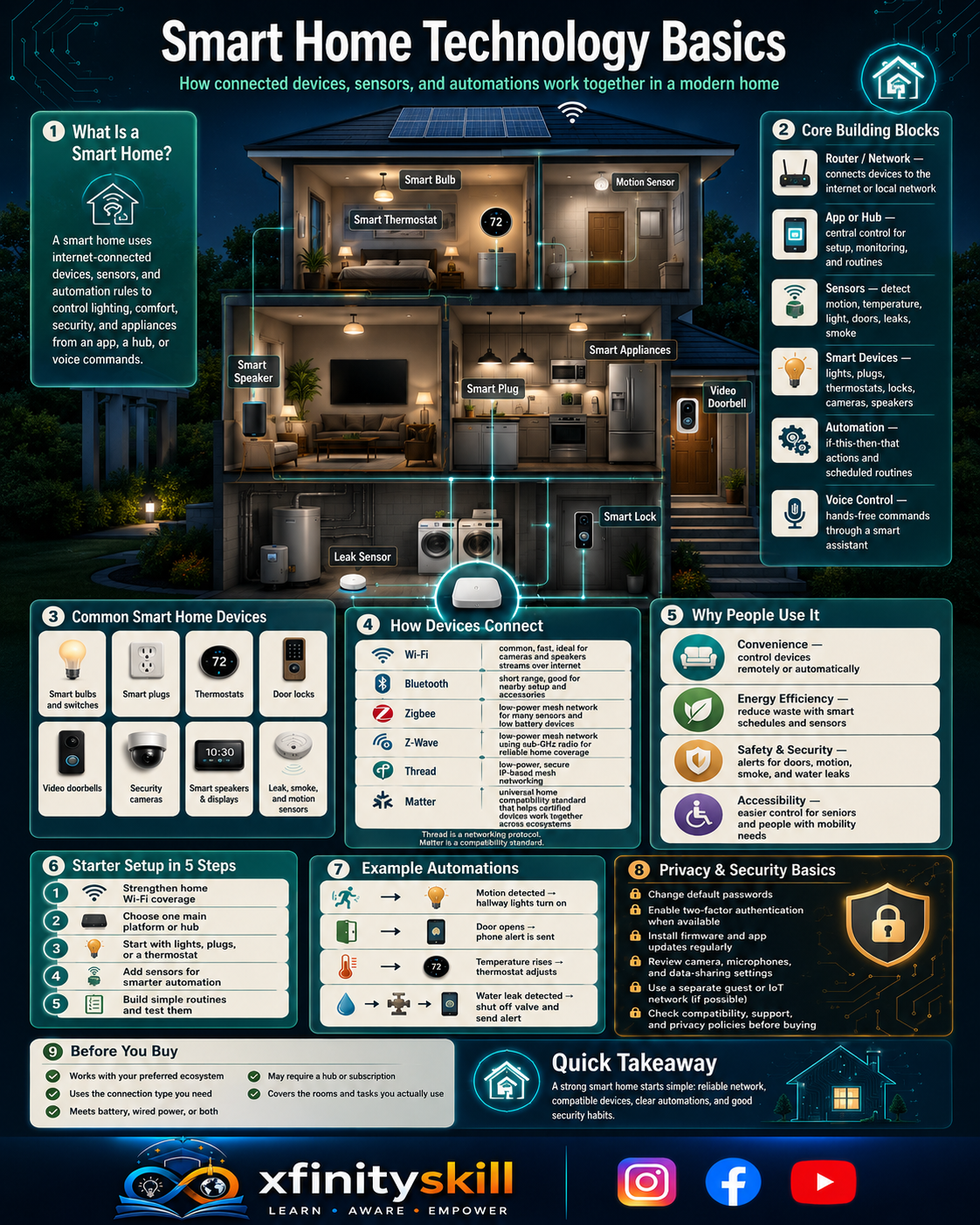
Smart home technology refers to the integration of devices and systems that enhance the convenience, efficiency, and security of your home. These technologies allow homeowners to control various aspects of their living environment remotely or automatically, often through a smartphone app or voice commands.
One of the key components of smart home technology is home automation. This includes systems that can control lighting, heating, cooling, and appliances. For example, smart thermostats can learn your schedule and adjust the temperature accordingly, helping to save energy and reduce utility bills.
Another important aspect is security. Smart security systems can include cameras, motion detectors, and smart locks that allow you to monitor your home in real-time and control access remotely. This provides peace of mind, especially when you’re away from home.
Smart lighting is also a popular feature. With smart bulbs, you can change the brightness and color of your lights, set schedules, and even control them with your voice. This not only enhances the ambiance of your home but can also improve energy efficiency.
Additionally, smart home technology often includes entertainment systems that can be controlled from a central hub. This allows you to stream music, movies, and more throughout your home seamlessly.
As you explore smart home technology, it’s essential to consider compatibility between devices and the ecosystem you choose. Many devices work best within specific platforms, such as Amazon Alexa, Google Assistant, or Apple HomeKit.
In summary, smart home technology offers a range of benefits, from increased convenience and energy efficiency to enhanced security and entertainment options. As technology continues to evolve, the possibilities for creating a smarter home are virtually limitless.