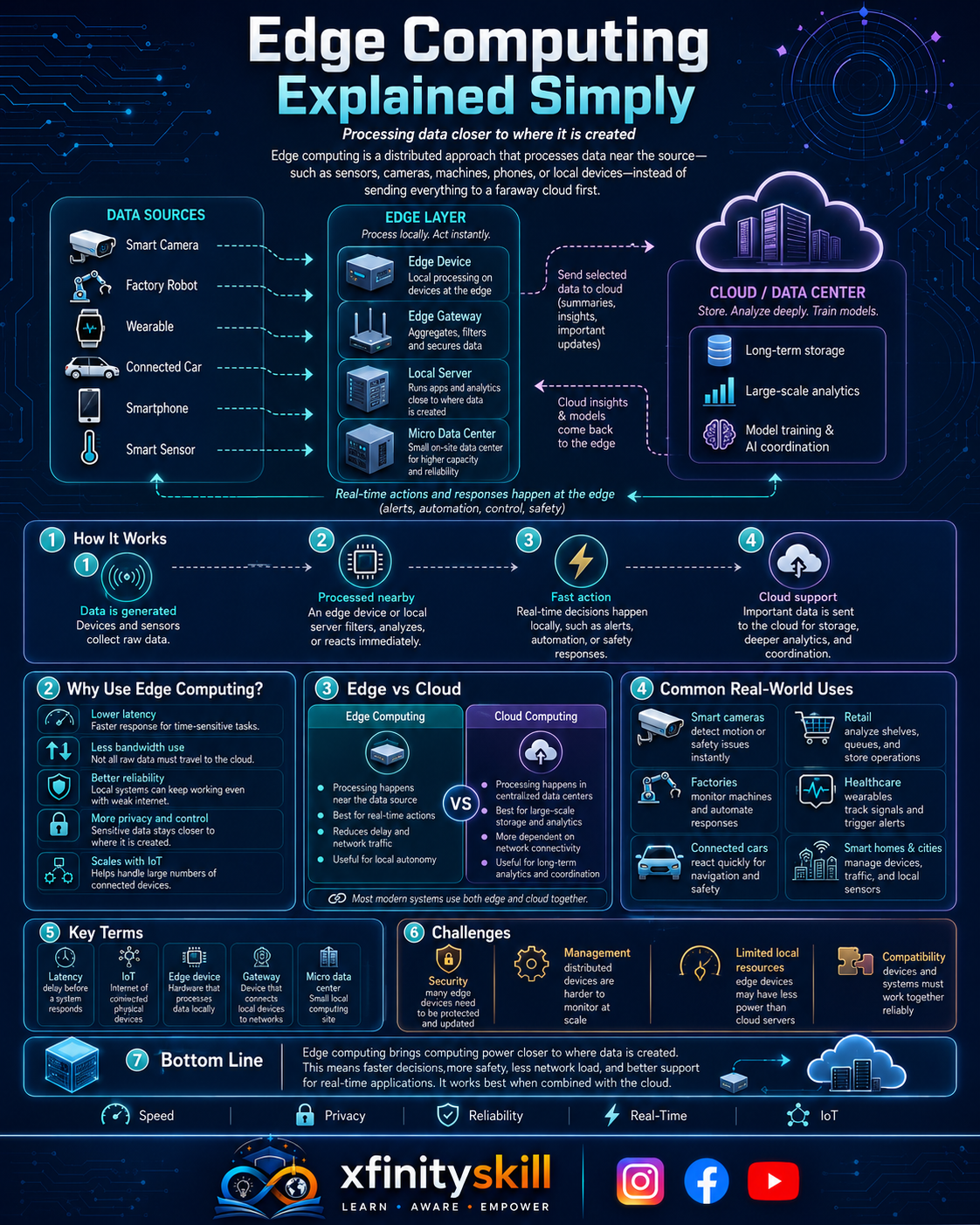
Edge computing is a transformative technology that brings data processing closer to the source of data generation. Instead of relying solely on centralized data centers, edge computing allows for data to be processed at the “edge” of the network, which can be devices like IoT sensors, smartphones, or local servers. This approach significantly reduces latency, enhances speed, and improves the overall efficiency of data handling.
One of the key benefits of edge computing is its ability to handle large volumes of data in real-time. For instance, in smart cities, traffic cameras can analyze data on-site to manage traffic flow without needing to send all the information back to a central server. This not only speeds up decision-making but also reduces bandwidth usage and costs.
Moreover, edge computing enhances security and privacy. By processing data locally, sensitive information can be kept closer to its source, minimizing the risk of exposure during transmission. This is particularly important in sectors like healthcare, where patient data must be handled with utmost care.
In summary, edge computing is about decentralizing data processing to improve speed, efficiency, and security. As the demand for real-time data processing continues to grow, edge computing is becoming an essential component of modern technology infrastructure.