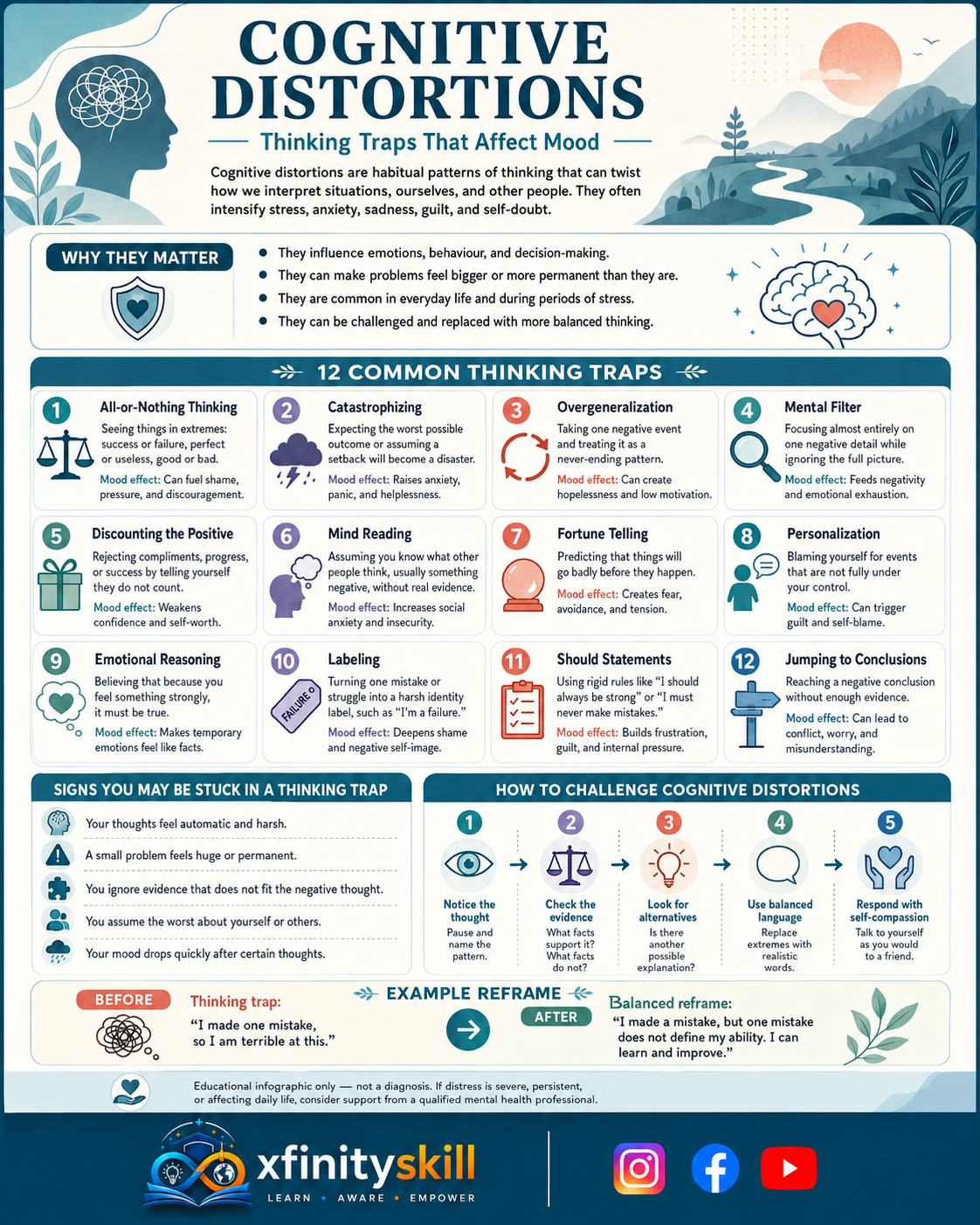
Cognitive distortions are patterns of negative thinking that can significantly impact our mood and overall mental health. These thinking traps often lead us to perceive situations in a biased or irrational way, which can exacerbate feelings of anxiety, depression, and stress. Understanding these distortions is the first step toward overcoming them.
One common cognitive distortion is all-or-nothing thinking, where individuals see situations in black-and-white terms. For example, if a person doesn’t achieve perfection in a task, they may feel like a complete failure. This type of thinking can lead to discouragement and a lack of motivation.
Another prevalent distortion is overgeneralization. This occurs when someone takes one negative experience and applies it broadly to all situations. For instance, if a person faces rejection in one job application, they might conclude that they will never be hired anywhere. This can create a cycle of hopelessness and despair.
Mental filtering is another trap, where individuals focus solely on the negative aspects of a situation while ignoring any positive elements. This selective attention can distort reality and lead to a skewed perception of events, making it difficult to appreciate the good in life.
Catastrophizing is a particularly damaging distortion, where one anticipates the worst possible outcome in any given situation. This can lead to heightened anxiety and stress, as the individual becomes consumed by fear of failure or disaster.
To combat these cognitive distortions, it’s essential to practice cognitive restructuring. This involves identifying negative thoughts, challenging their validity, and replacing them with more balanced and realistic perspectives. Techniques such as mindfulness and journaling can also help in recognizing and reframing these thought patterns.
By becoming aware of cognitive distortions and actively working to change them, individuals can improve their mood and enhance their overall mental well-being. It’s a journey of self-discovery and growth, leading to a more positive and resilient mindset.