Grief and loss are profound experiences that can affect individuals in various ways. Understanding the emotional stages of grief can help those who are navigating these difficult times, as well as provide insight for friends and family who wish to offer support.
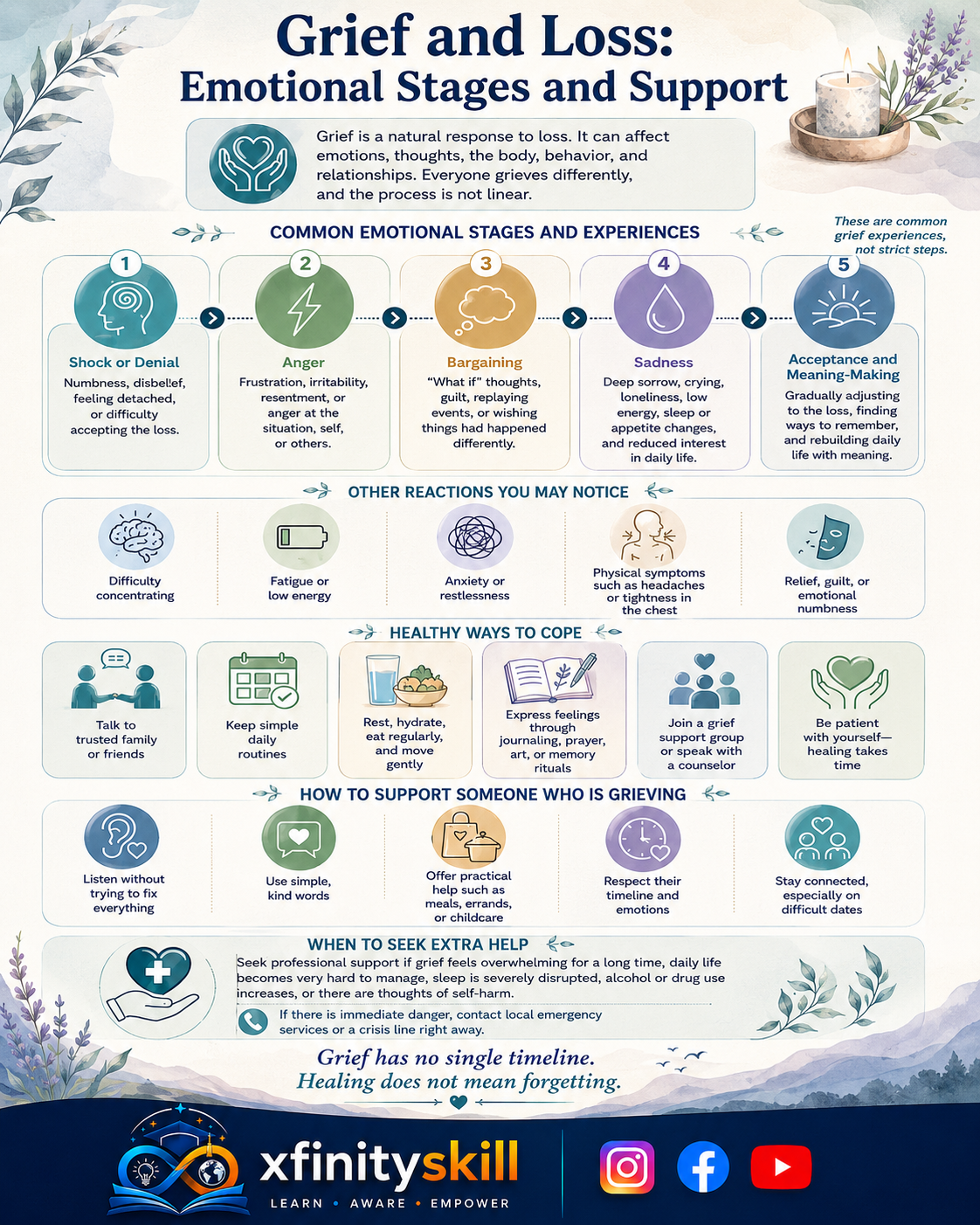
The emotional stages of grief, often referred to as the Kübler-Ross model, include denial, anger, bargaining, depression, and acceptance.
Denial is typically the first reaction. It serves as a buffer to the shock of loss, allowing individuals to process their emotions gradually. During this stage, one might feel numb or have difficulty accepting the reality of the situation.
Anger often follows denial. This stage can manifest as frustration, irritation, or even rage, directed at oneself, others, or the deceased. It’s essential to recognize that this anger is a natural part of the grieving process.
Bargaining is the stage where individuals may dwell on what could have been done differently. This can involve thoughts of “if only” or making deals with a higher power in hopes of reversing the loss.
Depression is a more profound stage where the individual may feel overwhelmed by sadness. This stage can lead to withdrawal from social interactions and a sense of hopelessness. It’s crucial to acknowledge these feelings and seek support during this time.
Finally, acceptance is the stage where individuals come to terms with their loss. This doesn’t mean that the pain is gone, but rather that they have found a way to live with it. Acceptance allows for healing and the possibility of moving forward.
Support during these stages is vital. Here are some ways to provide help:
- Listen: Sometimes, the best support is simply being there to listen without judgment.
- Encourage Expression: Encourage the grieving person to express their feelings, whether through talking, writing, or creative outlets.
- Offer Practical Help: Grieving can be exhausting. Offering to help with daily tasks can alleviate some burdens.
- Be Patient: Grief doesn’t follow a set timeline. Be patient and understanding as the individual navigates their emotions.
- Seek Professional Help: Sometimes, professional support from a therapist or counselor can provide the necessary tools to cope with grief.
In conclusion, grief and loss are complex emotional experiences that require understanding and support. By recognizing the stages of grief and offering compassionate assistance, we can help ourselves and others navigate these challenging times.