Traveling can be an exhilarating experience, but it often comes with the unwelcome companion of jet lag. This phenomenon occurs when your body’s internal clock, or circadian rhythm, is out of sync with the local time at your destination. Understanding jet lag and how to reset your body clock can significantly enhance your travel experience.
What is Jet Lag?
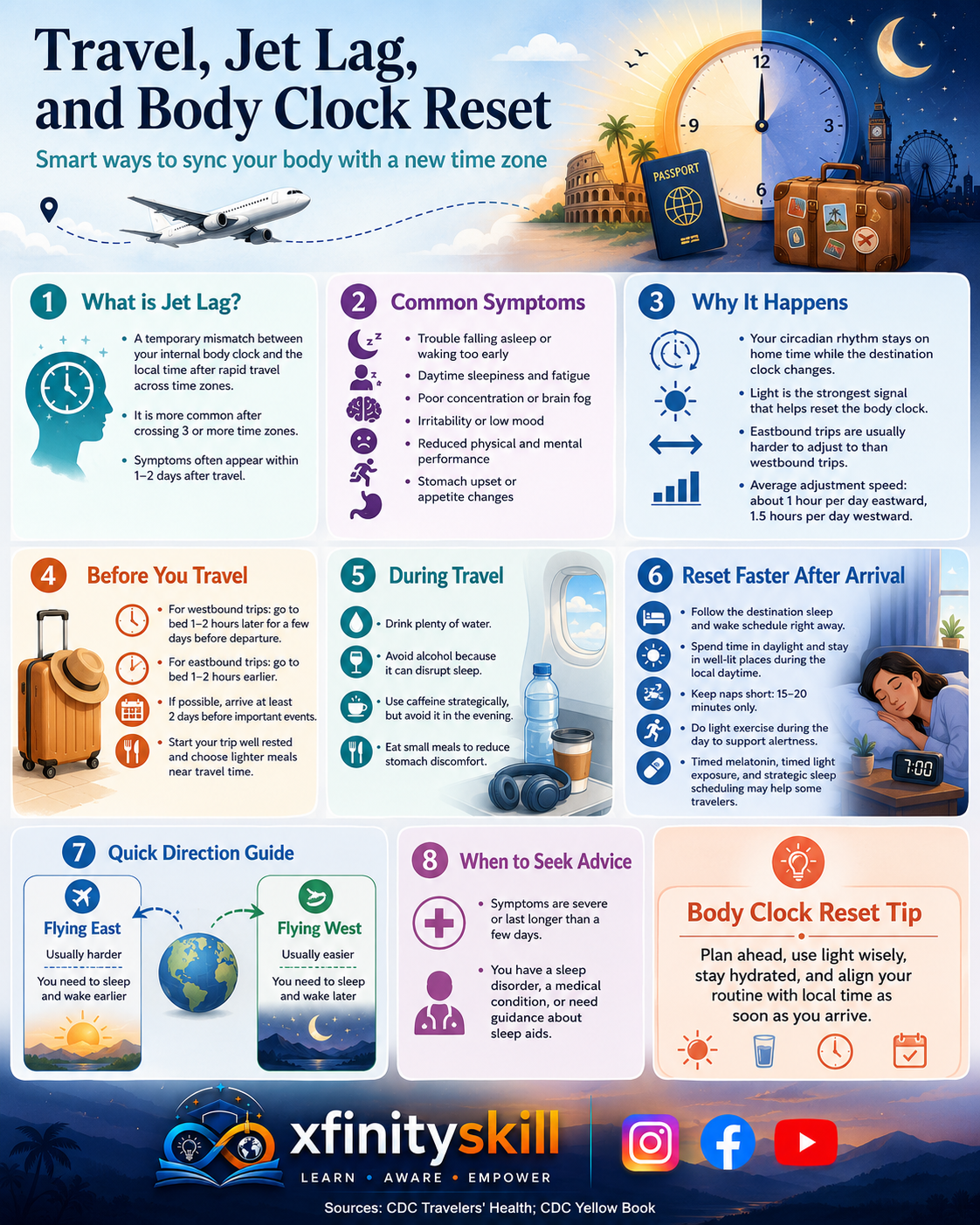
Jet lag is a temporary sleep disorder that affects travelers crossing multiple time zones. Symptoms can include fatigue, difficulty concentrating, mood changes, and digestive issues. The severity of jet lag varies depending on the number of time zones crossed and individual differences in circadian rhythm.
How Jet Lag Affects Your Body
When you travel, especially across several time zones, your body struggles to adjust to the new schedule. The internal clock regulates sleep-wake cycles, hormone release, and other bodily functions. Disruption can lead to:
- Sleep Disturbances: Difficulty falling asleep or waking up too early.
- Cognitive Impairment: Trouble focusing or remembering things.
- Mood Changes: Increased irritability or feelings of anxiety.
Tips for Resetting Your Body Clock
- Gradually Adjust Your Schedule: Before you travel, try to shift your sleeping and eating patterns closer to the time zone of your destination. This gradual adjustment can help ease the transition.
- Stay Hydrated: Drink plenty of water before, during, and after your flight. Dehydration can exacerbate the symptoms of jet lag.
- Limit Caffeine and Alcohol: Both substances can interfere with your sleep quality. It’s best to avoid them, especially in the hours leading up to your intended sleep time.
- Get Sunlight Exposure: Natural light helps regulate your circadian rhythm. Spend time outdoors during the day to help your body adjust to the new time zone.
- Use Sleep Aids Wisely: If necessary, consider using melatonin supplements to help regulate your sleep cycle. However, consult with a healthcare professional before using any sleep aids.
- Create a Comfortable Sleep Environment: Ensure your sleeping area is conducive to rest. Use earplugs, eye masks, or white noise machines to block out disturbances.
- Be Patient: It can take several days for your body to fully adjust to a new time zone. Allow yourself time to acclimate, especially if you’re traveling for an extended period.
Conclusion
Jet lag can be a challenging aspect of travel, but with the right strategies, you can minimize its impact and enjoy your journey to the fullest. By understanding how jet lag affects your body and implementing effective techniques to reset your body clock, you can make your travel experience more enjoyable and fulfilling. Safe travels!