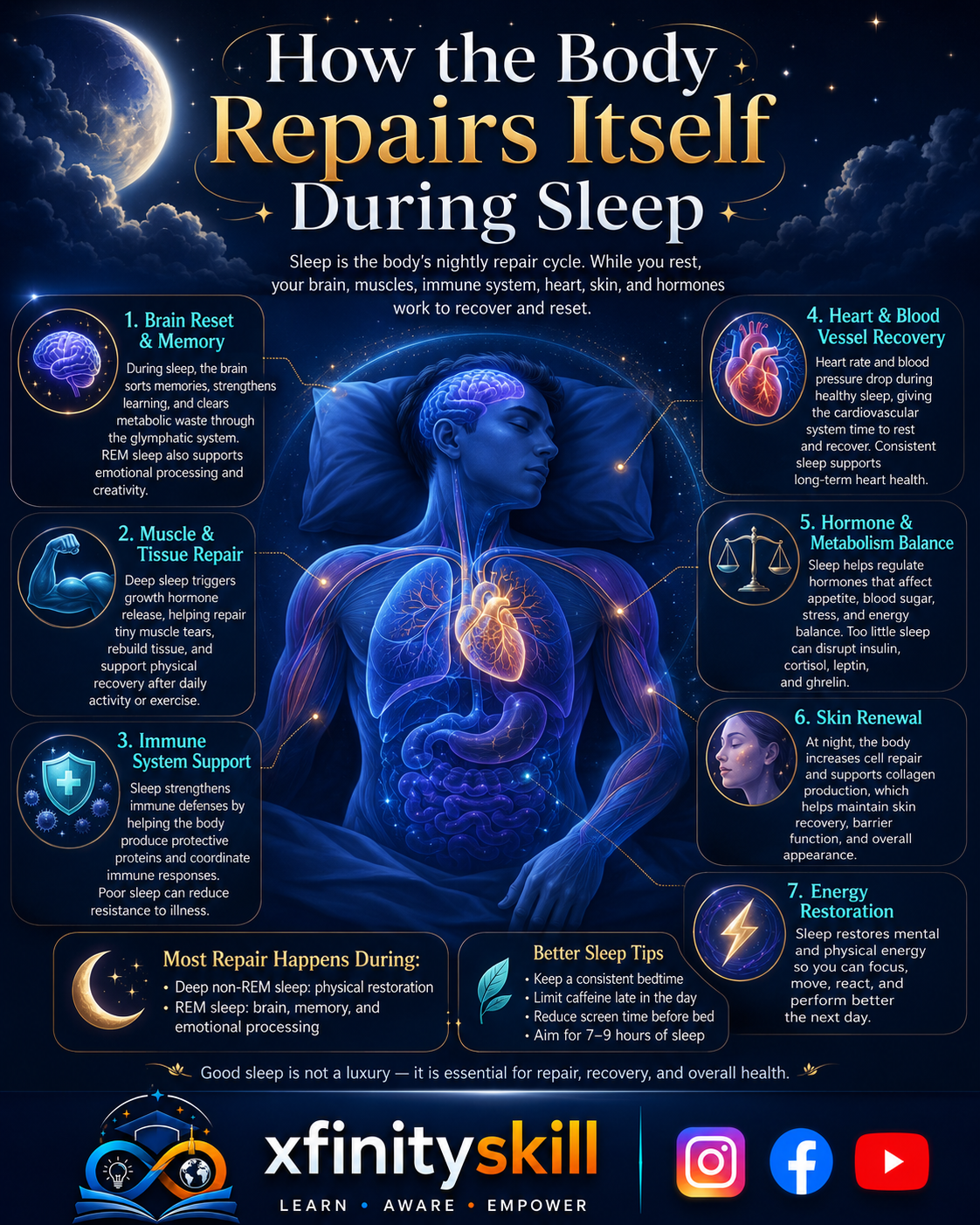
During sleep, the body undergoes a remarkable process of repair and rejuvenation, essential for maintaining overall health and well-being. Here’s how the body repairs itself during this critical time:
1. Cellular Repair and Growth
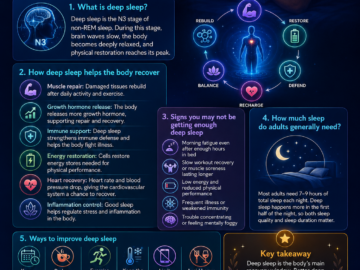
During deep sleep, the body focuses on repairing and regenerating cells. Growth hormone, which plays a key role in tissue growth and muscle repair, is released in higher quantities during this phase. This hormone aids in the recovery of muscles, bones, and other tissues, helping to heal injuries and promote overall physical health.
2. Immune System Strengthening
Sleep is vital for a robust immune system. During sleep, the body produces cytokines, proteins that help combat inflammation and infection. Adequate sleep enhances the immune response, making it easier for the body to fend off illnesses and recover from infections.
3. Brain Function and Memory Consolidation
Sleep is crucial for cognitive functions, including memory consolidation. During REM (Rapid Eye Movement) sleep, the brain processes and organizes information from the day, strengthening neural connections. This process not only aids in learning but also helps in emotional regulation, allowing the brain to recover from daily stressors.
4. Hormonal Balance
Sleep plays a significant role in regulating hormones that control appetite, stress, and metabolism. For instance, sleep deprivation can lead to an increase in ghrelin (the hunger hormone) and a decrease in leptin (the satiety hormone), which can contribute to weight gain and metabolic issues. Adequate sleep helps maintain hormonal balance, supporting overall health.
5. Detoxification
The brain has a unique system called the glymphatic system, which is more active during sleep. This system helps clear out toxins and waste products that accumulate during the day, including beta-amyloid, a protein associated with Alzheimer’s disease. By facilitating this detoxification process, sleep contributes to long-term brain health.
6. Emotional and Psychological Repair
Sleep is essential for emotional well-being. It allows the brain to process emotions and experiences, reducing stress and anxiety levels. A good night’s sleep can lead to improved mood and mental clarity, enhancing overall psychological resilience.
In summary, sleep is not merely a passive state but an active period of repair and restoration. Prioritizing quality sleep is crucial for physical health, cognitive function, and emotional balance, making it a cornerstone of a healthy lifestyle.