Composting at Home: What Goes In and What Stays Out
Composting is a fantastic way to reduce waste and create nutrient-rich soil for your garden. Understanding what materials can be composted and which should be avoided is crucial for successful home composting.
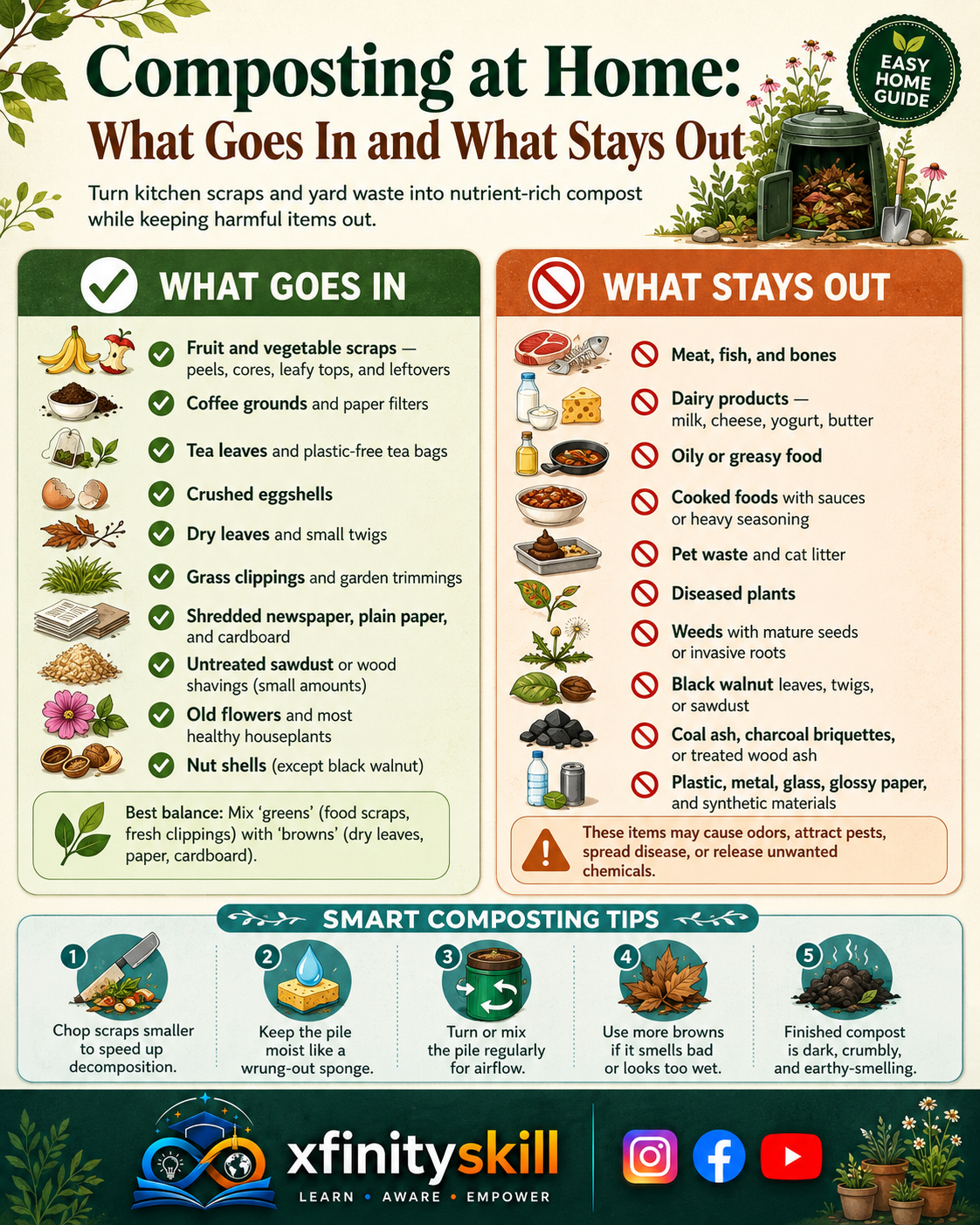
What Goes In
- Fruit and Vegetable Scraps: Leftover peels, cores, and other scraps from fruits and vegetables are excellent compost materials. They break down quickly and add valuable nutrients.
- Coffee Grounds and Filters: Used coffee grounds are rich in nitrogen and can enhance the compost’s nutrient content. Just be sure to include the paper filters as well.
- Eggshells: Crushed eggshells provide calcium, which is beneficial for plant growth. Rinse them to remove any residue before adding them to your compost.
- Grass Clippings: Fresh grass clippings are a great source of nitrogen. However, avoid adding too many at once to prevent clumping.
- Leaves and Yard Waste: Dry leaves, small branches, and other yard debris can be composted. They add carbon to the mix, balancing the nitrogen-rich materials.
- Shredded Paper and Cardboard: Non-glossy paper and cardboard can be composted in moderation. They help aerate the compost pile and provide carbon.
What Stays Out
- Meat and Dairy Products: These can attract pests and create odors, making them unsuitable for home composting.
- Oils and Fats: Similar to meat, oils can lead to unpleasant smells and attract unwanted animals.
- Diseased Plants: Composting diseased plants can spread pathogens. It’s best to dispose of them in the trash.
- Weeds with Seeds: Weeds can survive the composting process and re-emerge in your garden, so it’s wise to avoid composting them.
- Pet Waste: Dog or cat feces can contain harmful pathogens and should not be included in your compost.
- Synthetic Materials: Avoid composting anything that is not biodegradable, such as plastic, metal, or glass.
Tips for Successful Composting
- Balance Green and Brown Materials: Aim for a mix of nitrogen-rich (green) and carbon-rich (brown) materials for optimal decomposition.
- Aerate Your Pile: Turn your compost regularly to provide oxygen, which helps speed up the decomposition process.
- Monitor Moisture Levels: Your compost should be moist but not soggy. If it’s too dry, add water; if too wet, add more brown materials.
By following these guidelines, you can create a thriving compost system at home, turning kitchen scraps and yard waste into valuable compost for your garden. Happy composting!