Sustainable shopping means buying thoughtfully, reducing waste, choosing durable products, and avoiding misleading “green” claims. The most responsible purchase is often the one you do not need to make, because reducing and reusing usually prevents waste before recycling becomes necessary. The U.S. EPA recommends thinking green before shopping, buying used items, reusing bags and containers, and reducing food waste by buying only what you need.
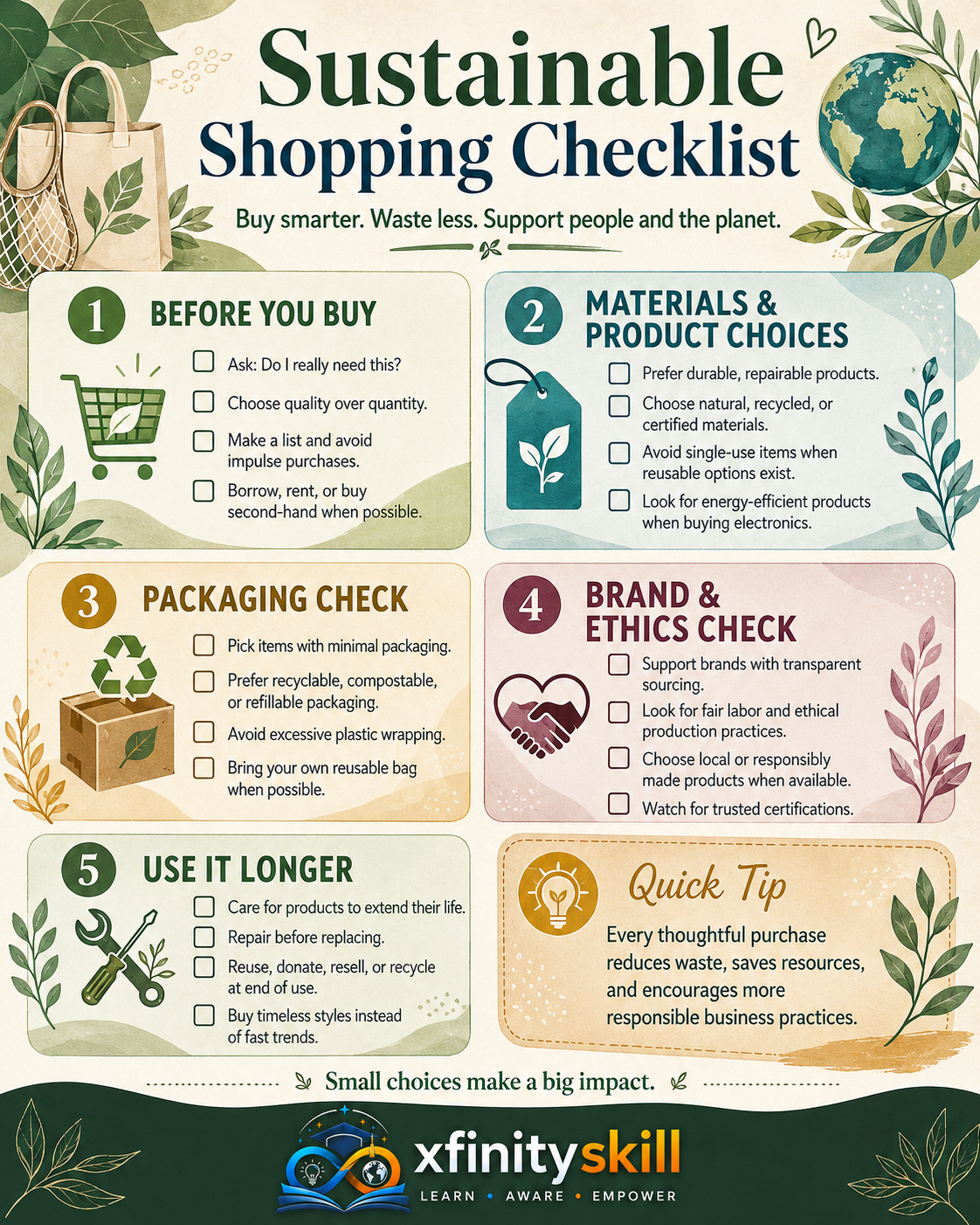
- Ask: “Do I really need this?”
Before buying, pause and check whether the item is necessary, useful, and long-lasting. Avoid impulse buying, because overconsumption increases resource use, packaging waste, and landfill pressure. UNEP connects unsustainable consumption and production with climate change, nature loss, pollution, and waste.
- Choose quality over quantity
Buy fewer items, but choose products that are durable, repairable, and reusable. A product that lasts longer usually reduces repeated purchasing and waste. Look for strong materials, replaceable parts, repair options, and simple designs that will not go out of use quickly.
- Reuse, repair, or buy second-hand first
Before buying new, consider whether you can repair what you already own, borrow it, rent it, or buy it second-hand. Reusing products such as clothing, bags, and containers helps prevent waste and reduces the need for new resources.
- Check for trustworthy labels
Look for credible certifications or labels that are clear and verifiable. For appliances and electronics, ENERGY STAR-certified products meet strict energy-efficiency specifications set by the U.S. EPA, helping reduce energy use and save money.
- Avoid vague greenwashing words
Be careful with words like “eco-friendly,” “natural,” “green,” or “sustainable” when there is no proof. The FTC Green Guides are designed to help prevent misleading environmental marketing claims, so a good claim should be specific, truthful, and supported by evidence.
- Choose less packaging
Pick products with minimal, recyclable, refillable, or reusable packaging. Avoid unnecessary single-use packaging when a lower-waste option is available. Bringing your own reusable bag, bottle, or container can reduce everyday waste.
- Buy local and seasonal when possible
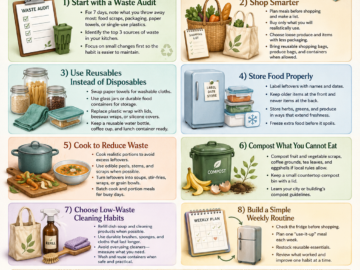
For food, local and seasonal choices may reduce transportation needs and support nearby producers. Also, plan meals before shopping to avoid buying too much. Food waste wastes the land, water, energy, and labour used to produce food; EPA notes that reducing food waste can reduce greenhouse gas emissions and conserve resources.
- Choose energy-efficient products
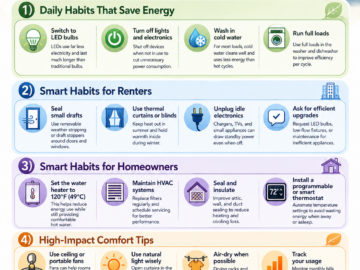
When buying appliances, lighting, electronics, or heating and cooling products, compare energy use, not just price. Energy-efficient products may cost less over time because they use less electricity or fuel. ENERGY STAR provides product categories and guidance for choosing certified efficient products.
- Think about the full life cycle
A sustainable product is not only about how it looks in the store. Consider how materials are sourced, how the product is made, how long it will last, how it is used, and what happens when it is thrown away. UNEP recommends “life cycle thinking,” which considers impacts from resource extraction through production, use, disposal, and reuse.
- Dispose responsibly
When the product reaches the end of its life, donate, resell, recycle, compost, or dispose of it properly. Recycling is helpful, but it should come after reducing and reusing. The best checklist order is: Refuse what you do not need, reduce what you buy, reuse what you can, repair when possible, recycle correctly, and dispose safely.
Final Takeaway
Sustainable shopping is not about buying perfect products. It is about making better choices more often: buy less, choose well, use longer, avoid waste, and look for proof behind green claims.