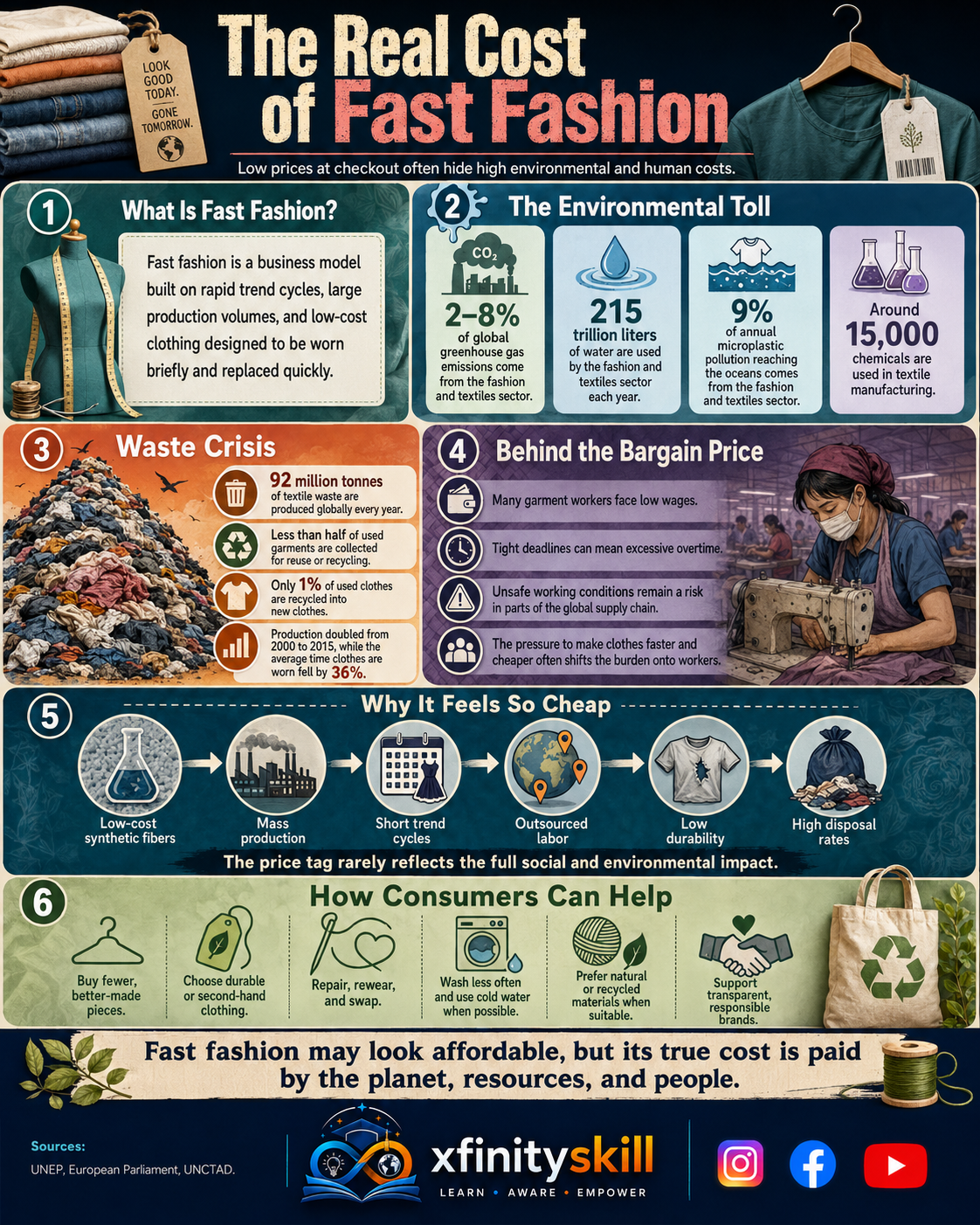
Fast fashion looks affordable at the checkout, but its real cost is paid by the environment, garment workers, and even consumers themselves. It is built on a simple model: produce clothing quickly, sell it cheaply, and encourage people to buy more often. While this makes fashion feel accessible, it also creates a cycle of overproduction, overconsumption, waste, pollution, and pressure on workers.
One major cost is environmental damage. The textile and fashion industry uses huge amounts of water, energy, chemicals, and raw materials. According to UNEP, the textile industry contributes an estimated 2% to 8% of global greenhouse gas emissions and has a major water and chemical footprint. Dyeing and finishing fabrics can also pollute water systems, especially when wastewater is not properly treated. Synthetic fabrics such as polyester can release microplastic fibres during washing, adding to plastic pollution in rivers and oceans.
Fast fashion also creates a serious waste problem. Clothes are often designed to be cheap and trendy rather than durable. As a result, many items are worn only a few times before being thrown away. When clothing is made from mixed fibres, poor-quality materials, or synthetic textiles, it becomes harder to recycle. Much of it ends up in landfills, is burned, or is exported as second-hand waste to other countries.
The human cost is just as important. The garment industry provides jobs for millions of people, especially women, but many workers face low wages, long hours, unsafe conditions, and limited protection. The pressure to produce clothing quickly and cheaply often pushes risk down the supply chain, where workers have the least power. A very low price tag can hide the real labour behind the product.
There is also a consumer cost. Fast fashion encourages impulse buying and the idea that clothing is disposable. People may spend less on each item but buy more overall. This can lead to clutter, wasted money, and a weaker connection to quality, repair, and mindful consumption.
The solution is not to blame individual shoppers. Many people choose fast fashion because it is affordable and available. Real change needs responsibility from brands, governments, and consumers together. Brands must design better-quality clothing, reduce overproduction, pay fair wages, and improve transparency. Governments can create stronger rules for textile waste, worker protection, and environmental responsibility. Consumers can help by buying less, choosing better-quality items, repairing clothes, swapping, thrifting, and asking brands for honest information.
The real cost of fast fashion is much bigger than the price on the tag. A cheap shirt may cost only a few dollars, but behind it may be polluted water, carbon emissions, textile waste, and unfair labour conditions. Choosing slower, more thoughtful fashion is not just about style — it is about protecting people, the planet, and our future.