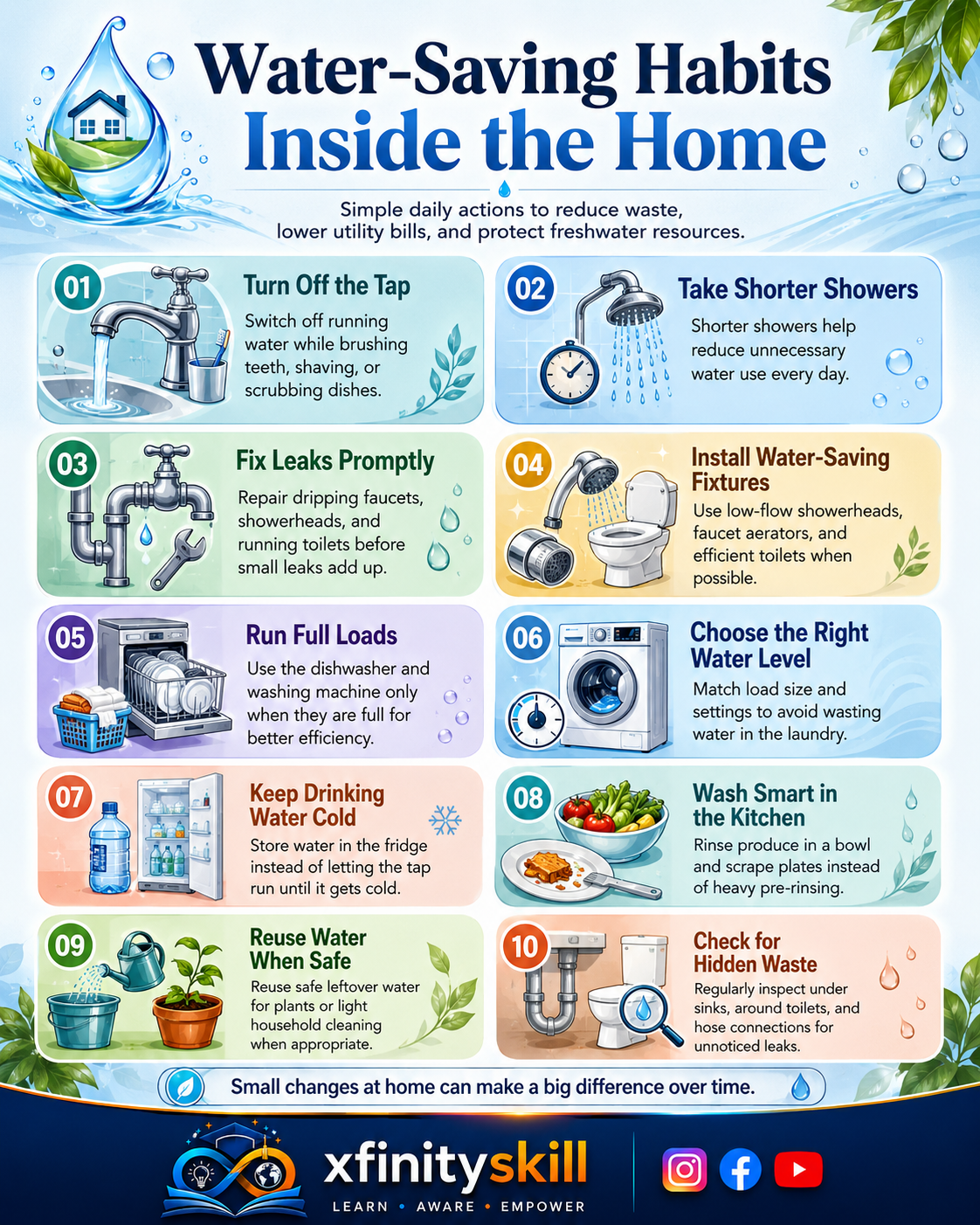
Saving water inside the home is one of the easiest ways to protect natural resources, reduce utility bills, and lower energy use. A large amount of household water is used indoors for toilets, showers, faucets, laundry, and dishwashing. The U.S. Environmental Protection Agency notes that indoor water use is a major part of household water consumption, and WaterSense-labeled fixtures can help families use at least 20% less water while still performing well.
- Fix Leaks Quickly
Small leaks can waste a surprising amount of water. A dripping faucet, running toilet, or leaking shower should be repaired as soon as possible. The Government of Canada recommends repairing leaks in taps and toilets as an important step during water conservation, especially when water supplies are stressed.
- Turn Off the Tap
Do not let the water run while brushing teeth, shaving, washing hands, or scrubbing dishes. EPA WaterSense states that turning off the tap while brushing teeth can save about 8 gallons of water per day. This simple habit costs nothing and can make a meaningful difference over time.
- Take Shorter Showers
Showers can use a lot of water, especially with older showerheads. EPA WaterSense explains that a full bathtub can require up to 70 gallons of water, while a 5-minute shower uses about 10 to 25 gallons. Natural Resources Canada also recommends installing a water-saving showerhead with a flow rate under 7.0 L/min to reduce hot water use.
- Use Water-Efficient Fixtures
Replacing old toilets, faucets, and showerheads with efficient models can reduce water use without reducing comfort. WaterSense-labeled showerheads, toilets, and faucet aerators are independently certified to use at least 20% less water and perform as well as or better than standard models. Natural Resources Canada recommends low-flow toilets that use 4.8 litres or less per flush and faucet aerators that deliver less than 4.7 L/min.
- Wash Full Loads Only
Run the washing machine and dishwasher only when they are full, or use the correct load-size setting when a smaller load is necessary. EPA WaterSense recommends washing only full laundry loads or choosing the appropriate water level. When replacing a clothes washer, ENERGY STAR certified models can use about 30% less water than standard models.
- Use the Dishwasher Wisely
Modern dishwashers are designed to clean efficiently, but water is wasted when they are run half-empty. Scrape food from plates instead of rinsing them under running water for a long time. Running full loads and using efficient settings can reduce both water and energy use.
- Keep Drinking Water in the Fridge
Instead of running the tap until the water becomes cold, keep a jug or bottle of drinking water in the refrigerator. This avoids wasting clean water down the drain and makes cold water available anytime.
- Reuse Water When Safe
Some indoor water can be reused for simple household purposes. For example, water used to rinse fruits and vegetables can be collected in a bowl and used for houseplants. This habit encourages mindful water use without requiring expensive tools.
- Choose Efficient Appliances
When buying a new washing machine or dishwasher, look for water- and energy-efficient models. Efficient appliances reduce water waste and can also lower energy costs because less hot water is needed. EPA WaterSense recommends ENERGY STAR certified clothes washers as a smart option for reducing water use.
- Build a Daily Water-Saving Mindset
Water conservation is most effective when it becomes a daily habit. Simple actions such as turning off taps, fixing leaks, taking shorter showers, using full loads, and choosing efficient fixtures can add up to major savings. The goal is not to stop using water, but to use it wisely, respectfully, and responsibly.
Key Message
Water-saving habits inside the home are simple, affordable, and powerful. Every drop saved helps protect freshwater resources, lower household costs, and build a more sustainable future.