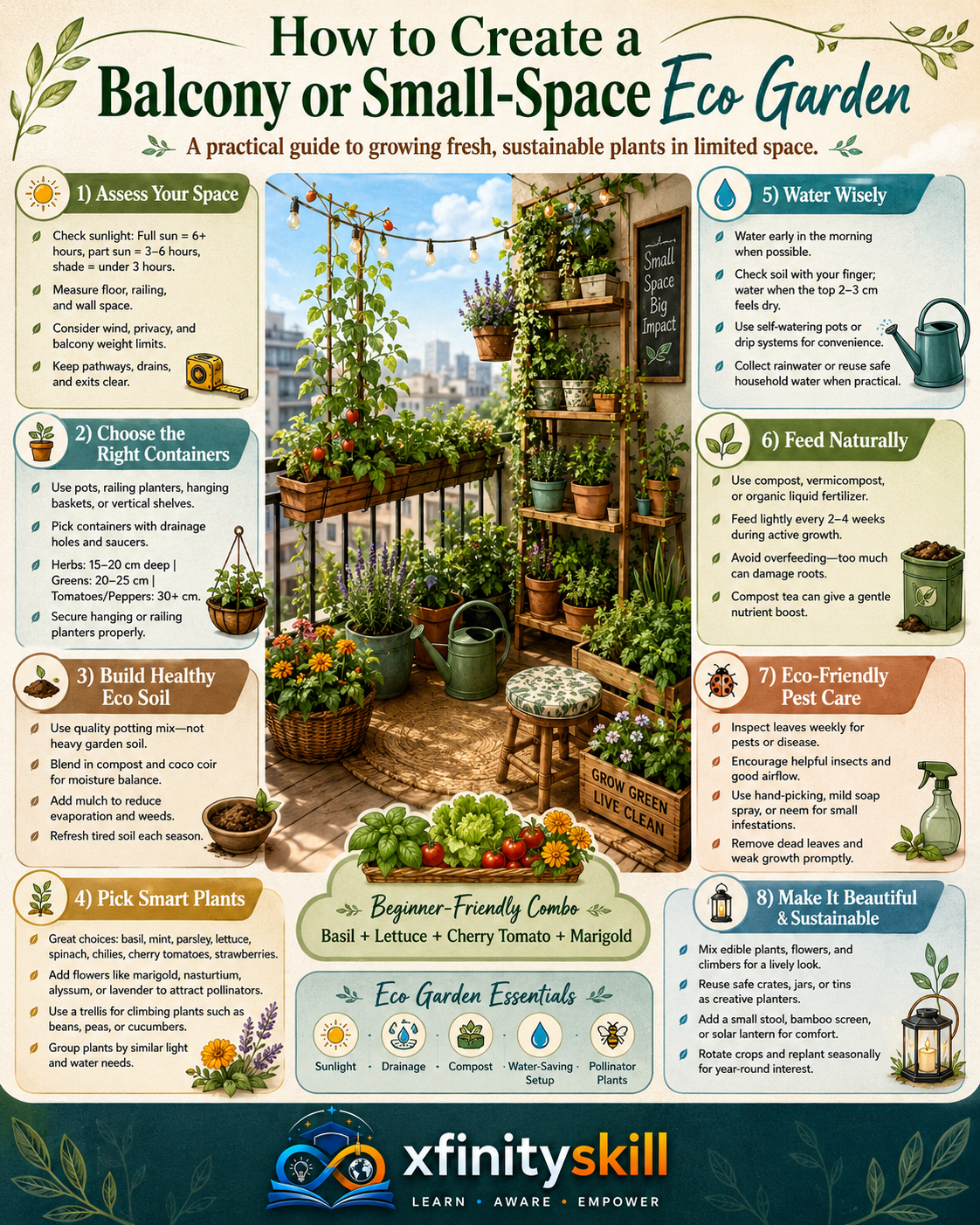
How to Create a Balcony or Small-Space Eco Garden
A balcony or small-space eco garden is a simple way to bring nature into an urban home while supporting a healthier environment. Even a small balcony, patio, windowsill, or corner space can become a productive green area when it is planned carefully. The goal is not only to grow plants but also to use space, water, soil, and materials responsibly.
1. Understand Your Space First
Before buying plants or containers, observe your balcony or small area for a few days. Notice how much sunlight it receives, how windy it is, and how much weight the space can safely hold. Many vegetables, herbs, and flowering plants need around six hours of sunlight each day, but some plants can grow in partial shade.
Also, check whether your balcony has strong wind. Wind can dry out soil quickly and damage delicate plants. A small trellis, screen, railing cover, or group of taller plants can help create protection.
2. Choose the Right Containers
Containers are the foundation of a small-space garden. Use pots, hanging baskets, railing planters, vertical shelves, grow bags, or recycled containers. However, every container must have proper drainage holes. Without drainage, water can collect at the bottom and damage plant roots.
Choose containers based on the plant’s root size. Herbs and lettuce can grow in smaller pots, while tomatoes, peppers, cucumbers, and dwarf fruit plants need deeper containers. Reusing old buckets, wooden boxes, or safe household containers is eco-friendly, but they should be clean, sturdy, and safe for planting.
3. Use Good Potting Mix, Not Heavy Garden Soil
For balcony gardening, regular garden soil is usually too heavy and compact. It may not drain well in pots and can reduce oxygen around the roots. A light potting mix is better because it holds moisture while still allowing air and drainage.
For a more eco-friendly option, look for peat-free or reduced-peat potting mixes where available. You can also improve soil health by adding finished compost in small amounts. Compost helps soil retain moisture and nutrients and can reduce the need for chemical fertilizers.
4. Select Plants That Fit Small Spaces
The best balcony garden plants are compact, productive, and suitable for containers. Good choices include:
Herbs: basil, mint, parsley, cilantro, thyme, oregano, chives
Leafy greens: lettuce, spinach, kale, Swiss chard
Vegetables: cherry tomatoes, peppers, radishes, beans, dwarf cucumbers
Flowers: marigolds, nasturtiums, calendula, lavender, pansies
Pollinator plants: native flowers, herbs with blooms, and nectar-rich plants
For food plants, choose “dwarf,” “bush,” or “patio” varieties because they are bred to grow well in containers. Start small with a few easy plants, then expand as you gain confidence.
5. Grow Vertically to Save Space
Small-space gardening works best when you use height, not just floor area. Vertical gardening allows you to grow more plants without overcrowding the balcony. You can use plant stands, wall shelves, hanging baskets, railing planters, trellises, or stackable pots.
Climbing plants such as beans, peas, small cucumbers, and some flowering vines can grow upward with support. Hanging baskets are useful for strawberries, trailing herbs, and flowers.
6. Water Wisely
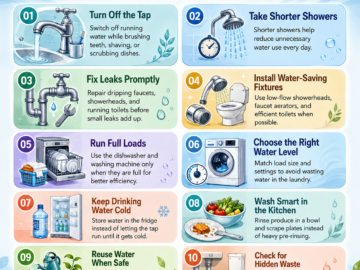
Container plants dry out faster than plants in the ground, especially during hot or windy weather. Check the soil regularly by touching the top inch. If it feels dry, water deeply until water drains from the bottom.
To save water, water early in the morning or in the evening, group plants with similar water needs together, and use mulch on top of the soil. Self-watering pots can also help reduce waste and keep moisture steady.
7. Feed Plants Naturally
Plants in containers use up nutrients faster because they have limited soil. Use compost, organic liquid fertilizer, or slow-release natural fertilizer when needed. Avoid overfeeding, because too much fertilizer can harm plants and may wash excess nutrients away with drainage water.
A healthy eco garden focuses on building good soil, not forcing fast growth.
8. Support Pollinators and Biodiversity
Even a small balcony can help bees, butterflies, and other pollinators. Choose nectar-rich flowers and native plants when possible. Plant a mix of flowers that bloom at different times so pollinators can find food throughout the growing season.
Avoid pesticides whenever possible. Many pests can be controlled by hand-picking, washing leaves with water, improving airflow, or attracting beneficial insects. A small shallow water dish with stones can also support pollinators safely.
9. Reduce Waste and Reuse Materials
An eco garden should reduce waste wherever possible. Reuse containers, trays, jars, wooden crates, and old shelves if they are safe and clean. Collect rainwater where allowed and practical. Compost fruit and vegetable scraps through a small compost bin, worm bin, or municipal green-bin program.
Do not overbuy plants or supplies. A small, healthy garden is better than an overcrowded one.
10. Maintain the Garden Regularly
A balcony garden needs small but regular care. Remove dead leaves, trim herbs often, rotate pots for even sunlight, check for pests, and clean fallen soil or water from the balcony floor. Regular care keeps the space healthy, attractive, and safe.
Conclusion
Creating a balcony or small-space eco garden is about making smart, sustainable choices. With the right containers, light potting mix, careful watering, compact plants, vertical growing, and pollinator-friendly flowers, even a tiny space can become a peaceful green corner. It can provide fresh herbs, vegetables, flowers, and emotional relaxation while also supporting the environment.