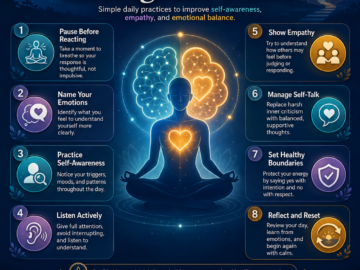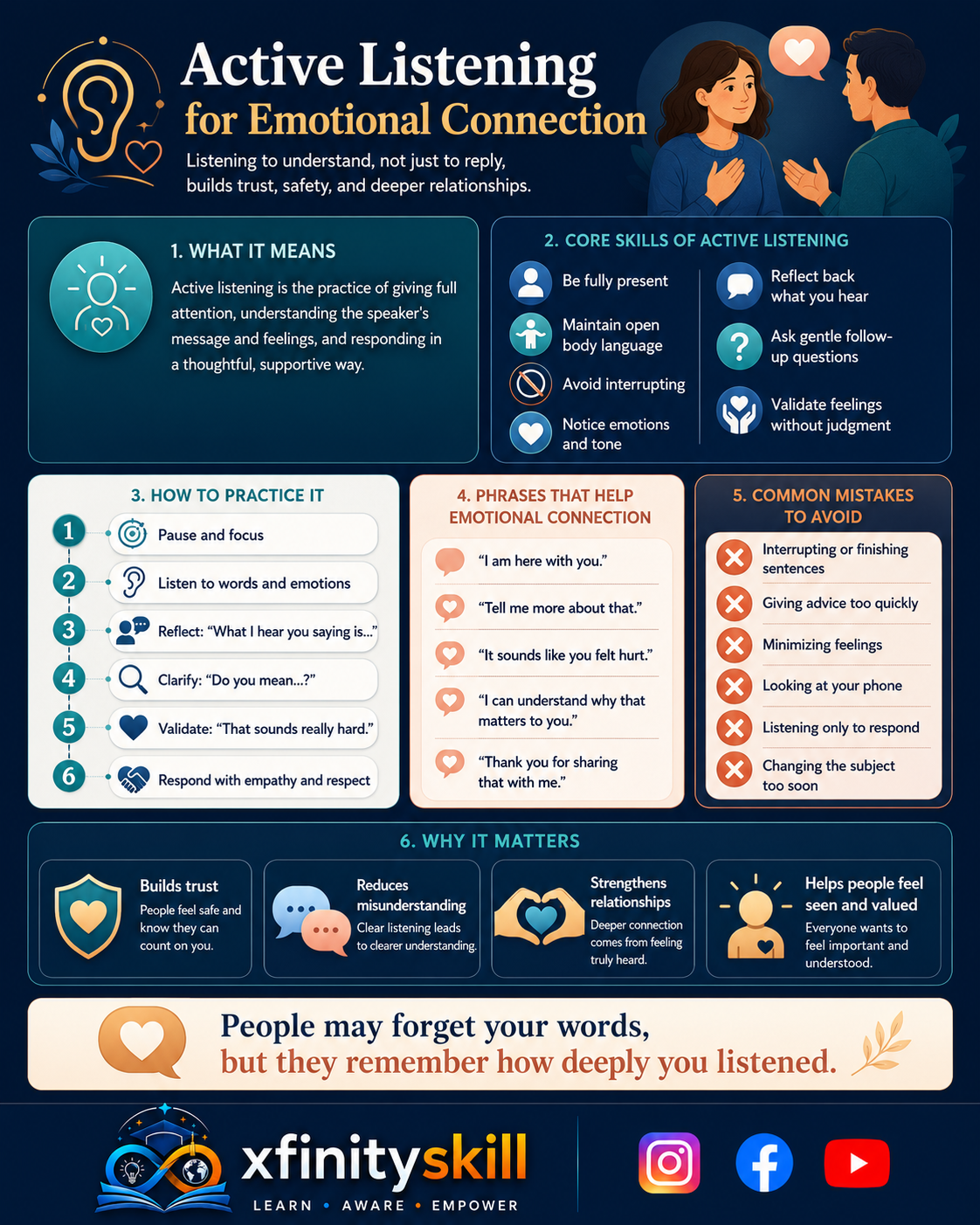
Active listening is a powerful tool for fostering emotional connections in our relationships. It goes beyond simply hearing the words spoken; it involves fully engaging with the speaker, understanding their feelings, and responding thoughtfully. Here are some key aspects of active listening that can enhance emotional connections:
- Presence: Being fully present in the moment is crucial. Put away distractions, maintain eye contact, and show that you are genuinely interested in what the other person is saying.
- Empathy: Try to understand the speaker’s emotions and perspective. Acknowledge their feelings by reflecting back what you hear, which can help them feel validated and understood.
- Open-Ended Questions: Encourage deeper conversation by asking open-ended questions. This invites the speaker to share more about their thoughts and feelings, fostering a richer dialogue.
- Nonverbal Cues: Pay attention to body language, facial expressions, and tone of voice. These nonverbal signals can provide additional context to the speaker’s words and enhance your understanding.
- Clarification: If something is unclear, don’t hesitate to ask for clarification. This shows that you are engaged and want to fully understand their message.
- Summarization: Periodically summarize what the speaker has said to confirm your understanding. This not only reinforces your attentiveness but also allows the speaker to correct any misunderstandings.
- Avoiding Judgment: Create a safe space for open communication by withholding judgment. This encourages honesty and vulnerability, which are essential for emotional connection.
By practicing active listening, we can build stronger, more meaningful relationships. It allows us to connect on a deeper level, fostering trust and intimacy that enrich our interactions.