Credit scores are crucial in determining an individual’s creditworthiness and can significantly impact financial opportunities. Understanding the anatomy of a credit score involves recognizing the key components that build or damage it.
Key Components of a Credit Score
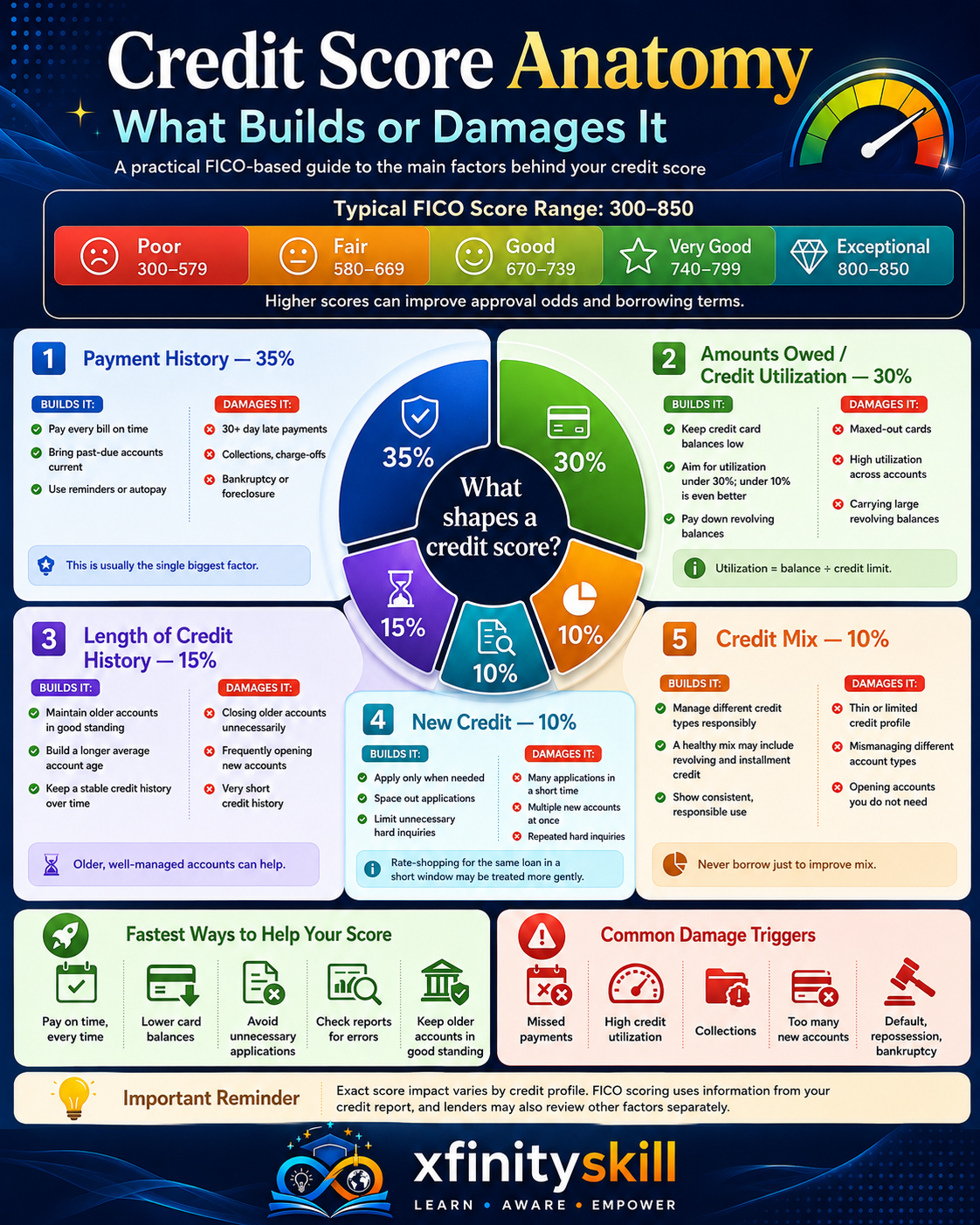
- Payment History (35%)
This is the most significant factor in your credit score. It reflects whether you have paid your past credit accounts on time. Late payments, defaults, and bankruptcies can severely damage your score. - Credit Utilization (30%)
This measures the amount of credit you are using compared to your total available credit. A lower utilization ratio (ideally below 30%) indicates responsible credit management and can positively influence your score. - Length of Credit History (15%)
A longer credit history can be beneficial. It shows lenders that you have experience managing credit. New accounts can lower the average age of your credit history, which may negatively impact your score. - Types of Credit (10%)
Having a mix of credit types—such as credit cards, mortgages, and installment loans—can be advantageous. It demonstrates your ability to manage different forms of credit responsibly. - New Credit Inquiries (10%)
Each time you apply for credit, a hard inquiry is made, which can temporarily lower your score. Multiple inquiries in a short period can signal risk to lenders.
Factors That Damage Your Credit Score
- Late Payments: Missing payments can lead to significant drops in your score.
- High Credit Utilization: Using a large portion of your available credit can indicate financial distress.
- Bankruptcy or Foreclosure: These events can have long-lasting negative effects on your credit score.
- Too Many New Accounts: Opening several new accounts in a short time can raise red flags for lenders.
Building a Healthy Credit Score
To build and maintain a healthy credit score, consider the following strategies:
- Pay Bills on Time: Set up reminders or automatic payments to ensure you never miss a due date.
- Keep Balances Low: Aim to use less than 30% of your available credit limit.
- Avoid Opening Too Many Accounts at Once: Space out credit applications to minimize hard inquiries.
- Regularly Check Your Credit Report: Monitoring your credit report can help you identify errors or fraudulent activity that could harm your score.
Understanding the anatomy of your credit score is essential for making informed financial decisions. By focusing on the factors that build your score and avoiding those that damage it, you can improve your creditworthiness and open doors to better financial opportunities.