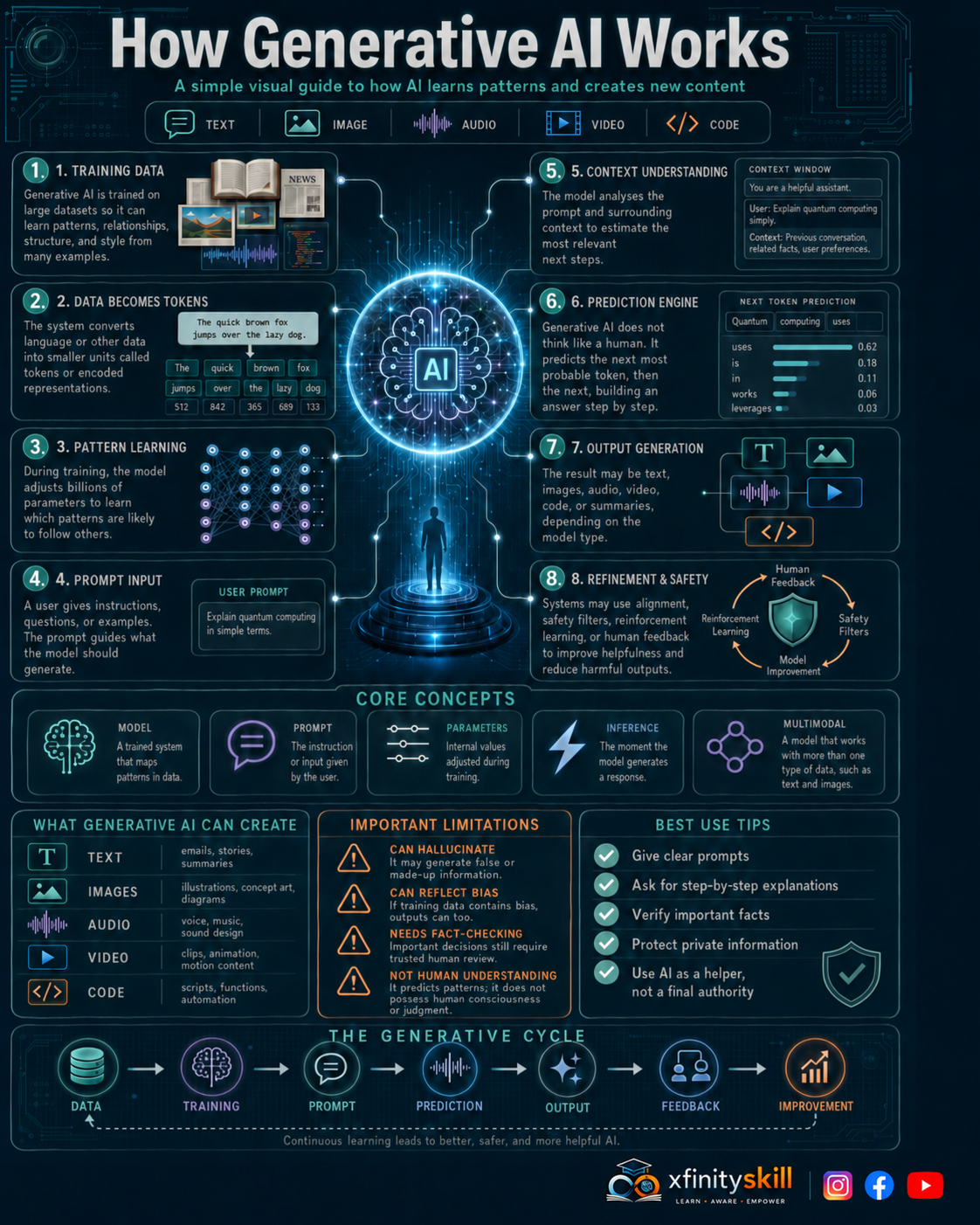
Generative AI refers to a class of artificial intelligence models that can create new content, such as text, images, music, and more, based on the data they have been trained on. These models learn patterns and structures from existing data and use that knowledge to generate original outputs.
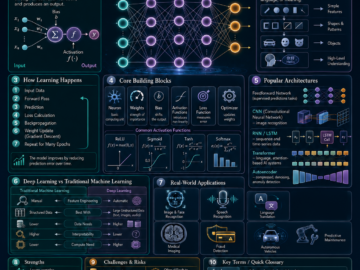
One of the most common techniques used in generative AI is deep learning, particularly through neural networks. Here’s a brief overview of how it works:
- Training Data: Generative AI models are trained on large datasets that contain examples of the type of content they are expected to generate. For instance, a model designed to create text might be trained on a vast collection of books, articles, and other written material.
- Learning Patterns: During training, the model analyzes the data to identify patterns, relationships, and structures. It learns how words, phrases, and concepts are typically used together.
- Generation Process: Once trained, the model can generate new content by sampling from the learned patterns. For example, when prompted with a specific input, the model predicts the next word or phrase based on the context it has learned.
- Fine-Tuning: Many generative models can be fine-tuned on specific datasets to improve their performance in particular domains, making them more relevant and accurate for specialized tasks.
- Applications: Generative AI has a wide range of applications, including content creation, art generation, music composition, and even coding assistance. It can be used in industries such as entertainment, marketing, and education.
Generative AI continues to evolve, with advancements leading to more sophisticated models that can produce increasingly realistic and coherent outputs.