Artificial Intelligence (AI) and human intelligence represent two distinct forms of cognitive processing, each with its own strengths and limitations.
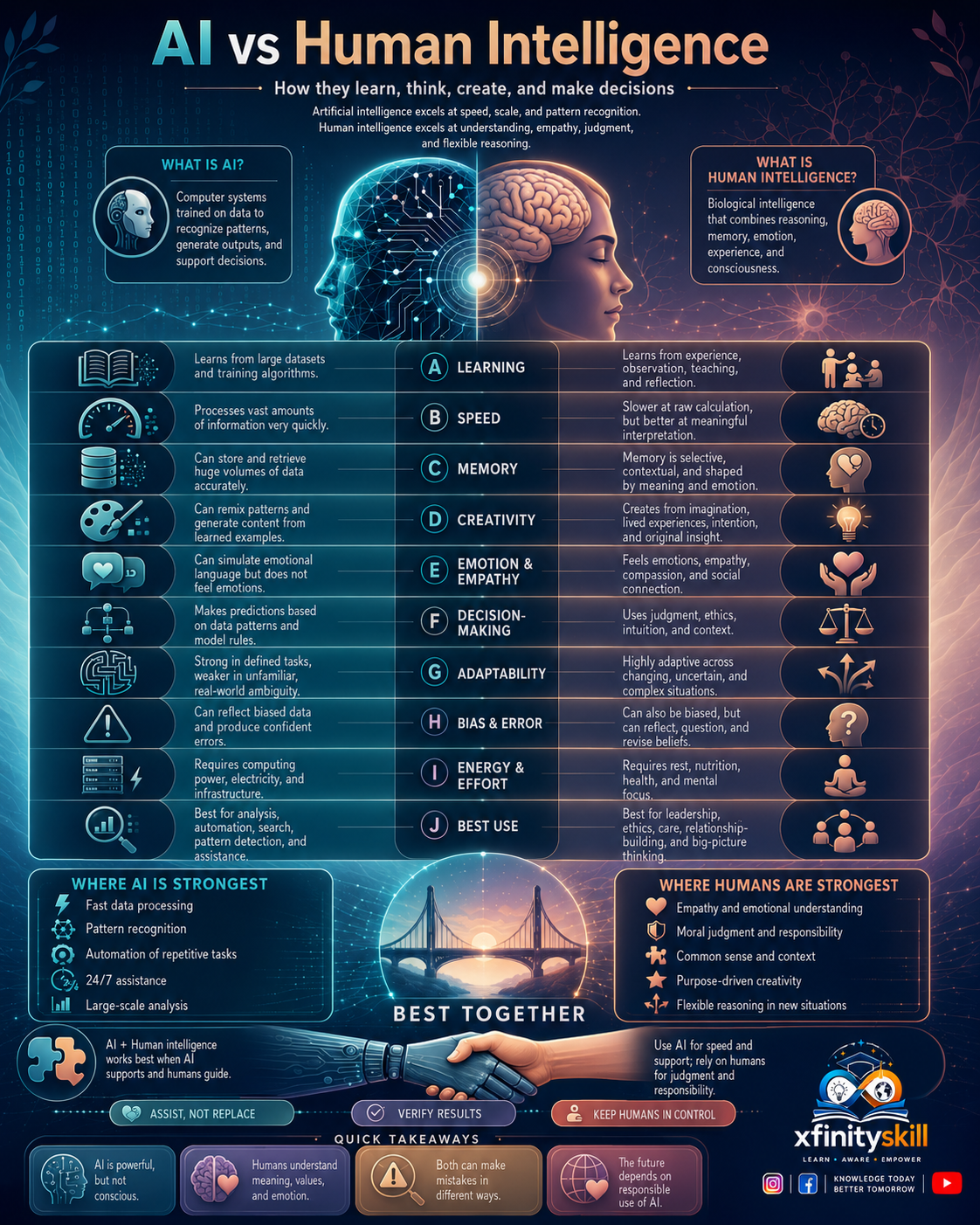
AI, driven by algorithms and vast datasets, excels in tasks that require speed, accuracy, and the ability to analyze large volumes of information. It can process data at a scale and speed that far surpasses human capabilities, making it invaluable in fields like data analysis, medical diagnostics, and automated systems. AI systems can learn from patterns and improve over time, often outperforming humans in specific tasks such as playing complex games or recognizing images.
On the other hand, human intelligence is characterized by emotional understanding, creativity, and the ability to navigate complex social interactions. Humans possess the ability to think critically, adapt to new situations, and apply knowledge in innovative ways. Emotional intelligence allows humans to empathize, communicate effectively, and build relationships, which are crucial in many aspects of life and work.
While AI can mimic certain aspects of human thought, it lacks the depth of understanding and emotional nuance that humans bring to decision-making. The interplay between AI and human intelligence is increasingly important as we integrate technology into our daily lives. The goal is not to replace human intelligence but to augment it, creating a synergy that leverages the strengths of both.
In conclusion, AI and human intelligence each have unique advantages. The future lies in collaboration, where AI enhances human capabilities, leading to innovative solutions and improved outcomes across various domains.