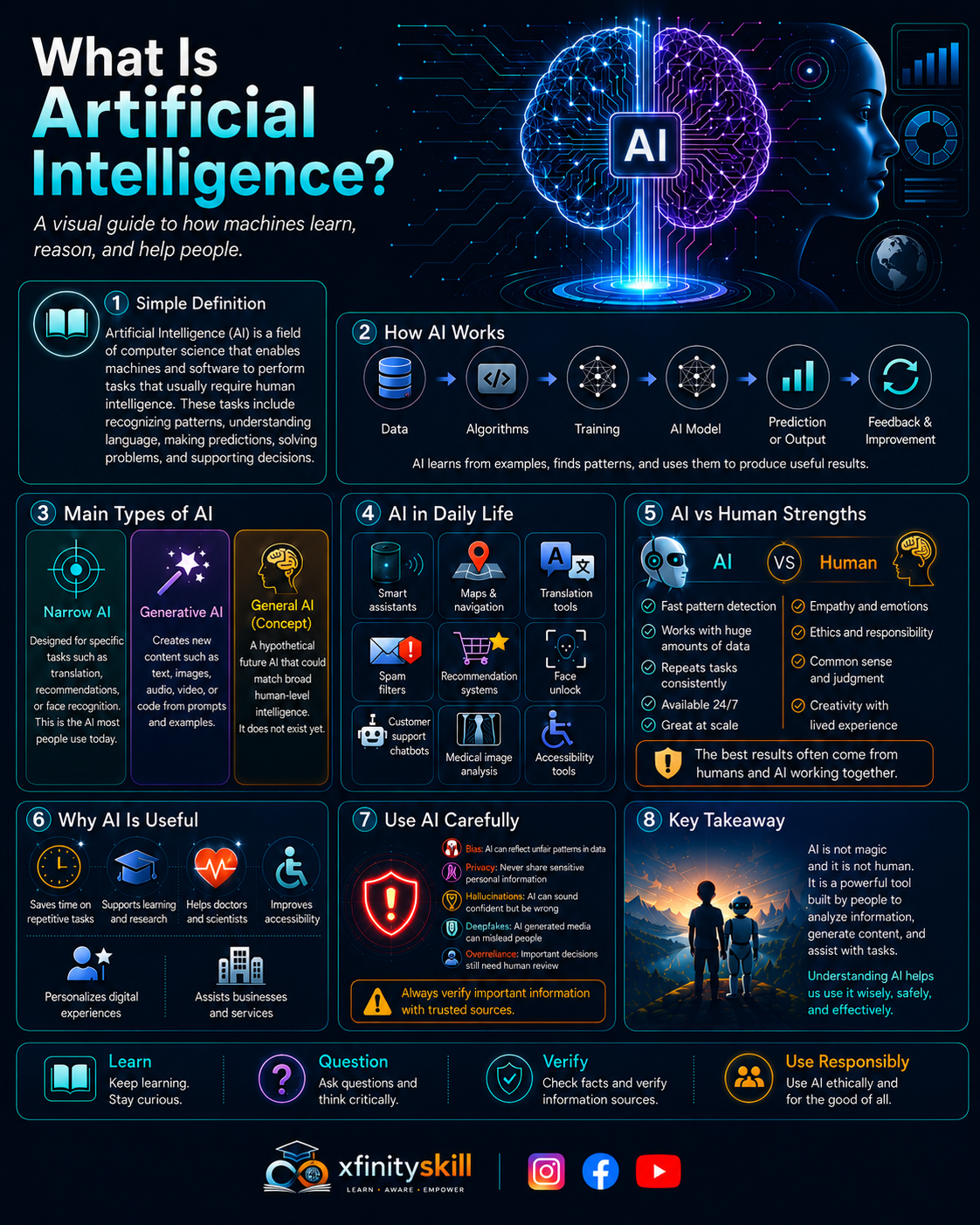
Artificial Intelligence (AI) refers to the simulation of human intelligence in machines that are programmed to think and learn like humans. It encompasses a variety of technologies and methodologies that enable computers to perform tasks that typically require human intelligence, such as understanding natural language, recognizing patterns, solving problems, and making decisions.
AI can be categorized into two main types:
- Narrow AI: This type of AI is designed to perform a specific task, such as voice recognition, image analysis, or playing chess. Narrow AI systems are highly specialized and excel in their designated functions but lack general intelligence.
- General AI: This is a theoretical form of AI that possesses the ability to understand, learn, and apply knowledge across a wide range of tasks, similar to a human being. General AI remains largely a concept and has not yet been realized.
AI technologies include machine learning, where algorithms improve through experience, and deep learning, which uses neural networks to analyze vast amounts of data. These advancements have led to significant breakthroughs in various fields, including healthcare, finance, and transportation.
The impact of AI on society is profound, offering both opportunities and challenges. While AI can enhance efficiency and productivity, it also raises ethical concerns regarding privacy, job displacement, and decision-making transparency. As AI continues to evolve, it is crucial to navigate these challenges responsibly to harness its full potential for the benefit of humanity.