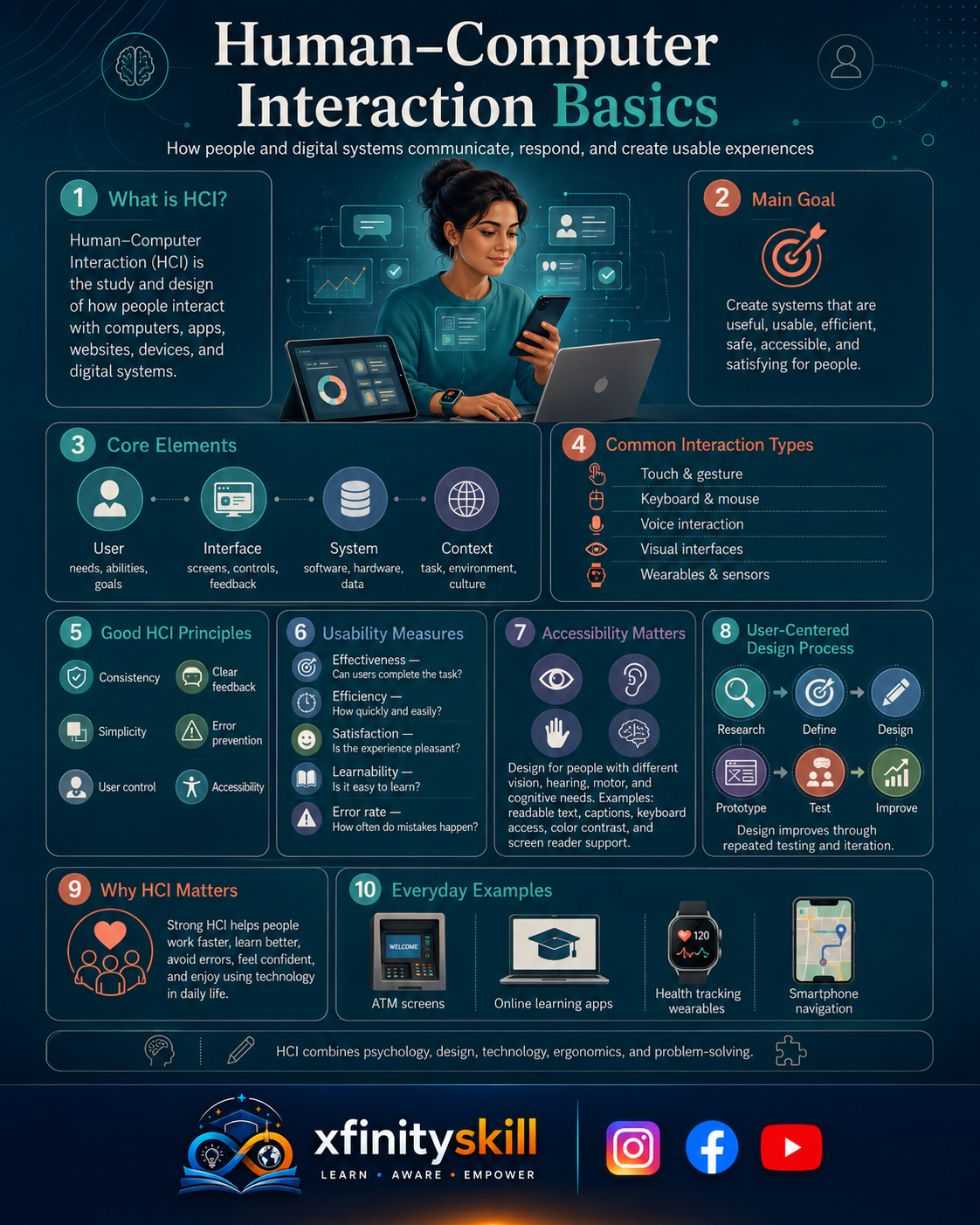
Human–Computer Interaction (HCI) is a multidisciplinary field that focuses on the design and use of computer technology, emphasizing the interfaces between people (users) and computers. Understanding HCI is essential for creating user-friendly systems that enhance user experience and efficiency.
HCI encompasses several key concepts:
- Usability: This refers to how effectively, efficiently, and satisfactorily a user can interact with a system. Usability testing is crucial to identify areas for improvement.
- User Experience (UX): UX goes beyond usability to include all aspects of the user’s interaction with the system, including emotions, perceptions, and responses. A positive UX is vital for user satisfaction.
- Interaction Design: This involves designing the interactive elements of a system, such as buttons, menus, and gestures. Good interaction design ensures that users can navigate and utilize the system intuitively.
- Cognitive Psychology: Understanding how users think and process information helps designers create systems that align with user expectations and mental models.
- Accessibility: HCI also focuses on making technology usable for people with disabilities. This includes designing interfaces that accommodate various needs, ensuring inclusivity.
- Prototyping and Evaluation: Creating prototypes allows designers to test ideas and gather feedback early in the development process. Evaluation methods, such as user testing and surveys, help refine the design.
- Emerging Technologies: HCI is constantly evolving with advancements in technology, such as virtual reality (VR), augmented reality (AR), and artificial intelligence (AI). Understanding how these technologies impact user interaction is crucial for future developments.
In summary, HCI is about creating systems that are not only functional but also enjoyable and accessible for users. By focusing on usability, user experience, and the principles of design, HCI aims to bridge the gap between humans and technology, making interactions seamless and effective.