The internet is a vast network that connects millions of computers worldwide, allowing them to communicate and share information. Understanding how the web works is essential for navigating this digital landscape effectively.
First, let’s break down the fundamental components of the internet:
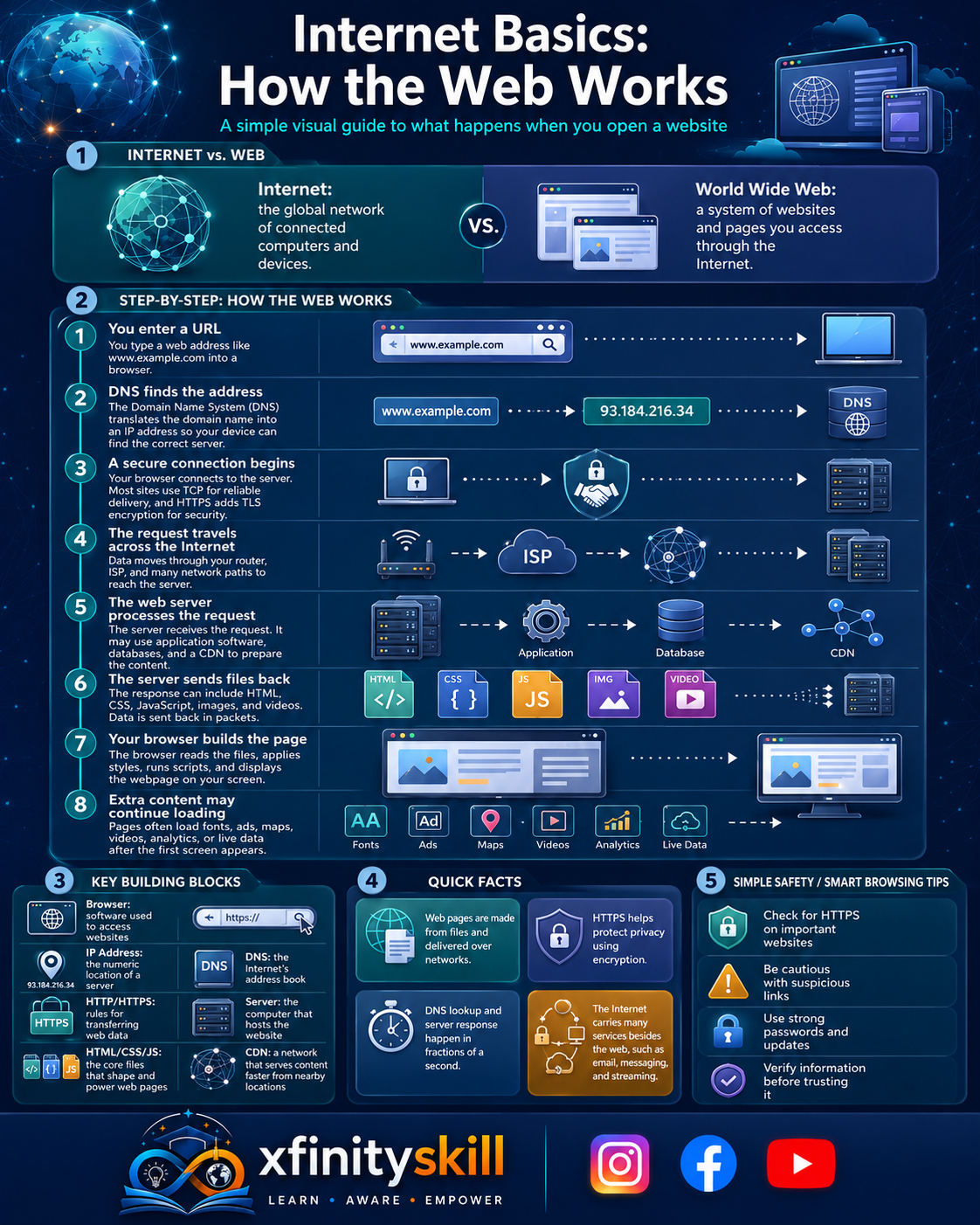
- Web Browsers: These are applications like Chrome, Firefox, and Safari that allow users to access and view websites. They interpret HTML, CSS, and JavaScript to display content.
- Web Servers: These are powerful computers that store websites and serve them to users when requested. When you enter a URL in your browser, it sends a request to the web server hosting that site.
- URLs (Uniform Resource Locators): A URL is the address of a specific webpage. It consists of several parts, including the protocol (http or https), the domain name (like xfinityskill.com), and the path to the specific page.
- HTTP/HTTPS: Hypertext Transfer Protocol (HTTP) is the protocol used for transferring web pages. HTTPS is the secure version, encrypting data for safer transactions.
- Domain Names: These are human-readable addresses that correspond to IP addresses, which are numerical labels assigned to each device connected to the internet. Domain names make it easier for users to access websites without remembering complex numbers.
- IP Addresses: Every device on the internet has a unique IP address, which identifies it on the network. This address is essential for routing data between devices.
- Data Transmission: When you request a webpage, data is transmitted over the internet in small packets. These packets travel through various routes and are reassembled by your browser to display the complete page.
- Web Development: Websites are built using languages like HTML, CSS, and JavaScript. HTML structures the content, CSS styles it, and JavaScript adds interactivity.
- Search Engines: These tools, like Google and Bing, help users find information on the web by indexing and ranking pages based on relevance and quality.
- Security: With the rise of online threats, understanding internet security is crucial. This includes using strong passwords, recognizing phishing attempts, and ensuring websites use HTTPS for secure transactions.
By grasping these basics, users can navigate the web more confidently and safely, making the most of the vast resources available online. Whether you’re browsing for information, shopping, or connecting with others, understanding how the web works enhances your online experience.