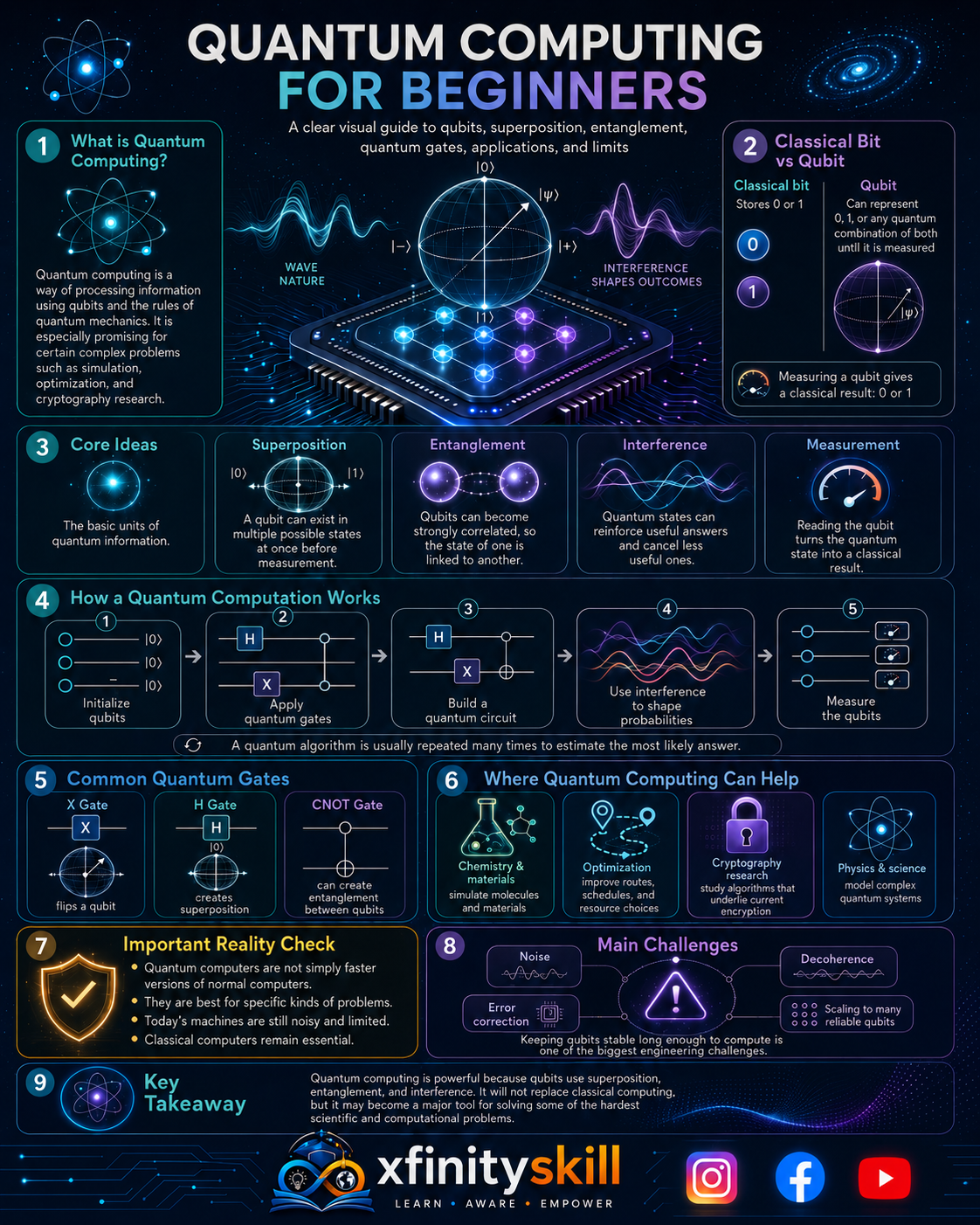
Quantum computing is an exciting and rapidly evolving field that harnesses the principles of quantum mechanics to process information in ways that classical computers cannot. For beginners, understanding the basics of quantum computing can open up a world of possibilities in technology and science.
At its core, quantum computing relies on quantum bits, or qubits. Unlike classical bits, which can be either a 0 or a 1, qubits can exist in multiple states simultaneously due to a property called superposition. This allows quantum computers to perform many calculations at once, potentially solving complex problems much faster than traditional computers.
Another key principle of quantum computing is entanglement. When qubits become entangled, the state of one qubit is directly related to the state of another, no matter how far apart they are. This interconnectedness can lead to powerful computational capabilities, enabling quantum computers to tackle problems in cryptography, optimization, and drug discovery that are currently infeasible for classical computers.
Quantum algorithms, such as Shor’s algorithm for factoring large numbers and Grover’s algorithm for searching unsorted databases, demonstrate the potential of quantum computing. These algorithms can significantly outperform their classical counterparts, showcasing the transformative power of quantum technology.
However, quantum computing is still in its infancy. Building stable qubits and maintaining their quantum states is a significant challenge due to decoherence, where qubits lose their quantum properties due to interference from their environment. Researchers are actively working on various approaches, including superconducting qubits, trapped ions, and topological qubits, to overcome these hurdles.
As a beginner, it’s essential to stay curious and informed about the advancements in quantum computing. Online courses, tutorials, and resources from universities and tech companies can provide valuable insights into this fascinating field. Engaging with communities and forums dedicated to quantum computing can also enhance your understanding and keep you updated on the latest developments.
In summary, quantum computing represents a paradigm shift in how we approach computation. By leveraging the unique properties of quantum mechanics, it holds the promise of solving problems that were once thought to be insurmountable. As the field continues to grow, the potential applications of quantum computing will likely reshape industries and drive innovation in ways we are just beginning to imagine.