Digital accessibility and inclusive design are essential components of creating a user-friendly digital environment that caters to everyone, regardless of their abilities or disabilities.
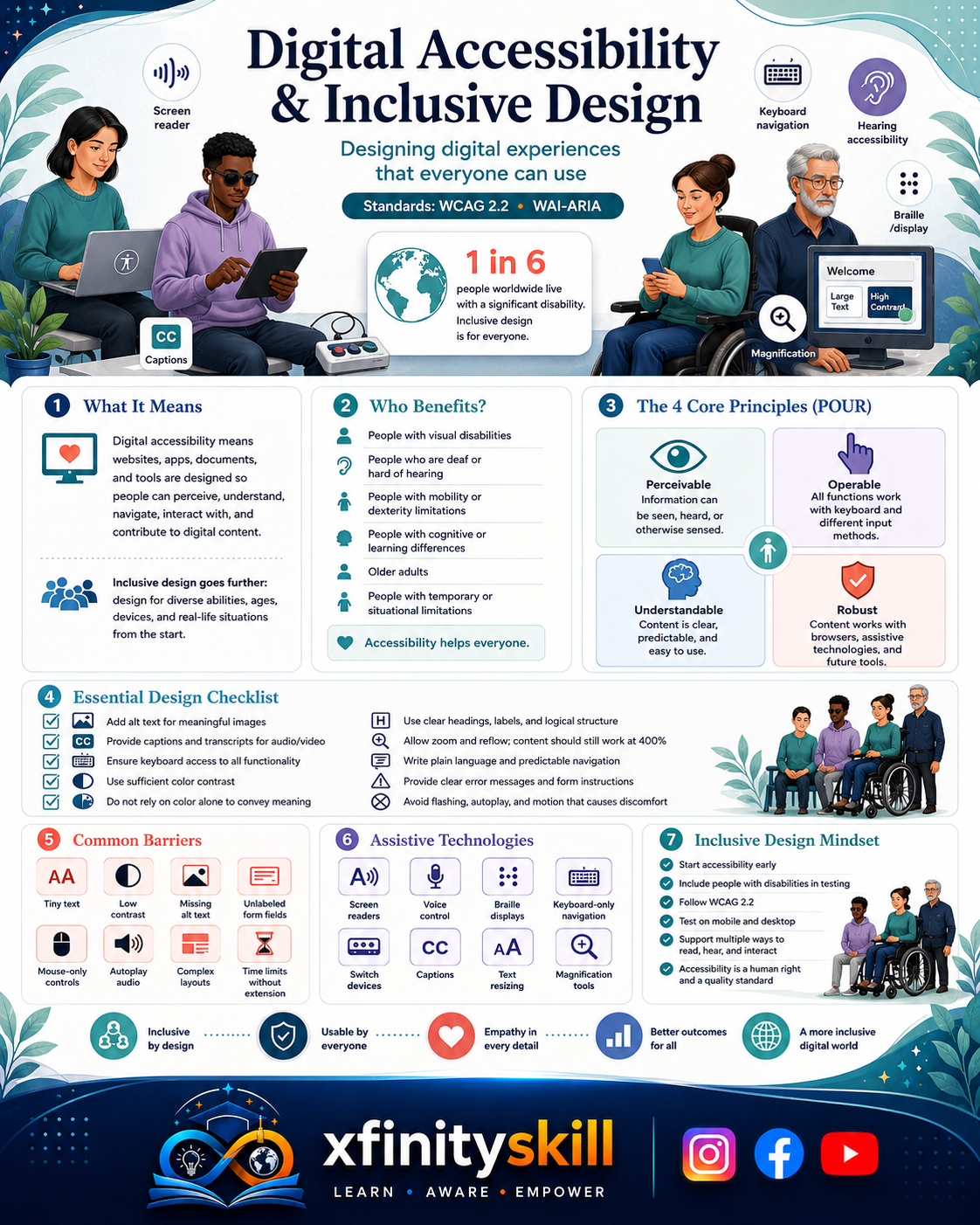
Digital accessibility refers to the practice of ensuring that websites, applications, and digital content are usable by people with a wide range of disabilities. This includes visual impairments, hearing loss, motor difficulties, and cognitive challenges. By adhering to accessibility standards, such as the Web Content Accessibility Guidelines (WCAG), designers and developers can create digital experiences that are navigable and comprehensible for all users.
Inclusive design, on the other hand, goes beyond accessibility. It emphasizes the importance of considering the diverse needs and experiences of all users during the design process. This approach encourages designers to create solutions that are not only accessible but also enjoyable and effective for everyone. By involving users from various backgrounds and abilities in the design process, inclusive design fosters innovation and leads to products that resonate with a broader audience.
Key principles of digital accessibility and inclusive design include:
- Perceivable: Information and user interface components must be presented in ways that users can perceive. This means providing text alternatives for non-text content, ensuring sufficient contrast, and offering captions for audio and video.
- Operable: User interface components must be operable by all users. This includes ensuring that all functionality is available from a keyboard, providing enough time for users to read and use content, and avoiding content that may cause seizures.
- Understandable: Information and operation of the user interface must be understandable. This involves using clear language, providing instructions, and ensuring that users can predict the outcomes of their actions.
- Robust: Content must be robust enough to be interpreted reliably by a wide variety of user agents, including assistive technologies. This means using standard coding practices and ensuring compatibility with various devices and browsers.
By prioritizing digital accessibility and inclusive design, organizations not only comply with legal requirements but also enhance user satisfaction and engagement. Ultimately, creating an inclusive digital landscape benefits everyone, fostering a sense of belonging and ensuring that no one is left behind in the digital age.