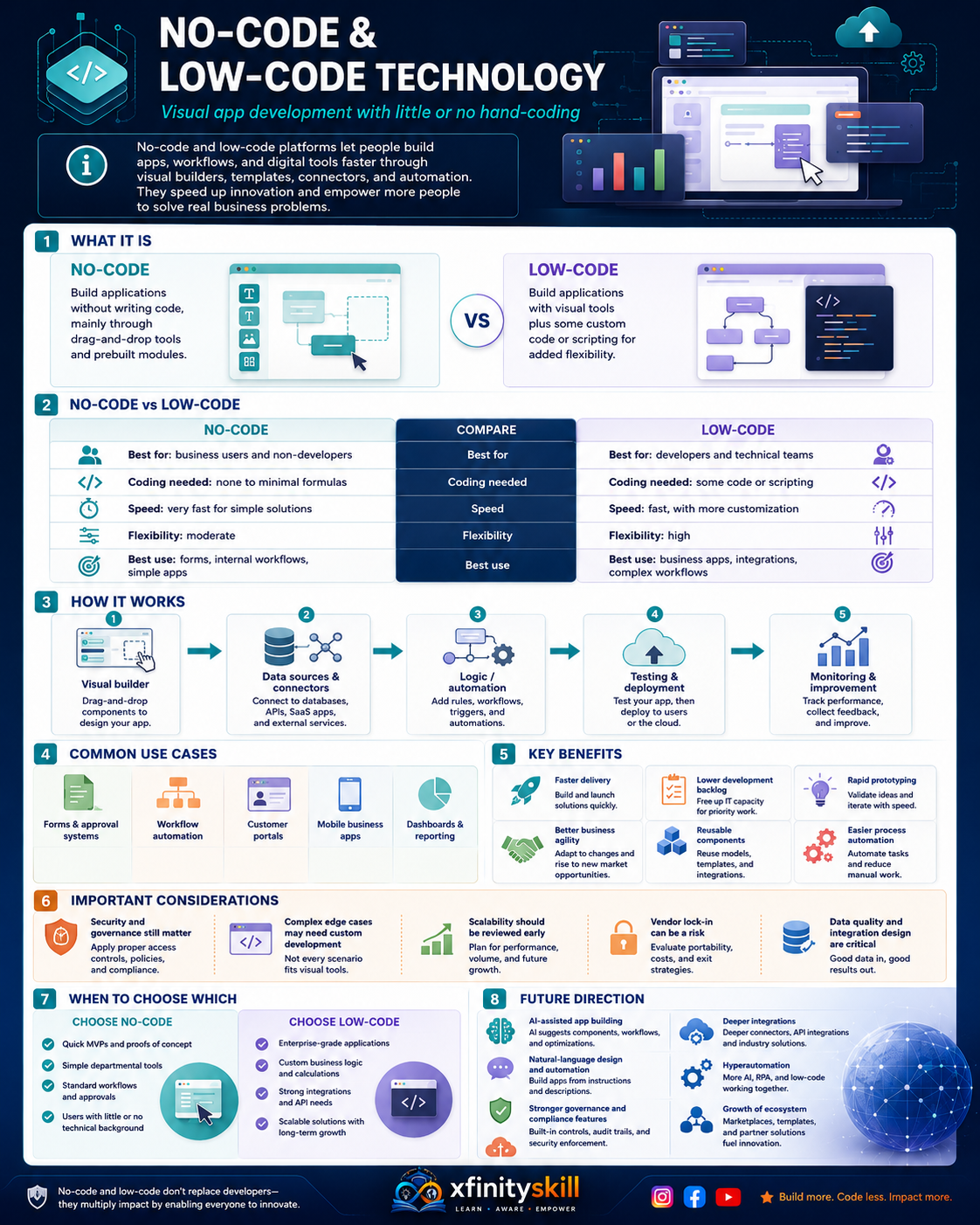
No-Code and Low-Code technology are revolutionizing the way businesses approach software development. These platforms empower users, regardless of their technical expertise, to create applications and automate processes with minimal coding knowledge.
No-Code platforms allow users to build applications through intuitive drag-and-drop interfaces, enabling anyone to turn their ideas into functional software without writing a single line of code. This democratization of technology fosters innovation, as individuals from various backgrounds can contribute to digital transformation efforts within their organizations.
On the other hand, Low-Code platforms provide a balance between ease of use and flexibility. While they still require some coding, they significantly reduce the amount of manual coding needed. This makes them ideal for professional developers who want to accelerate the development process, as well as for business users who possess some technical skills.
Both No-Code and Low-Code technologies enhance collaboration between IT and business teams, allowing for faster prototyping and iteration. They enable organizations to respond quickly to changing market demands and streamline workflows, ultimately leading to increased efficiency and reduced costs.
In summary, No-Code and Low-Code technologies are not just trends; they represent a fundamental shift in how software is developed and deployed, making it accessible to a broader audience and driving innovation across industries.