Empathy, sympathy, and compassion are often used interchangeably, but they represent distinct emotional responses to the experiences of others.
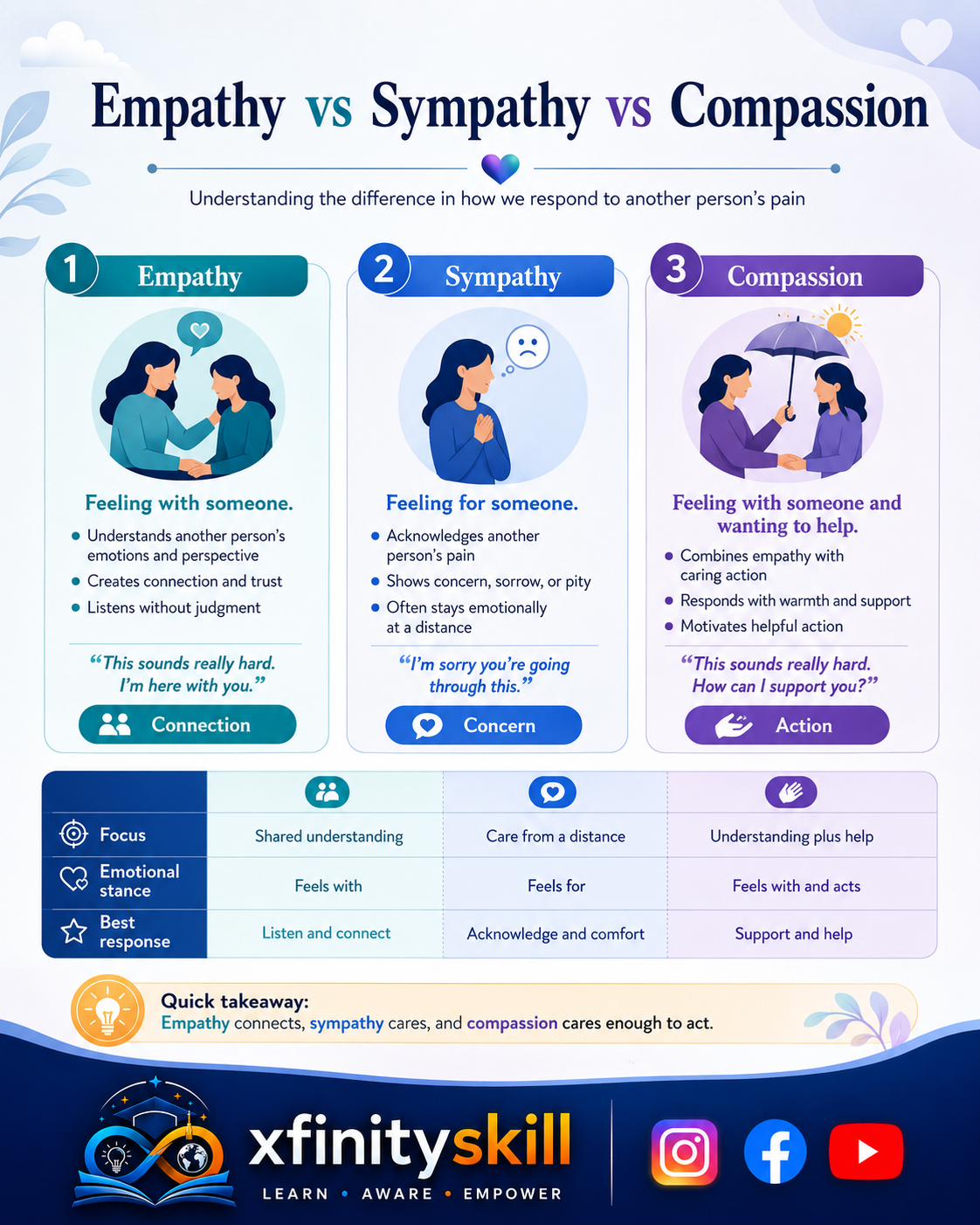
Empathy is the ability to understand and share the feelings of another person. It involves putting yourself in someone else’s shoes and experiencing their emotions as if they were your own. This deep connection allows for a more profound understanding of their situation, fostering a sense of closeness and support.
Sympathy, on the other hand, is a more detached form of concern. It involves recognizing someone else’s suffering and feeling pity or sorrow for them, but it does not require sharing their emotional experience. Sympathy can be expressed through kind words or gestures, but it often lacks the depth of understanding that empathy provides.
Compassion goes a step further by not only feeling for someone but also being motivated to help alleviate their suffering. It combines elements of empathy and sympathy, as it involves understanding another’s pain and feeling a desire to take action to support them. Compassion is often seen as a proactive response, encouraging individuals to engage in acts of kindness and support.
In summary, while empathy allows us to connect deeply with others’ feelings, sympathy acknowledges their pain from a distance, and compassion drives us to take action to help. Understanding these differences can enhance our interpersonal relationships and improve our ability to support those in need.