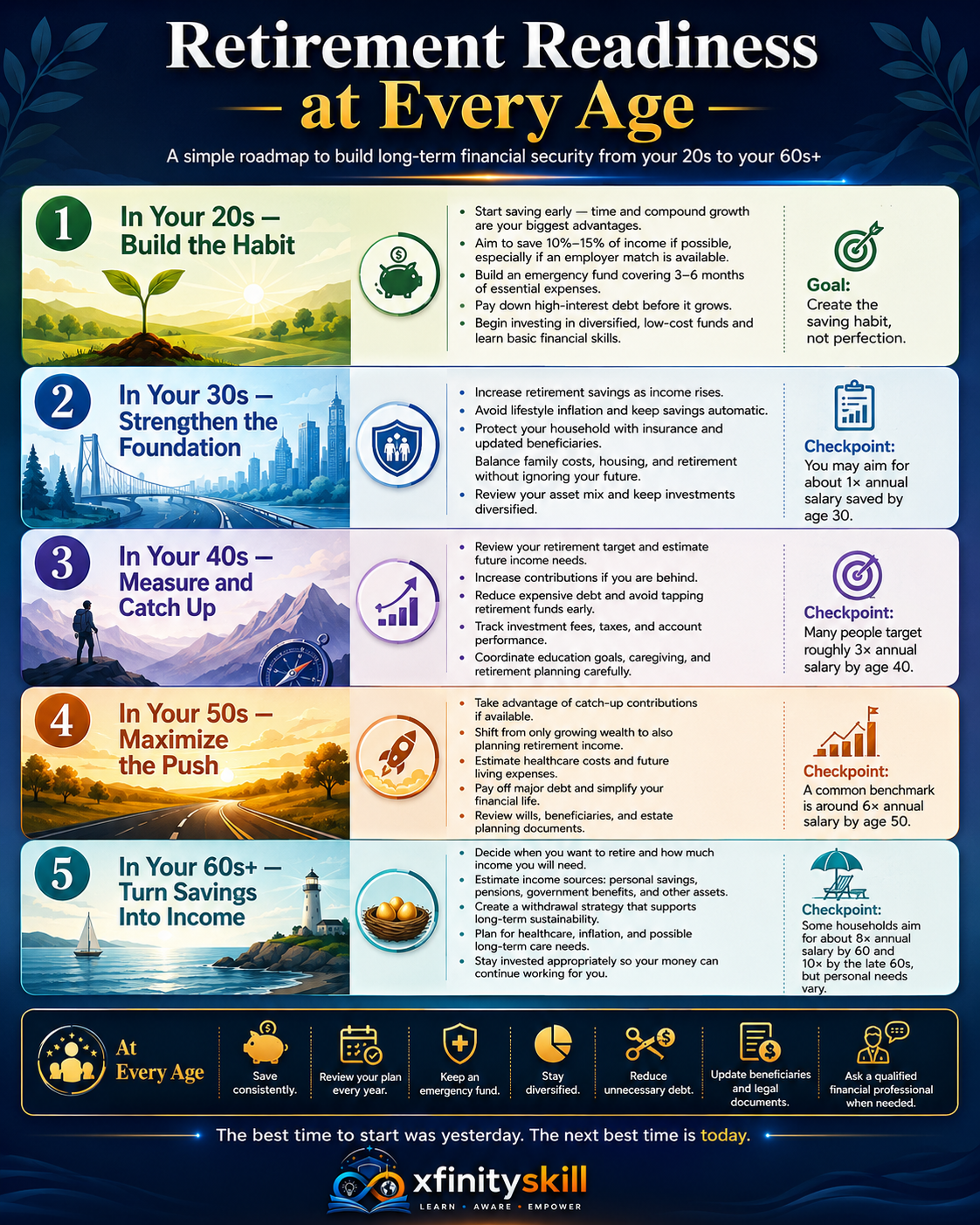
Retirement Readiness at Every Age
Planning for retirement is a crucial aspect of financial health, and it’s never too early or too late to start preparing. Understanding retirement readiness at various life stages can help individuals make informed decisions that align with their long-term goals.
In Your 20s: Start Early
The earlier you start saving for retirement, the better. In your 20s, focus on building a solid financial foundation. This includes:
- Establishing a Budget: Track your income and expenses to identify areas where you can save.
- Emergency Fund: Aim to save three to six months’ worth of living expenses to cover unexpected costs.
- Retirement Accounts: Contribute to employer-sponsored retirement plans, like a 401(k), especially if there’s a company match. Consider opening an IRA for additional savings.
In Your 30s: Increase Contributions
As your career progresses, your income typically increases. Use this opportunity to boost your retirement savings:
- Maximize Contributions: Increase your contributions to retirement accounts. Aim for at least 15% of your income if possible.
- Diversify Investments: Consider a mix of stocks, bonds, and other assets to balance risk and growth potential.
- Review Financial Goals: Reassess your retirement goals and adjust your savings strategy accordingly.
In Your 40s: Focus on Growth
By your 40s, you should have a clearer picture of your retirement goals. This is the time to focus on growth:
- Catch-Up Contributions: If you’re behind on savings, take advantage of catch-up contributions allowed in retirement accounts for those aged 50 and older.
- Debt Management: Work on paying down high-interest debt to free up more money for savings.
- Retirement Planning: Consider consulting a financial advisor to create a comprehensive retirement plan.
In Your 50s: Prepare for Transition
As you approach retirement age, it’s essential to prepare for the transition:
- Assess Retirement Readiness: Evaluate your savings, investments, and expected retirement income sources, such as Social Security and pensions.
- Healthcare Planning: Consider healthcare costs in retirement and explore options like Health Savings Accounts (HSAs).
- Retirement Lifestyle: Think about the lifestyle you want in retirement and how much it will cost.
In Your 60s: Finalize Your Plan
In your 60s, it’s time to finalize your retirement plan:
- Withdrawal Strategy: Develop a strategy for withdrawing funds from your retirement accounts to ensure your savings last throughout retirement.
- Social Security Timing: Decide when to start taking Social Security benefits, as this can significantly impact your overall retirement income.
- Estate Planning: Ensure your estate planning documents are in order, including wills and trusts.
Conclusion
Retirement readiness is a lifelong journey that requires attention and adjustment at every stage of life. By starting early, increasing contributions, and planning strategically, individuals can achieve a secure and fulfilling retirement. Remember, it’s never too late to take control of your financial future!