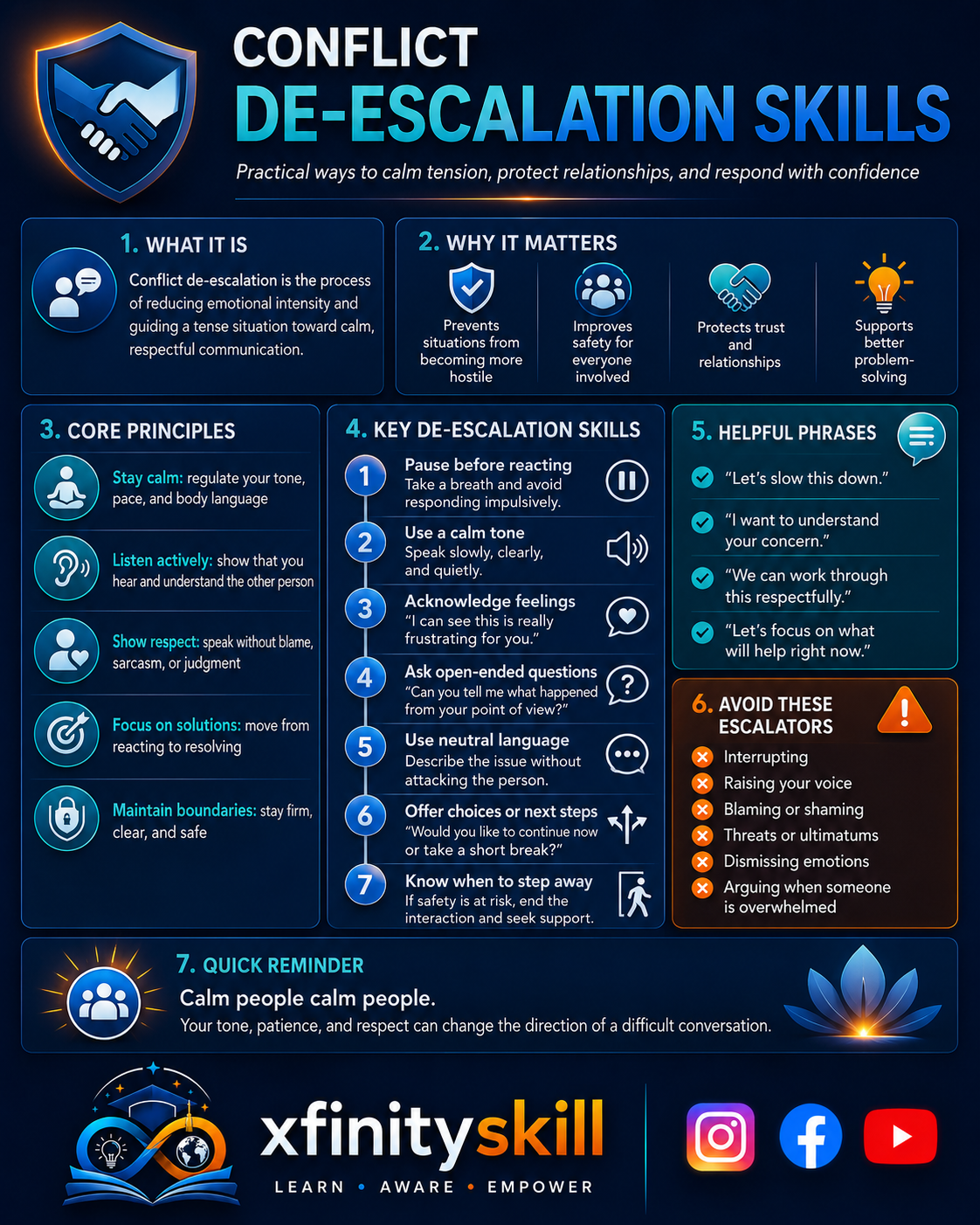
Conflict De-escalation Skills
Conflict de-escalation skills are essential tools for managing and resolving disputes in a constructive manner. These skills help individuals navigate tense situations, reduce hostility, and foster a more collaborative environment. Here are some key components of effective conflict de-escalation:
- Active Listening
Listening attentively to the other party’s concerns is crucial. It shows respect and helps to identify the root cause of the conflict. By paraphrasing what the other person has said, you can demonstrate understanding and validate their feelings. - Empathy
Putting yourself in the other person’s shoes can significantly reduce tension. Acknowledging their emotions and experiences can create a sense of connection and openness, making it easier to find common ground. - Calm Demeanor
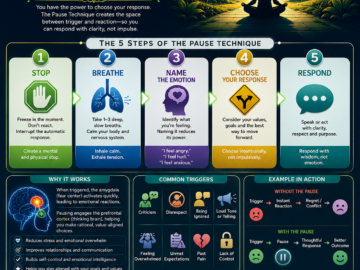
Maintaining a calm and composed attitude is vital. Your body language, tone of voice, and choice of words can influence the emotional climate of the conversation. Staying calm can help de-escalate the situation and encourage the other party to do the same. - Clear Communication
Expressing your thoughts and feelings clearly and respectfully can prevent misunderstandings. Use “I” statements to convey your perspective without sounding accusatory, which can help keep the dialogue constructive. - Problem-Solving Approach
Focus on finding solutions rather than assigning blame. Collaboratively brainstorming options can shift the focus from conflict to resolution, fostering a sense of teamwork. - Setting Boundaries
It’s important to establish clear boundaries during a conflict. If the conversation becomes too heated, suggest taking a break to cool down. This can prevent escalation and allow both parties to reflect on the situation. - Know When to Walk Away
Sometimes, the best course of action is to step back from the conflict. If emotions are running too high, it may be more productive to revisit the discussion later when both parties are calmer.
By honing these conflict de-escalation skills, individuals can create a more harmonious environment, whether at work, home, or in social settings. These skills not only help in resolving conflicts but also contribute to building stronger relationships based on mutual respect and understanding.