Emergency Fund Science: How Much Is Enough?
Building an emergency fund is a crucial aspect of financial literacy and money management. An emergency fund serves as a financial safety net, providing peace of mind and security in times of unexpected expenses, such as medical emergencies, car repairs, or job loss. But how much should you actually save?
Determining the Right Amount
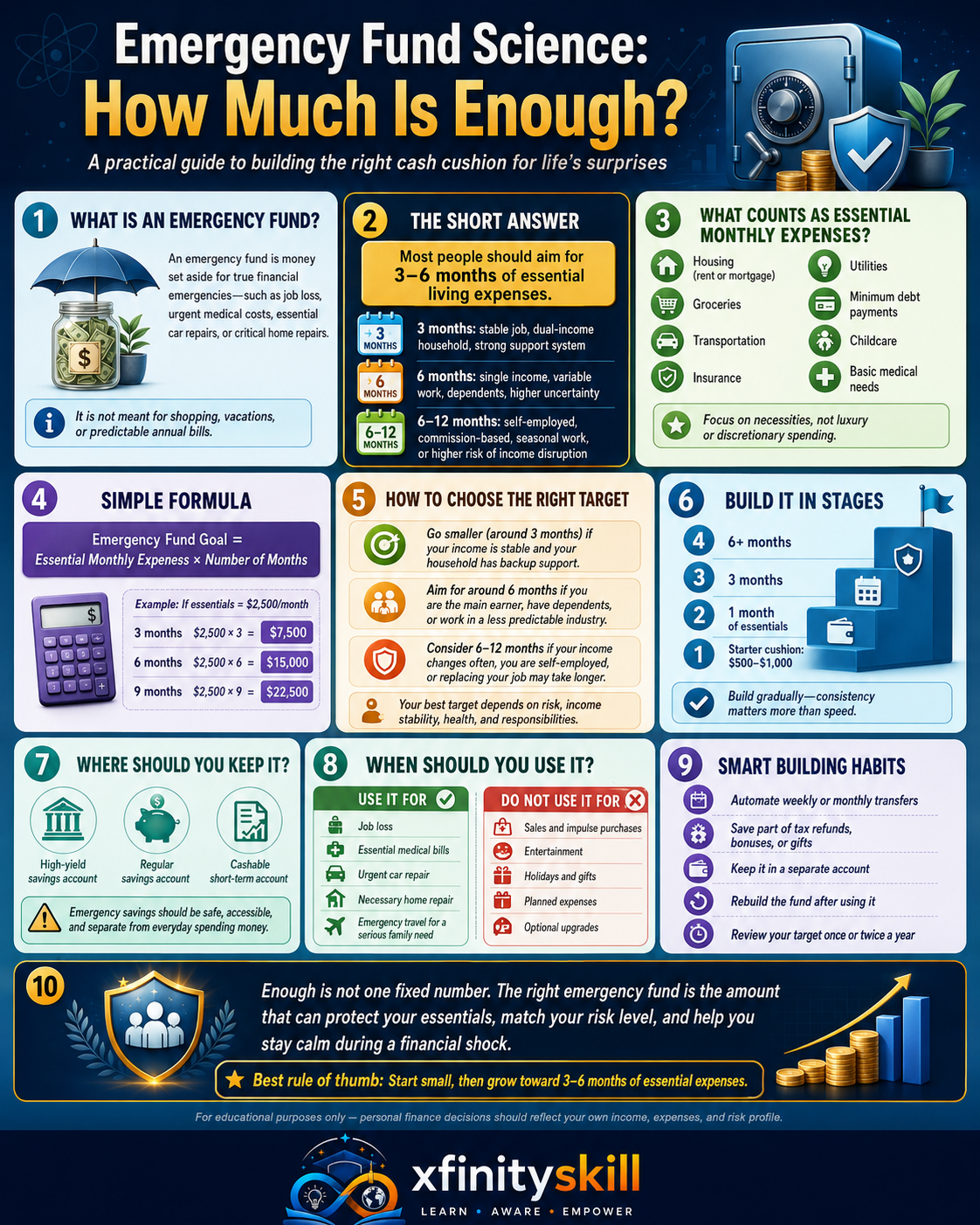
Financial experts generally recommend saving three to six months’ worth of living expenses. This range is based on the idea that it typically takes this amount of time to find a new job or recover from a financial setback. However, the exact amount can vary based on individual circumstances:
- Job Stability: If you work in a volatile industry or have a job with less security, consider saving more—up to nine months or even a year of expenses.
- Dependents: If you have children or other dependents, a larger fund may be necessary to cover their needs during a financial crisis.
- Health Considerations: If you have ongoing health issues or high medical expenses, a more substantial emergency fund can provide additional security.
Where to Keep Your Emergency Fund
It’s essential to keep your emergency fund in a liquid account, meaning you can access it quickly without penalties. High-yield savings accounts or money market accounts are popular choices, as they offer better interest rates than traditional savings accounts while still allowing easy access to your funds.
Building Your Fund
Starting an emergency fund can feel daunting, but breaking it down into manageable steps can make it easier:
- Set a Goal: Determine how much you want to save based on your monthly expenses and personal circumstances.
- Automate Savings: Set up automatic transfers from your checking account to your emergency fund to ensure consistent contributions.
- Start Small: If saving three to six months’ worth of expenses seems overwhelming, start with a smaller goal, such as $1,000, and gradually build from there.
- Review and Adjust: Regularly assess your financial situation and adjust your savings goal as necessary, especially after significant life changes like a new job, marriage, or having children.
Conclusion
An emergency fund is a vital component of financial health, providing a buffer against life’s uncertainties. By understanding how much to save and implementing a strategic plan, you can build a fund that offers security and peace of mind. Remember, the key is to start saving today, no matter how small the amount, and to remain consistent in your efforts.