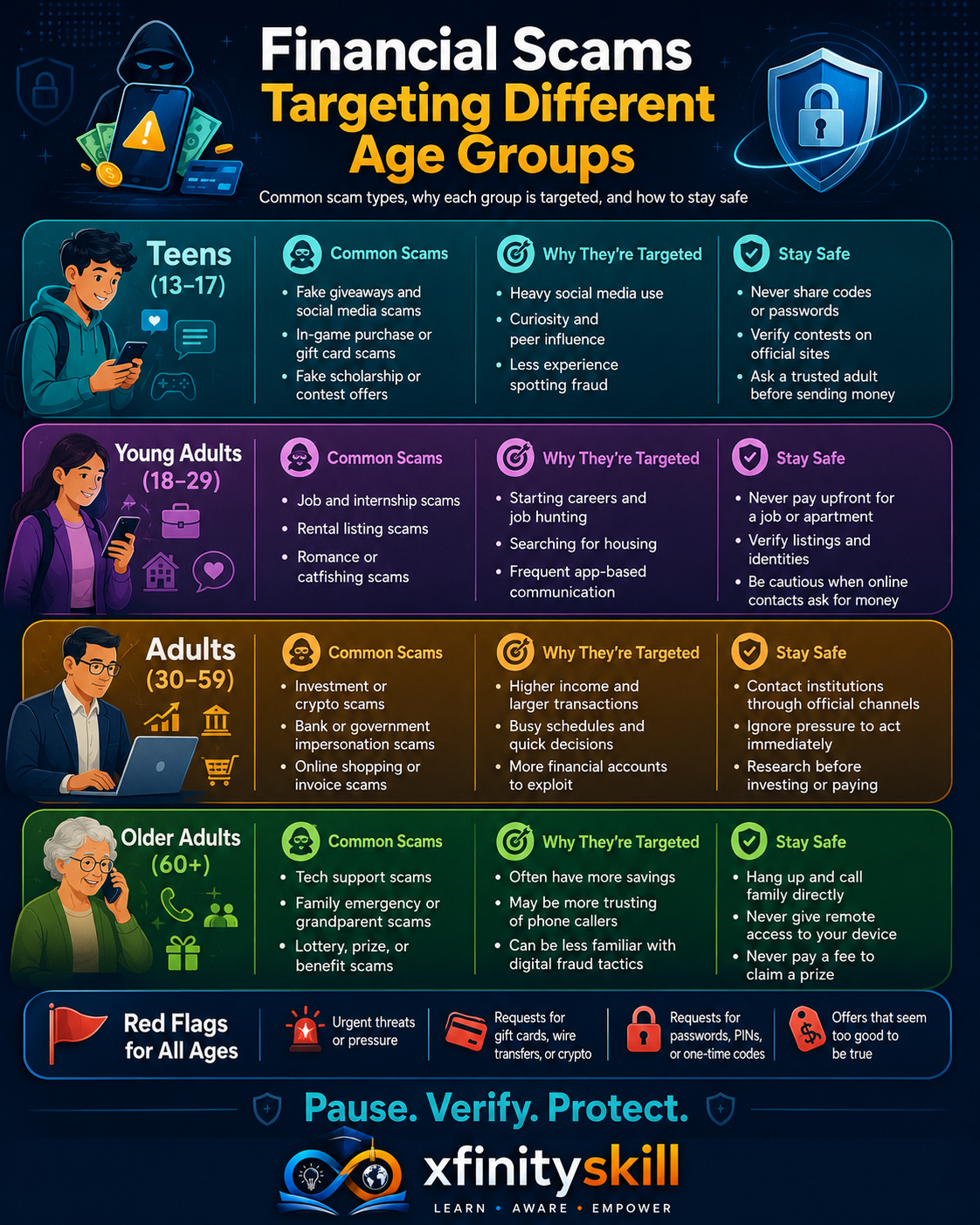
Financial scams are a pervasive issue that affects individuals across all age groups, but the tactics and targets often vary significantly. Understanding how different age demographics are targeted can help in raising awareness and preventing these scams.
1. Seniors:
Older adults are frequently targeted by scammers due to their perceived vulnerability and often limited familiarity with technology. Common scams include:
- Investment Scams: Fraudsters may promote fake investment opportunities, promising high returns with little risk. These scams often exploit the desire for financial security in retirement.
- Romance Scams: Scammers often create fake profiles on dating sites to build emotional connections, eventually asking for money under various pretenses.
- Imposter Scams: Scammers impersonate government officials or family members in distress, convincing seniors to send money urgently.
2. Middle-Aged Adults:
Individuals in their 40s to 60s are often targeted through more sophisticated scams, as they typically have more assets. Common scams include:
- Business Opportunity Scams: These scams promise lucrative business ventures that require upfront investments. They often use high-pressure tactics to convince victims to act quickly.
- Phishing Scams: Middle-aged adults may receive emails or messages that appear to be from legitimate companies, asking for personal information or login credentials.
- Credit Card Fraud: Scammers may use stolen information to make unauthorized purchases, often targeting those who are less vigilant about monitoring their financial accounts.
3. Young Adults:
Younger individuals, particularly those in their 20s and 30s, are often targeted through digital platforms. Common scams include:
- Online Shopping Scams: Fraudulent websites may offer products at steep discounts, only to take payment without delivering goods.
- Student Loan Scams: Scammers may offer to help manage or consolidate student loans for a fee, often providing little to no real assistance.
- Cryptocurrency Scams: With the rise of digital currencies, young adults are increasingly targeted by scams promising quick profits through cryptocurrency investments.
4. Children and Teens:
While children and teens may not have direct financial assets, they are still vulnerable to scams that exploit their naivety. Common scams include:
- In-App Purchases: Scammers may create games or apps that encourage children to make unauthorized purchases without parental consent.
- Social Media Scams: Teens may be targeted through social media platforms, where scammers pose as friends or influencers to solicit money or personal information.
Conclusion:
Awareness and education are key in combating financial scams across all age groups. By understanding the specific tactics used against different demographics, individuals can better protect themselves and their loved ones from falling victim to these fraudulent schemes. Always verify the legitimacy of offers and be cautious about sharing personal information, regardless of age.