Inflation and Purchasing Power
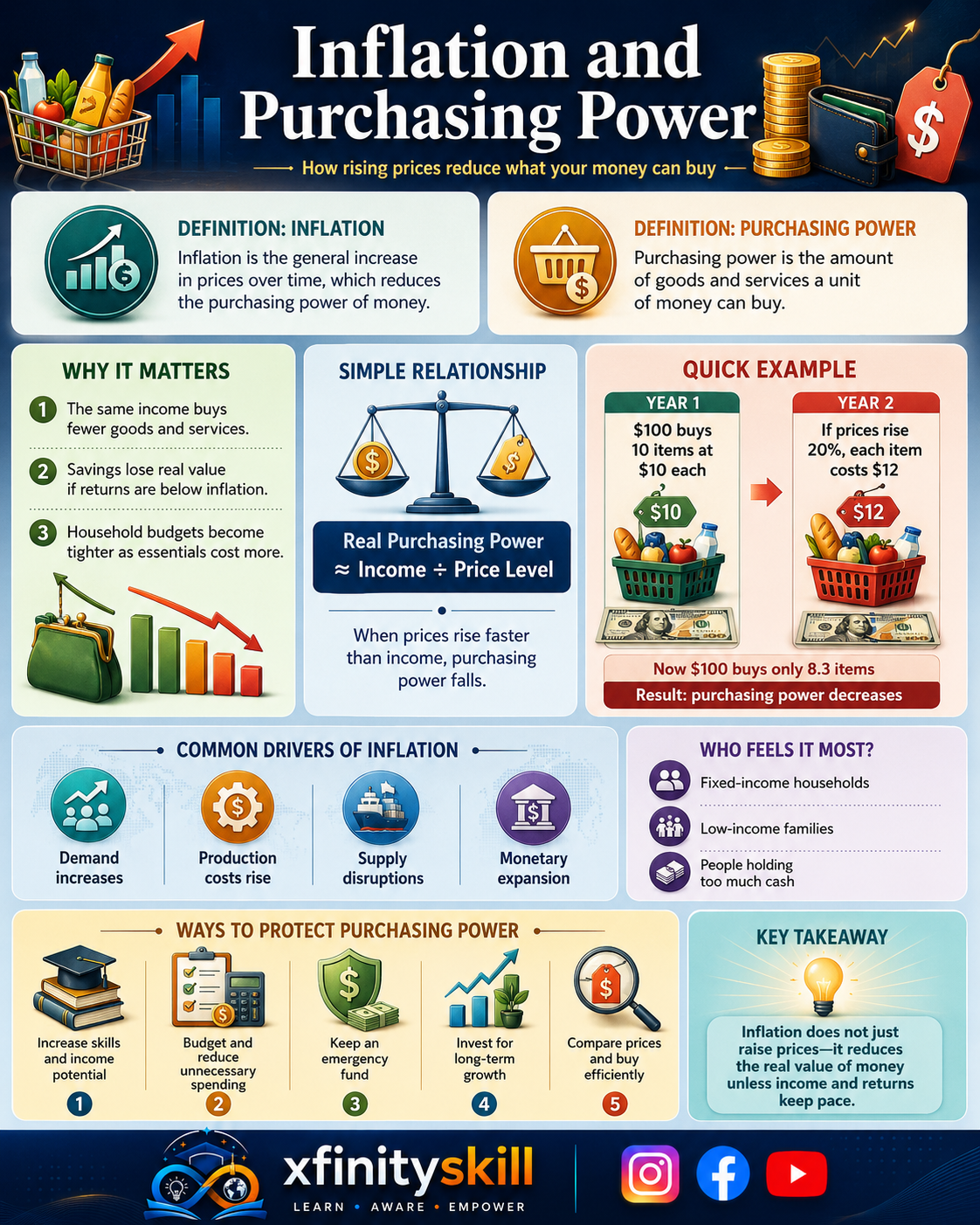
Inflation is the rate at which the general level of prices for goods and services rises, eroding purchasing power. When inflation increases, each unit of currency buys fewer goods and services, which can significantly impact consumers and the economy as a whole.
One of the primary causes of inflation is an increase in the supply of money. When central banks, like the Federal Reserve in the United States, inject more money into the economy, it can lead to higher demand for goods and services. If this demand outpaces supply, prices will rise. Other factors contributing to inflation include rising production costs, increased consumer demand, and supply chain disruptions.
Purchasing power, on the other hand, refers to the amount of goods and services that can be bought with a unit of currency. As inflation rises, purchasing power declines. For example, if inflation is at 3% and your salary remains the same, you effectively have less money to spend because the prices of goods and services have increased.
To illustrate, consider a scenario where the price of a loaf of bread is $2. If inflation rises by 5%, the new price of that loaf would be $2.10. If your income does not increase, you can now buy less bread with the same amount of money, demonstrating the impact of inflation on purchasing power.
Inflation can have varying effects on different segments of the population. For those on fixed incomes, such as retirees relying on pensions, rising prices can lead to financial strain. Conversely, individuals with assets that appreciate in value, like real estate or stocks, may benefit from inflation as their investments increase in worth.
To mitigate the effects of inflation, individuals can consider strategies such as investing in assets that typically outpace inflation, like stocks or real estate, or adjusting their spending habits to prioritize essential goods and services.
In summary, understanding the relationship between inflation and purchasing power is crucial for making informed financial decisions. As inflation continues to fluctuate, being aware of its implications can help individuals and businesses navigate economic challenges effectively.