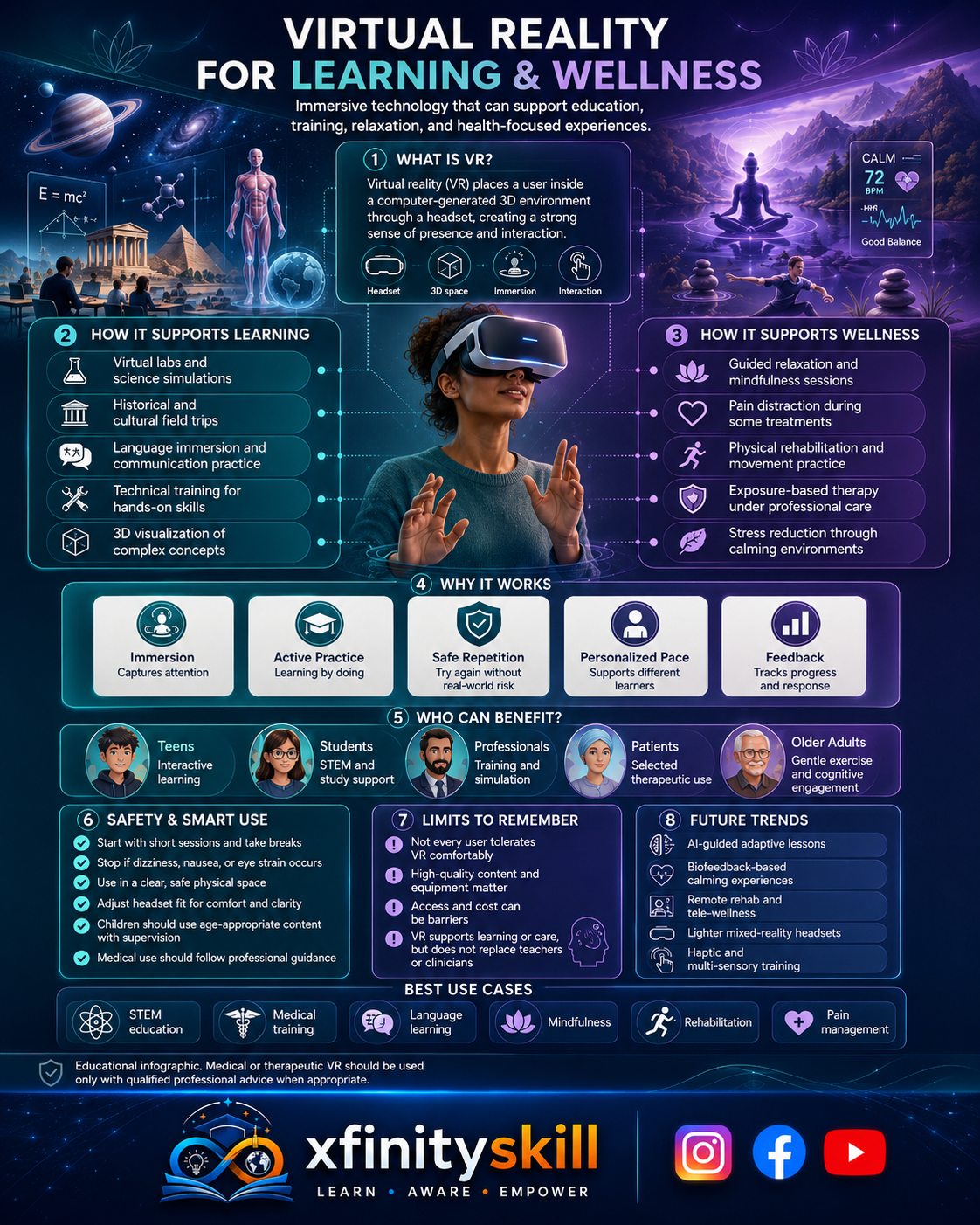
Virtual Reality for Learning and Wellness
Virtual Reality (VR) is revolutionizing the way we approach education and wellness, offering immersive experiences that enhance learning and promote mental health. By creating a simulated environment, VR allows users to engage with content in a way that traditional methods cannot match.
In education, VR provides students with the opportunity to explore complex concepts through interactive simulations. For instance, learners can take virtual field trips to historical sites, dive into the depths of the ocean, or even travel through the human body. This hands-on approach not only makes learning more engaging but also helps to reinforce knowledge retention.
Moreover, VR can cater to various learning styles, accommodating visual, auditory, and kinesthetic learners. It fosters collaboration among students, as they can work together in a shared virtual space, enhancing teamwork and communication skills.
When it comes to wellness, VR is proving to be a powerful tool for mental health. It offers therapeutic experiences that can help individuals manage stress, anxiety, and phobias. Guided meditation sessions in serene virtual environments can promote relaxation and mindfulness, while exposure therapy in a controlled setting can assist those facing specific fears.
Additionally, VR can facilitate physical wellness through interactive fitness programs that make exercise enjoyable. Users can participate in virtual workouts, dance classes, or even adventure sports, all from the comfort of their homes. This gamified approach encourages a more active lifestyle and can lead to improved physical health.
In summary, the integration of Virtual Reality into learning and wellness is creating new pathways for growth and healing. As technology continues to evolve, the potential for VR to transform these fields is limitless, paving the way for a more engaging and healthier future.