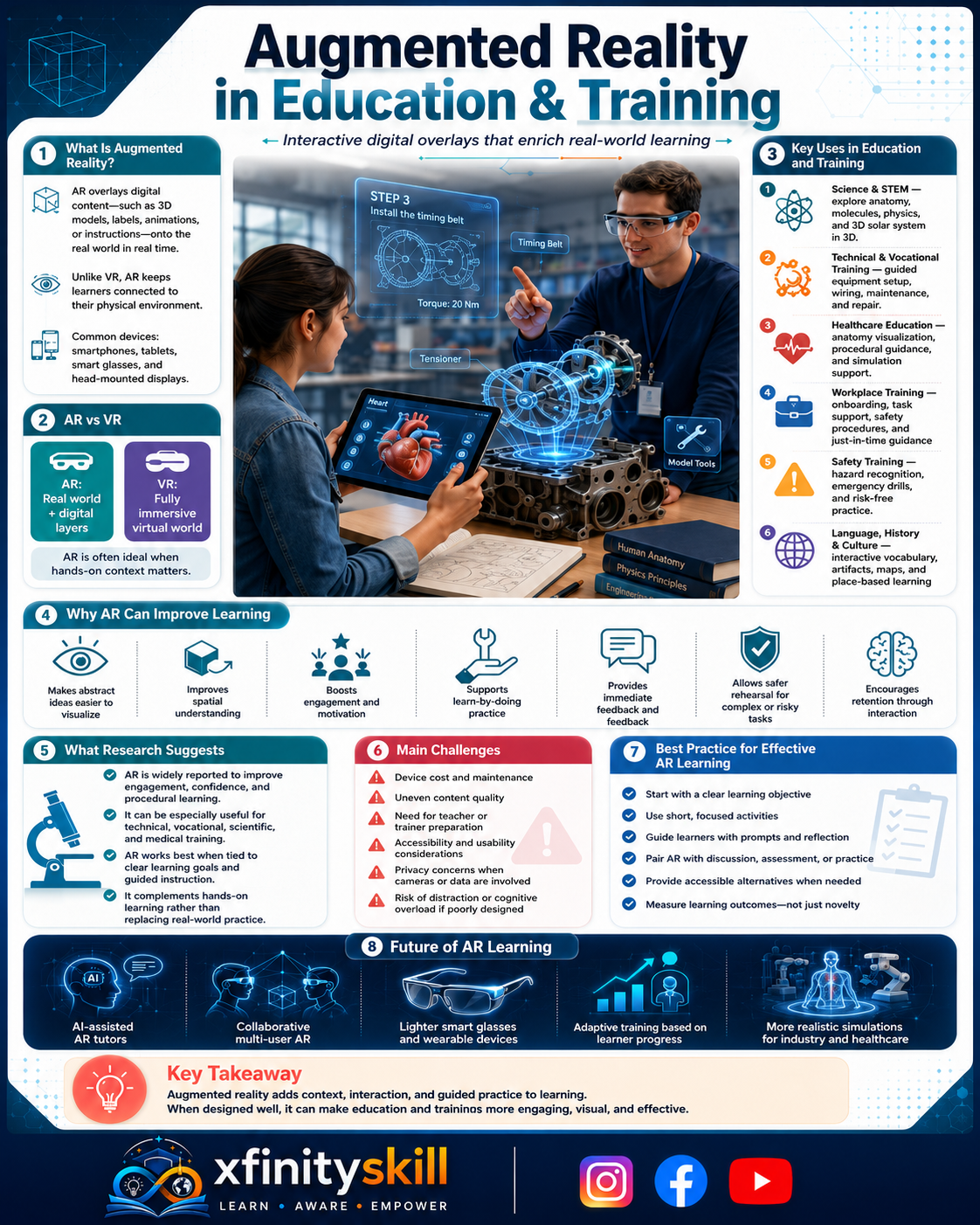
Augmented Reality (AR) is revolutionizing the landscape of education and training by providing immersive and interactive experiences that enhance learning outcomes. By overlaying digital information onto the real world, AR allows students and trainees to engage with content in a way that traditional methods cannot match.
One of the most significant advantages of AR in education is its ability to create experiential learning opportunities. For instance, students can visualize complex concepts, such as the human anatomy or astronomical phenomena, through 3D models that they can manipulate and explore. This hands-on approach not only aids in comprehension but also fosters retention of information.
In vocational training, AR can simulate real-world scenarios, allowing learners to practice skills in a safe environment. For example, medical students can perform virtual surgeries, while technicians can troubleshoot machinery using AR overlays that guide them through the repair process. This practical application of knowledge prepares individuals for real-life challenges, enhancing their confidence and competence.
Moreover, AR promotes collaboration among learners. Through shared AR experiences, students can work together on projects, solving problems collectively and learning from one another. This collaborative aspect not only builds teamwork skills but also enriches the learning experience by exposing individuals to diverse perspectives.
As AR technology continues to evolve, its integration into educational curricula is becoming more seamless. Educators are increasingly adopting AR tools and applications, making lessons more engaging and relevant to students’ lives. The potential for personalized learning is also significant, as AR can adapt to individual learning styles and paces, ensuring that each student receives the support they need.
In conclusion, Augmented Reality is a powerful tool in education and training, transforming how knowledge is imparted and absorbed. By creating immersive, interactive, and collaborative learning environments, AR not only enhances understanding but also prepares learners for the complexities of the modern world. As this technology advances, its impact on education will undoubtedly continue to grow, paving the way for innovative teaching and learning methods.