Digital Twins Technology
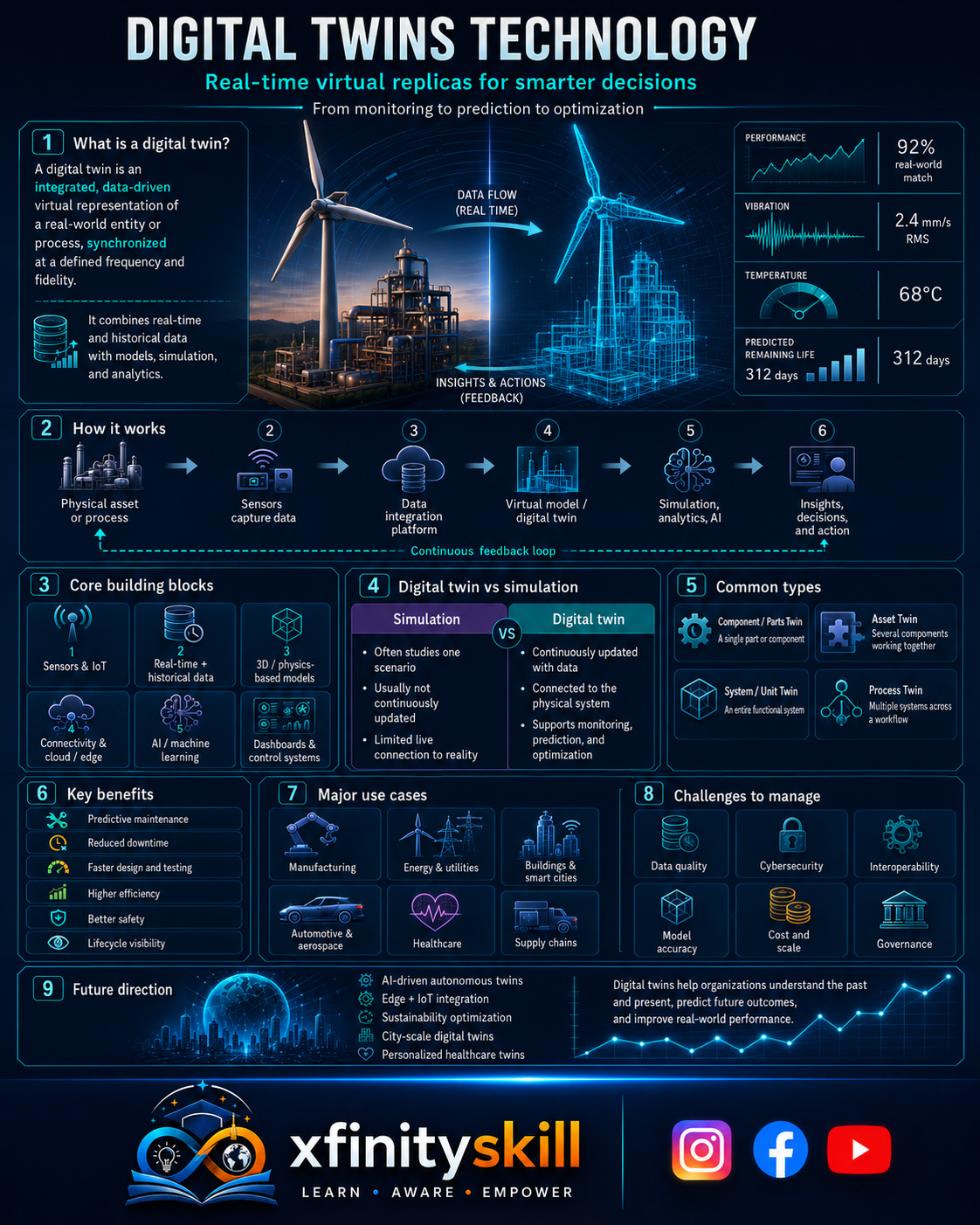
Digital twins are virtual replicas of physical entities, processes, or systems that allow for real-time monitoring, analysis, and optimization. This innovative technology bridges the gap between the physical and digital worlds, enabling organizations to simulate, predict, and enhance performance across various industries.
One of the primary applications of digital twins is in manufacturing. By creating a digital twin of a production line, companies can monitor equipment performance, predict maintenance needs, and optimize workflows. This leads to increased efficiency, reduced downtime, and significant cost savings.
In the realm of smart cities, digital twins can model urban environments, helping city planners visualize infrastructure, traffic patterns, and resource management. This data-driven approach allows for better decision-making and improved quality of life for residents.
Healthcare is another sector benefiting from digital twins. By creating digital replicas of patients, healthcare providers can personalize treatment plans, predict health outcomes, and improve patient care. This technology fosters a proactive approach to health management, ultimately leading to better patient outcomes.
Moreover, the integration of IoT (Internet of Things) devices with digital twins enhances data collection and analysis. Real-time data feeds from sensors and devices allow for dynamic updates to the digital twin, ensuring that it accurately reflects the current state of its physical counterpart.
As industries continue to embrace digital transformation, the potential of digital twins technology will only grow. By leveraging this powerful tool, organizations can drive innovation, enhance operational efficiency, and create more sustainable practices for the future.