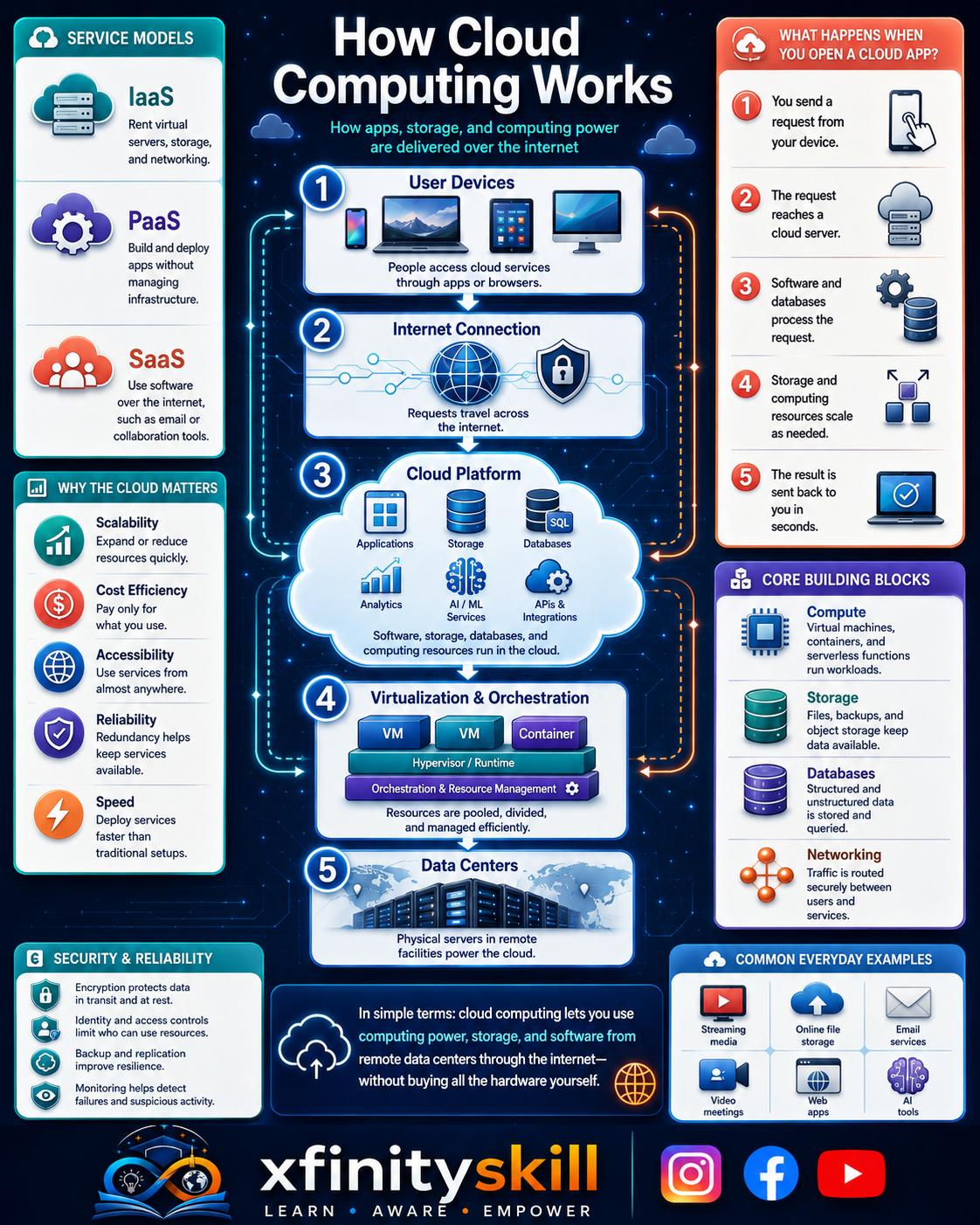
Cloud computing is a transformative technology that allows users to access and store data and applications over the internet instead of on local servers or personal computers. Here’s a breakdown of how it works:
1. Infrastructure as a Service (IaaS)
At its core, cloud computing relies on a vast network of servers located in data centers around the world. These servers provide the necessary infrastructure for hosting applications and storing data. Users can rent virtual machines, storage, and networking resources on-demand, allowing for scalability and flexibility.
2. Platform as a Service (PaaS)
PaaS offers a platform allowing developers to build, deploy, and manage applications without worrying about the underlying infrastructure. This service provides tools and services that streamline the development process, enabling faster deployment and innovation.
3. Software as a Service (SaaS)
SaaS delivers software applications over the internet on a subscription basis. Users can access these applications from any device with an internet connection, eliminating the need for installation and maintenance. Examples include email services, customer relationship management (CRM) systems, and collaboration tools.
4. Virtualization Technology
Cloud computing heavily relies on virtualization, which allows multiple virtual instances to run on a single physical server. This technology maximizes resource utilization and enables efficient management of workloads.
5. Data Storage and Management
Data is stored in large, distributed databases across multiple servers. This redundancy ensures data availability and reliability. Cloud providers implement robust security measures, including encryption and access controls, to protect sensitive information.
6. Scalability and Flexibility
One of the key advantages of cloud computing is its ability to scale resources up or down based on demand. Businesses can quickly adjust their computing power and storage needs without significant upfront investments.
7. Accessibility and Collaboration
Cloud computing enables users to access their data and applications from anywhere, fostering collaboration among teams. This accessibility is particularly beneficial for remote work and global teams.
8. Cost Efficiency
By utilizing cloud services, organizations can reduce costs associated with hardware, software, and maintenance. The pay-as-you-go model allows businesses to only pay for the resources they use, making it a cost-effective solution.
Conclusion
In summary, cloud computing revolutionizes how we store, access, and manage data and applications. Its flexibility, scalability, and cost-effectiveness make it an essential component of modern IT infrastructure, empowering businesses to innovate and grow in a digital world.